

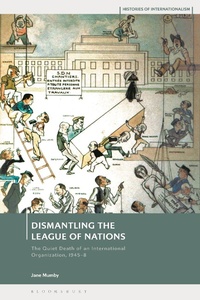
Dismantling the League of Nations
The Quiet Death of an International Organization, 1945-8
1. Auflage
Erschienen am 30. November 2023
264 Seiten
978-1-350-37690-8 (ISBN)
Beschreibung

The League of Nations, one of the world's first multi-function intergovernmental organisations, was also one of the first to undergo liquidation. This book unveils the last chapter in its story, showing how complex and time-consuming the end of this 'great experiment' truly was.
Starting with the signing of the Charter of the United Nations in 1945 - the death knell of the League - Mumby traces the closure process that followed. From the final meeting of the Assembly in April 1946, the transfer of assets and functions to the UN, the liquidation of the Secretariat, and the last acts of business through 1948, this book follows the story through the eyes of those who made it happen. It demonstrates why this process took longer than expected, highlights the importance of human agency in even the most bureaucratic of institutions, and points to the lingering impact of the League on international organisations today.
Uncovering both the institutional and personal aspects of the League of Nations' final chapter, this book furthers our understanding of this famous institution, shedding light on those that continue to dominate contemporary international relations, and exposing the unavoidable complexity of dismantling an intergovernmental organisation.
Starting with the signing of the Charter of the United Nations in 1945 - the death knell of the League - Mumby traces the closure process that followed. From the final meeting of the Assembly in April 1946, the transfer of assets and functions to the UN, the liquidation of the Secretariat, and the last acts of business through 1948, this book follows the story through the eyes of those who made it happen. It demonstrates why this process took longer than expected, highlights the importance of human agency in even the most bureaucratic of institutions, and points to the lingering impact of the League on international organisations today.
Uncovering both the institutional and personal aspects of the League of Nations' final chapter, this book furthers our understanding of this famous institution, shedding light on those that continue to dominate contemporary international relations, and exposing the unavoidable complexity of dismantling an intergovernmental organisation.
Weitere Details
Reihe
Auflage
1. Auflage
Sprache
Englisch
Verlagsort
London
Großbritannien
Verlagsgruppe
Bloomsbury Publishing PLC
Zielgruppe
Für Beruf und Forschung
Illustrationen
10 bw illus
ISBN-13
978-1-350-37690-8 (9781350376908)
Copyright in bibliographic data and cover images is held by Nielsen Book Services Limited or by the publishers or by their respective licensors: all rights reserved.
Schweitzer Klassifikation
Weitere Ausgaben
Andere Ausgaben
Jane Mumby
Dismantling the League of Nations
The Quiet Death of an International Organization, 1945-8
Buch
06/2025
Bloomsbury Academic
44,70 €
Versand in 15-20 Tagen
Jane Mumby
Dismantling the League of Nations
The Quiet Death of an International Organization, 1945-8
Buch
12/2023
Bloomsbury Academic
125,93 €
Versand in 15-20 Tagen
Person
Jane Mumby is Postdoctoral Researcher at the Centre for the Study of Internationalism at Birkbeck, University of London, UK.
Inhalt
Introduction
1. Build-Up to the End: 1940-April 1946
2. Transfer Troubles: April-July 1946
3. Geneva and New York: August-December 1946
4. (Un)Avoidable Delays: January-July 1947
5. The Many Endings of the League of Nations: August 1947 Onwards
Conclusion
Bibliography
Index
1. Build-Up to the End: 1940-April 1946
2. Transfer Troubles: April-July 1946
3. Geneva and New York: August-December 1946
4. (Un)Avoidable Delays: January-July 1947
5. The Many Endings of the League of Nations: August 1947 Onwards
Conclusion
Bibliography
Index
