

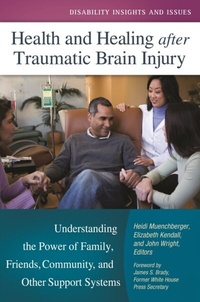
Health and Healing after Traumatic Brain Injury
Understanding the Power of Family, Friends, Community, and Other Support Systems
1. Auflage
Erschienen am 9. Mai 2013
280 Seiten
978-1-4408-2887-4 (ISBN)
Beschreibung
In this groundbreaking book, experts show what a difference support systems-family, friends, community and social programs-can make towards the recovery of the millions of people who suffer a traumatic brain injury each year.
Health and Healing after Traumatic Brain Injury: Understanding the Power of Family, Friends, Community, and Other Support Systems stresses the importance of an integrated and systems approach to healing. This book offers a unique combination of practitioner perspectives on what works for individual patients, consumer stories and learned insights over time, as well as researcher insights from innovative programs. It provides a holistic account of the important factors in living with a brain injury that will inform and benefit health practitioners and policy makers as well as people with brain injuries and their family members and friends.
The chapters explore the current best evidence and contemporary views on healing that draw on optimism, aspirational living, and meaningful partnerships. The authors focus on the emergent area of the salutogenic experience of injury-how brain injury changes and shapes lives in positive ways-and on the variables within individuals and their environments that provide a supportive influence in long-term healing.
Health and Healing after Traumatic Brain Injury: Understanding the Power of Family, Friends, Community, and Other Support Systems stresses the importance of an integrated and systems approach to healing. This book offers a unique combination of practitioner perspectives on what works for individual patients, consumer stories and learned insights over time, as well as researcher insights from innovative programs. It provides a holistic account of the important factors in living with a brain injury that will inform and benefit health practitioners and policy makers as well as people with brain injuries and their family members and friends.
The chapters explore the current best evidence and contemporary views on healing that draw on optimism, aspirational living, and meaningful partnerships. The authors focus on the emergent area of the salutogenic experience of injury-how brain injury changes and shapes lives in positive ways-and on the variables within individuals and their environments that provide a supportive influence in long-term healing.
Alle Preise
Weitere Details
Reihe
Auflage
1. Auflage
Sprache
Englisch
Verlagsort
USA
Verlagsgruppe
Bloomsbury Publishing Plc
Zielgruppe
Interest Age: From 7 to 17 years
ISBN-13
978-1-4408-2887-4 (9781440828874)
Copyright in bibliographic data and cover images is held by Nielsen Book Services Limited or by the publishers or by their respective licensors: all rights reserved.
Schweitzer Klassifikation
Weitere Ausgaben
Personen
Heidi Muenchberger, PhD, is associate professor of environmental psychology at Griffith Health Institute, Queensland, Australia.
Elizabeth Kendall, PhD, is professor of community health and rehabilitation at Griffith University, Queensland, Australia.
John Wright is a rural scientist who has lived with a brain injury for over 40 years and is a strong advocate for disability and wellbeing in the community.
Elizabeth Kendall, PhD, is professor of community health and rehabilitation at Griffith University, Queensland, Australia.
John Wright is a rural scientist who has lived with a brain injury for over 40 years and is a strong advocate for disability and wellbeing in the community.
Inhalt
Series Foreword
Catherine A. Marshall and Elizabeth Kendall, Series Editors
Foreword
James S. Brady
Acknowledgments
PART 1: SELF-DETERMINATION AND PERSONAL HEALING AFTER TRAUMATIC BRAIN INJURY
John Wright
Freedom
Erica Anderson
Chapter 1. Advice from the Heart: Stories of Survival and Growth following Brain Injury
Lisa Guttentag Lederer
Chapter 2. Neuroplasticity and Mindfulness in Brain Injury Rehabilitation: Cause for Great Optimism
Anita Chauvin, Michelle McIntyre, and Glyn Blackett
Chapter 3. The Subtlety of Brain Injury: Surviving and Thriving through Playfulness
Susan Wenberg
PART 2: PULLING TOGETHER RATHER THAN FALLING APART: BRAIN INJURY IN FAMILIES
Elizabeth Kendall
In Theory
Erica Anderson
Chapter 4. Family Resilience and Traumatic Brain Injury
Michelle McIntyre and Elizabeth Kendall
Chapter 5. Someone to Care: Social Support after Brain Injury
Melissa Kendall
Chapter 6. Too Small for Your Boots! Understanding the Experience of Children when Family Members Acquire a Neurological Condition
Samantha Bursnall and Kenneth I. Pakenham
Chapter 7. Assisting Siblings When Their Brother or Sister Sustains Acquired Brain Injury
Samantha Bursnall
PART 3: SYSTEMS FOR HEALING: BUILDING A BETTER SERVICE SYSTEM FOR TRAUMATIC BRAIN INJURY
Heidi Muenchberger
Sewing
Erica Anderson
Chapter 8. Understanding Mental Health Outcomes following Traumatic Brain Injury
Maria Hennessy
Chapter 9. The Role of Psychotherapy in Rehabilitation after Traumatic Brain Injury
Rudi Coetzer
Chapter 10. Optimal Rehabilitation for Women Who Receive Traumatic Brain Injury following Intimate Partner Violence
Martha E. Banks
Chapter 11. Holistic Neuropsychological Rehabilitation after Traumatic Brain Injury: Two Case Studies
Barbara A. Wilson, Fiona Ashworth, and Jill Winegardner
PART 4: PLACES, COMMUNITIES, AND CULTURES: DRAWING ON THE STRENGTH OF MANY
Heidi Muenchberger
Stand
Erica Anderson
Chapter 12. "There's No Place Like Home": The Experience of Home for Young People with Acquired Brain Injury in Residential Care Environments
Hayley Danielle Quinn
Chapter 13. The International Community-based Rehabilitation Model: A Way of Assisting People with Brain Injuries, Their Families, and Communities
Pim Kuipers, Susan Gauld, Melissa Kendall, Sharon Smith, and Russell Bowen
Chapter 14. Culture, Disability, and Caregiving for People with Traumatic Brain Injury
Paul Leung
Chapter 15. Community Leaders within a Brain Injury Self-management Program: A Valuable Resource
Heidi Muenchberger, Areti Kennedy, and Elizabeth Kendall
A Last Word: Charting a Positive Course for the Future
Elizabeth Kendall
Index
About the Editors and Contributors
Catherine A. Marshall and Elizabeth Kendall, Series Editors
Foreword
James S. Brady
Acknowledgments
PART 1: SELF-DETERMINATION AND PERSONAL HEALING AFTER TRAUMATIC BRAIN INJURY
John Wright
Freedom
Erica Anderson
Chapter 1. Advice from the Heart: Stories of Survival and Growth following Brain Injury
Lisa Guttentag Lederer
Chapter 2. Neuroplasticity and Mindfulness in Brain Injury Rehabilitation: Cause for Great Optimism
Anita Chauvin, Michelle McIntyre, and Glyn Blackett
Chapter 3. The Subtlety of Brain Injury: Surviving and Thriving through Playfulness
Susan Wenberg
PART 2: PULLING TOGETHER RATHER THAN FALLING APART: BRAIN INJURY IN FAMILIES
Elizabeth Kendall
In Theory
Erica Anderson
Chapter 4. Family Resilience and Traumatic Brain Injury
Michelle McIntyre and Elizabeth Kendall
Chapter 5. Someone to Care: Social Support after Brain Injury
Melissa Kendall
Chapter 6. Too Small for Your Boots! Understanding the Experience of Children when Family Members Acquire a Neurological Condition
Samantha Bursnall and Kenneth I. Pakenham
Chapter 7. Assisting Siblings When Their Brother or Sister Sustains Acquired Brain Injury
Samantha Bursnall
PART 3: SYSTEMS FOR HEALING: BUILDING A BETTER SERVICE SYSTEM FOR TRAUMATIC BRAIN INJURY
Heidi Muenchberger
Sewing
Erica Anderson
Chapter 8. Understanding Mental Health Outcomes following Traumatic Brain Injury
Maria Hennessy
Chapter 9. The Role of Psychotherapy in Rehabilitation after Traumatic Brain Injury
Rudi Coetzer
Chapter 10. Optimal Rehabilitation for Women Who Receive Traumatic Brain Injury following Intimate Partner Violence
Martha E. Banks
Chapter 11. Holistic Neuropsychological Rehabilitation after Traumatic Brain Injury: Two Case Studies
Barbara A. Wilson, Fiona Ashworth, and Jill Winegardner
PART 4: PLACES, COMMUNITIES, AND CULTURES: DRAWING ON THE STRENGTH OF MANY
Heidi Muenchberger
Stand
Erica Anderson
Chapter 12. "There's No Place Like Home": The Experience of Home for Young People with Acquired Brain Injury in Residential Care Environments
Hayley Danielle Quinn
Chapter 13. The International Community-based Rehabilitation Model: A Way of Assisting People with Brain Injuries, Their Families, and Communities
Pim Kuipers, Susan Gauld, Melissa Kendall, Sharon Smith, and Russell Bowen
Chapter 14. Culture, Disability, and Caregiving for People with Traumatic Brain Injury
Paul Leung
Chapter 15. Community Leaders within a Brain Injury Self-management Program: A Valuable Resource
Heidi Muenchberger, Areti Kennedy, and Elizabeth Kendall
A Last Word: Charting a Positive Course for the Future
Elizabeth Kendall
Index
About the Editors and Contributors
