

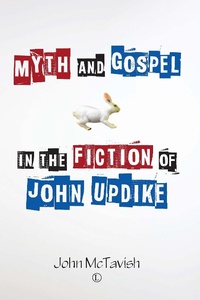
Myth and Gospel in the Fiction of John Updike
Erschienen am 25. Oktober 2018
201 Seiten
978-0-7188-4764-7 (ISBN)
Beschreibung
Big on style, slight on substance: that has been a common charge over the years by critics of John Updike. In fact, however, John Updike is one of the most serious writers of modern times. Myth, as Myth and Gospel in the Fiction of John Updike shows, unlocks his fictional universe and repeatedly breaks open the powerful themes in his literary parables of the gospel. This book also includes a personal tribute to John Updike by his son David, essays by pioneer Updike scholars Alice and Kenneth Hamilton, and an anecdotal chapter in which readers share Updike discoveries and recommendations. All in all, weight is added to the complaint that the master of myth and gospel was shortchanged by the Nobel committee.
Rezensionen / Stimmen
'John Updike had better eyes than ours. He memorably noticed everyday details that, without him, we'd miss. McTavish returns the favor, uncovering surprising mythic riches beneath Updike's deceptively mundane surfaces. Deploying wit, theological insight ('Elizanne' echoes 'eleison'), lively links with Ayckbourn, Hawthorne and more, generous inclusion of others' views, gossipy encounters with Updike's family and the iconic writer himself, in blessedly jargon-free prose, McTavish's close reading of Updike is an eye-opener all the way.'- Bruce McLeod, Retired parish minister and former Moderator of The United Church of Canada
'John Updike was an American treasure. In the second half of the twentieth century, Updike and Saul Bellow inherited the mantle of 'literary giant' that William Faulkner and Ernest Hemingway wore in the first half. A master of the elegantly lyrical sentence and the precisely observed detail, Updike used these gifts to probe the yearnings, both spiritual and mundane, of ordinary Americans. John McTavish is an ideal reader of Updike's explorations of the complex relationship between the sacred and the profane.'
- Don Greiner, Curator of Modern American Literature, University of South Carolina; author, The Other John Updike: Poems, Short Stories, Prose, Play
'John McTavish's book is a result of the long time reading of Updike's works from a specific perspective--their relation to myth and Christianity. The structure of the book is mosaic-like as it also contains works of some other authors on Updike, which makes the discussion dynamic. I recommend this book warmly to all readers interested in Updike, because it will help them understand the profound religious and philosophical dilemmas that permeate his oeuvre.'
- Biljana Dojcinovic, Faculty of Philology, University of Belgrade
'This book bears witness to a half-century of engagement with a writer called 'one of the few literary links with the historic Christian faith.' In addition to his own insightful commentary on the mythic and theological dimensions of Updike's work, McTavish garners ephemeral reviews, pays homage to the pioneering scholarship of Alice and Kenneth Hamilton, indexes stories where 'the mix of myth and gospel is particularly thick,' and offers a provocative collection of reminiscences by a range of Updike's readers. A testimony to Updike's continuing significance - and to the vitality of his reputation both within and outside the academy.'
- Kathleen Verduin, Professor of English, Hope College
'I will read my father more closely now that John McTavish has shone a light on the delicate and deep tensions present as Updike's characters grapple with the complexities of being fully human. Do our physical urges diminish our spiritual yearnings, or do they uphold each other? Mr. McTavish reveals the soul of Updike's work and the spirit of a twentieth-century American writer engaged with conflicting and life-affirming truths.'
- Elizabeth Cobblah
Weitere Details
Sprache
Englisch
Verlagsort
Cambridge
Großbritannien
Verlagsgruppe
James Clarke & Co Ltd
Dateigröße
6,51 MB
ISBN-13
978-0-7188-4764-7 (9780718847647)
Copyright in bibliographic data and cover images is held by Nielsen Book Services Limited or by the publishers or by their respective licensors: all rights reserved.
Schweitzer Klassifikation
Weitere Ausgaben
Person
John McTavish is a minister of the United Church of Canada, a playwright, and compiler of chancel dramas, co-editor of the book Karl Barth: Preaching through the Christian Year, and a longtime student of John Updike's work with interpretative articles in academic journals ('Touchstone', 'Theology Today') and denominational magazines ('The United Church Observer', 'The Presbyterian Record'). McTavish lives in Huntsville, Ontario.
Inhalt
Foreword
Introduction: David Updike's 'Tribute to Dad'
Myth and Gospel in John Updike's Early Fiction
1. Myth and the Problem of Nothingness in The Witches of Eastwick
2. Myth, Gospel, and The Centaur
3. Barthian Myths in Three Early Novels
4. The Myth of Eros in Marry Me
Interlude with the Hamiltons
5. Can a Novel Be Christian? John Updike and A Month of Sundays
6. John Updike's Prescription for Survival
Myth and Gospel in John Updike's Later Fiction
7. Updike's Rabbit Tetralogy and Ayckbourn's Norman Conquests Trilogy
8. A Potpourri of Reviews
Myth and Gospel in John's Updike's Poetry and Short Stories
9. Myth and Gospel in Updike's Religious Poetry
10. Myth and Gospel in Updike's Short Stories
Meeting John Updike in Print and in Person
11. Readers Share Discoveries and Recommendations
12. An Interview with John Updike
13. John Updike, 1932-2009
Afterword
Acknowledgments
Selected Bibliography
Introduction: David Updike's 'Tribute to Dad'
Myth and Gospel in John Updike's Early Fiction
1. Myth and the Problem of Nothingness in The Witches of Eastwick
2. Myth, Gospel, and The Centaur
3. Barthian Myths in Three Early Novels
4. The Myth of Eros in Marry Me
Interlude with the Hamiltons
5. Can a Novel Be Christian? John Updike and A Month of Sundays
6. John Updike's Prescription for Survival
Myth and Gospel in John Updike's Later Fiction
7. Updike's Rabbit Tetralogy and Ayckbourn's Norman Conquests Trilogy
8. A Potpourri of Reviews
Myth and Gospel in John's Updike's Poetry and Short Stories
9. Myth and Gospel in Updike's Religious Poetry
10. Myth and Gospel in Updike's Short Stories
Meeting John Updike in Print and in Person
11. Readers Share Discoveries and Recommendations
12. An Interview with John Updike
13. John Updike, 1932-2009
Afterword
Acknowledgments
Selected Bibliography
