

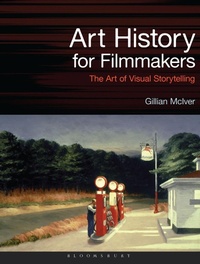
Art History for Filmmakers
The Art of Visual Storytelling
1. Auflage
Erschienen am 10. März 2016
256 Seiten
978-1-4725-8066-5 (ISBN)
Beschreibung
Since cinema's earliest days, literary adaptation has provided the movies with stories; and so we use literary terms like metaphor, metonymy and synecdoche to describe visual things. But there is another way of looking at film, and that is through its relationship with the visual arts - mainly painting, the oldest of the art forms.
Art History for Filmmakers is an inspiring guide to how images from art can be used by filmmakers to establish period detail, and to teach composition, color theory and lighting. The book looks at the key moments in the development of the Western painting, and how these became part of the Western visual culture from which cinema emerges, before exploring how paintings can be representative of different genres, such as horror, sex, violence, realism and fantasy, and how the images in these paintings connect with cinema.
Insightful case studies explore the links between art and cinema through the work of seven high-profile filmmakers, including Peter Greenaway, Peter Webber, Jack Cardiff, Martin Scorsese, Guillermo del Toro, Quentin Tarantino and Stan Douglas. A range of practical exercises are included in the text, which can be carried out singly or in small teams.
Featuring stunning full-color images, Art History for Filmmakers provides budding filmmakers with a practical guide to how images from art can help to develop their understanding of the visual language of film.
Weitere Details
Reihe
Auflage
1. Auflage
Sprache
Englisch
Verlagsort
London
Großbritannien
Verlagsgruppe
Bloomsbury Publishing PLC
Zielgruppe
Für höhere Schule und Studium
Illustrationen
200 colour illus
Dateigröße
16,05 MB
ISBN-13
978-1-4725-8066-5 (9781472580665)
Copyright in bibliographic data and cover images is held by Nielsen Book Services Limited or by the publishers or by their respective licensors: all rights reserved.
Schweitzer Klassifikation
Weitere Ausgaben
Person
Gillian McIver studied History at the University of Toronto, Canada and completed a PhD in Art History and Cinema at the University of Roehampton, UK. She makes films, curates exhibitions and screenings, and ran a gallery in East London. She has lectured at Central St Martins, The National Film and Television School, and the University for the Creative Arts, UK. She is the author of Art History for Filmmakers (Bloomsbury 2016).
Inhalt
Introduction
What is art history and how does it relate to cinema history?; How is art history useful for filmmakers?; Painting as a record of what the past looked like in the imagination of artists; Painting and the use of visual language; A brief linear (traditional) history of art; Towards an "alternative" history of art
Chapter 1: Visual Culture and Storytelling
Narrative and storytelling in art; Narrative in painting and cinema; Case study: William Hogarth's The Rake's Progress,and Darren Aronofsky's Requiem for a Dream; Exercise; Discussion questions
Chapter 2: Creating the Visual - Perspective, Colour and Lighting
A brief history of perspective; Colour theory and colour psychology; How to use light; Case Study: Rembrandt, and Peter Greenaway's The Cook, the Thief, His Wife and Her Lover and Nightwatching; Exercise; Discussion questions
Chapter 3: Realism in Visual Art
Realism; What is representation?; Art after photography: Modern conceptions of realism in art; Case study: Johannes Vermeer, and Peter Webber's The Girl with the Pearl Earring (DoP Eduardo Serra); Exercise; Discussion questions
Chapter 4: Beyond Realism
Fantasy worlds in cinema and art; Oneiric: The world of dreams; Surrealism; Going beyond the real; Case study: Jack Cardiff (DoP) and A Matter of Life and Death (dir. Michael Powell and Emeric Pressburger); Exercise; Discussion questions
Chapter 5: Sex and Violence
Sex; Violence; Case study: Caravaggio, and Martin Scorsese's Taxi Driver ; Exercise; Discussion questions
Chapter 6: Horror
From dream to nightmare; Monsters; Case study: Francisco Goya, and Guillermo del Toro's Pan's Labyrinth and Pacific Rim; Exercise; Discussion questions
Chapter 7: Landscape
What is landscape painting?; The Western; Case study: Albert Beirstadt, Andrew Wyeth, and Ed Harris's Appaloosa. Exercise; Discussion questions
Chapter 8: History and Heroism
History painting: Victory, virtue, and the hero; Case study: Quentin Tarantino's Diango Unchained and Gainsborough's Blue Boy; Exercise; Discussion questions
Chapter 9: Modern Movements
Expressionism; Minimalism; Beyond Western culture; Case study: Katsushika Hokusai and Disney; Cinema as contemporary art; Exercise; Discussion questions
Chapter 10: Conclusion - Using art history in film-making
Film-making roles and art; Case study: Terrence Malick, Nestor Almendros and Andrew Wyeth (Days of Heaven); Case study: Conrad Hall, Sam Mendes and Edward Hopper (Road to Perdition); Case study: Wally Pfister, Christopher Nolan and MC Escher (Inception)
What is art history and how does it relate to cinema history?; How is art history useful for filmmakers?; Painting as a record of what the past looked like in the imagination of artists; Painting and the use of visual language; A brief linear (traditional) history of art; Towards an "alternative" history of art
Chapter 1: Visual Culture and Storytelling
Narrative and storytelling in art; Narrative in painting and cinema; Case study: William Hogarth's The Rake's Progress,and Darren Aronofsky's Requiem for a Dream; Exercise; Discussion questions
Chapter 2: Creating the Visual - Perspective, Colour and Lighting
A brief history of perspective; Colour theory and colour psychology; How to use light; Case Study: Rembrandt, and Peter Greenaway's The Cook, the Thief, His Wife and Her Lover and Nightwatching; Exercise; Discussion questions
Chapter 3: Realism in Visual Art
Realism; What is representation?; Art after photography: Modern conceptions of realism in art; Case study: Johannes Vermeer, and Peter Webber's The Girl with the Pearl Earring (DoP Eduardo Serra); Exercise; Discussion questions
Chapter 4: Beyond Realism
Fantasy worlds in cinema and art; Oneiric: The world of dreams; Surrealism; Going beyond the real; Case study: Jack Cardiff (DoP) and A Matter of Life and Death (dir. Michael Powell and Emeric Pressburger); Exercise; Discussion questions
Chapter 5: Sex and Violence
Sex; Violence; Case study: Caravaggio, and Martin Scorsese's Taxi Driver ; Exercise; Discussion questions
Chapter 6: Horror
From dream to nightmare; Monsters; Case study: Francisco Goya, and Guillermo del Toro's Pan's Labyrinth and Pacific Rim; Exercise; Discussion questions
Chapter 7: Landscape
What is landscape painting?; The Western; Case study: Albert Beirstadt, Andrew Wyeth, and Ed Harris's Appaloosa. Exercise; Discussion questions
Chapter 8: History and Heroism
History painting: Victory, virtue, and the hero; Case study: Quentin Tarantino's Diango Unchained and Gainsborough's Blue Boy; Exercise; Discussion questions
Chapter 9: Modern Movements
Expressionism; Minimalism; Beyond Western culture; Case study: Katsushika Hokusai and Disney; Cinema as contemporary art; Exercise; Discussion questions
Chapter 10: Conclusion - Using art history in film-making
Film-making roles and art; Case study: Terrence Malick, Nestor Almendros and Andrew Wyeth (Days of Heaven); Case study: Conrad Hall, Sam Mendes and Edward Hopper (Road to Perdition); Case study: Wally Pfister, Christopher Nolan and MC Escher (Inception)
