

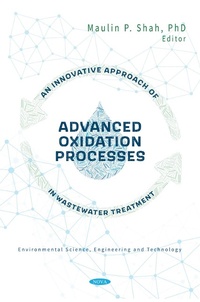
Innovative Approach of Advanced Oxidation Processes in Wastewater Treatment
Erschienen am 15. November 2021
319 Seiten
978-1-68507-343-5 (ISBN)
Beschreibung

In recent decades, scientific insight into the chemistry of water has increased enormously, leading to the development of advanced wastewater and water purification technologies. However, the quality of freshwater resources has continually deteriorated worldwide, both in industrialized countries and in developing countries. Although traditional wastewater technologies are focused on the removal of suspended solids, nutrients and bacteria, hundreds of organic pollutants occur in wastewater and affected urban surface waters. These new pollutants are synthetic or naturally occurring chemicals that are not often monitored in the environment but have the potential to penetrate the environment and cause known or suspected adverse ecological and/or human health effects. These contaminants are collectively referred to as the "Emerging Contaminants" and are mostly derived from domestic use and occur in trace concentrations ranging from pico to micrograms per litre. Environmental contaminants are recalcitrant for conventional wastewater treatment processes and most of them remain unaffected, leading to the contamination of receiving water. This scenario leads to the need for an advanced wastewater treatment process that can remove environmental contaminants to safely monitor fresh water sources. This book explains the technologies of biological and chemical wastewater treatment processes. The biological wastewater treatment processes presented include: (1) bioremediation of wastewater that includes aerobic treatment (oxidation ponds, aerating lagoons, aerobic bioreactors, active sludge, percolation or drip filters, biological filters, rotating biological contactors, biological removal of nutrients) and anaerobic treatment (anaerobic bioreactors), anaerobic lagoons); (2) phytoremediation of waste water consisting of engineered wetlands, rhizofiltration, rhizodegradation, phytodegradation, phytoaccumulation, Phyto transformation and hyperaccumulators; and (3) mycoremediation of wastewater. The chemical wastewater treatment processes discussed include chemical precipitation (coagulation, flocculation), ion exchange, neutralization, adsorption, and disinfection (chlorination / dechlorination, ozone, UV light). In addition, this chapter explains the wastewater treatment plants and illustrates them in terms of plant size, plant layout, and plant design and installation location.
Weitere Details
Weitere Ausgaben
Andere Ausgaben
Buch
12/2021
Nova Science Publishers Inc
302,21 €
Versand in 15-20 Tagen
Inhalt
- Intro
- Contents
- Preface
- Chapter 1
- Persistent Organic Pollutants: An Environmental Menace
- Abstract
- Introduction
- Bioaccumulation of POPS
- Microplastics and Persistent Organic Pollutants
- Dioxins
- Aldrin
- Chlordane
- DDT
- Dieldrin
- Endrin
- Heptachlor
- Hexachlorobenzene (HCB)
- Mirex
- Toxaphene
- Polychlorinated Biphenyls (PCB)
- Polychlorinated Dibenzo-p-Dioxins (PCDD)
- Polychlorinated Dibenzofurans (PCDF)
- Endocrine Disrupting Chemicals and Direct as WellIndirect Implications
- Reproductive System- GestationalWeight Gain and Newborns Head Circumference
- Additive and SynergisticEffects
- POPs in Environments: Indoor and Outdoor and Control Measures
- Principles for the Safety Assessment of Food Additives and Contaminants in Food
- Conclusion
- Acknowledgments
- References
- Chapter 2
- Removal of Emerging Contaminants Present in Wastewater by Using Advanced Oxidation Processes
- Abstract
- Introduction
- Photolysis
- Electrochemical AOPs
- Anodic Oxidation
- Indirect Oxidation
- Sonochemical Based AOPs
- Heterogeneous Photocatalysis
- Ozone Based AOPs
- Fenton based AOPs
- Factors Affecting the Efficiency of Advanced Oxidation Processes
- Effects of Target Pollutant Concentration
- Effect of Catalyst Concentration
- Effect of Irradiation Intensity
- Effect of pH
- Effect of H2O2 Concentrations
- Effect of Different Ions and Natural Organic Matter
- Challenges and Control Strategies AOPs
- Conclusion and Future Scope
- Acknowledgments
- References
- Chapter 3
- Nanoremediation of Industrial Heavy Metal Effluents Using Carbon Nanomaterials as Superb Nanoadsorbents
- Abstract
- Abbreviations
- Introduction
- Conventional Techniques Used for Removal of Heavy Metal Ions
- Concepts and Theories of Adsorption
- Nanotechnology: An Ocean of Advanced Applications
- Nanoremediation of Heavy Metals Using Carbon-based Nanomaterials
- Carbon Nanotubes
- Graphene-Based Nanoadsorbents
- Conclusion
- References
- Chapter 4
- Emerging Pollutants: Occurrence, Fate, Toxicological Impacts and Removal Technologies
- Abstract
- Introduction
- Types and Sources of Contaminants
- Toxicity of Emerging Contaminants to the Environment
- Extraction and Analysis of Contaminants
- Steps for Analytical Analysis of Emerging Pollutants
- Centrifugation of Wastewater
- Clean Up
- Quantification
- Mechanisms Involved in Degradation of Emerging Contaminants
- Technologies for Treatment and Removal of Emerging Contaminants
- Conventional Treatment Methods
- Conventional Activated Sludge Process
- Advanced Treatment
- Membrane Technologies
- Nanofiltration and Reverse Osmosis
- Membrane Bioreactor
- Constructed Wetland
- Adsorption
- Activated Carbon as Adsorbent
- Graphene-Based Adsorption
- Carbon Nanotubes as Adsorbent
- Advanced Oxidation Process
- Ultraviolet Irradiation
- Ultra Sonication
- Fenton Process
- Ozonation
- Comparison of Various Techniques Used for Removal of Emerging Contaminants
- Conclusion
- References
- Chapter 5
- Nanotechnological Interventions to Tackle Heavy Metal Pollution
- Abstract
- Introduction
- Metallic Nanoparticles for Heavy Metal Removal
- Iron Nanoparticles for Heavy Metal Removal
- Carbon Based Nanomaterials for Heavy Metal Removal
- Conclusion
- References
- Chapter 6
- Bioremediation: A Novel Way to Deal with Petroleum Sludge for Sustainable Environment
- Abstract
- Introduction
- Classification of Refinery Sludge
- Source of Oily Sludge
- Composition of Oily Sludge
- Sustainable Waste Management
- Oil Recovery from Petroleum Sludge
- Solvent Extraction
- Centrifugation Treatment
- Surfactant Enhanced Oil Recovery (EOR)
- Freezing and Thawing Treatment
- Sludge Pyrolysis
- Microwave Irradiation
- Ultrasonic Irradiation
- Electro-Kinetic Method
- Froth Flotation
- Petroleum Sludge Disposal Methods
- Incineration
- Stabilization/Solidification
- Oxidation Treatment
- Bioremediation
- Bioremediation Technologies Can Be Generally Classified as in Situ or Ex-Situ
- In Situ Bioremediation
- Bioventing
- Biosparging
- Ex Situ Bioremediation
- Land Cultivating
- Bio-Heaps/Reusing
- Bio-Slurry Treatment
- Process of Microbial Degradation of Petroleum Hydrocarbon
- Microorganism Corruption of Aliphatic Mixtures
- Microorganism Debasement of Fragrant Mixtures
- Plant - Micro Organism Interactions for the Management of Contaminated Soil from Crude Oil
- Conclusion
- References
- Chapter 7
- Advanced Oxidation Process in Waste Water Reuse
- Abstract
- Introduction
- Advanced Oxidation Technology
- Working with Hydroxyl Radical in Advanced Oxidation Processes
- Types of Advanced Oxidation Processes
- Photolysis
- Direct Photolysis
- Indirect Photolysis
- Pros and Cons of Photolysis
- Ozone Based AOPs
- Ozonation
- Pros and Cons of Ozonation
- Ozone/UV System
- Ozone/Hydrogen Peroxide System
- Ozone /Hydrogen Peroxide/UV System
- Hydrogen Peroxide Based AOPs
- UV/H2O2 System
- Fe2+/H2O2 System (Fenton Reagent)
- Fe3+/H2O2 System (Fenton like Reagent)
- Fe2+/H2O2/UV System (Photo-Fenton)
- Heterogeneous Photocatalysis with TiO2
- Titanium Dioxide/UV Systems
- The TiO2/H2O2/UV System
- Sonochemical Advanced Oxidation Processes
- Electro-Oxidative Advanced Oxidation Processes
- Commercialization/Economic Take of Advanced Oxidation Technology
- Advantages and Limitation
- Future Prospectives and Conclusion
- References
- Chapter 8
- Photocatalysis as Advanced Oxidation Processes for Wastewater Treatment
- Abstract
- Introduction
- Photocatalytic Mechanism of Semiconductors
- Oxidation and Reduction Reaction Mechanism
- Steps in the Water Purification Process
- Classification of Nano-Based Photocatalyst
- Application of Photocatalysis in Water Treatment
- Factors Influencing the Photocatalysis Process
- Solution pH
- The Initial Concentration of Pollutant
- Photocatalyst Dosage
- Reaction Temperature
- Intensity of Light
- The Separation Rate of Electron-Hole Pair
- Photocatalyst Structure
- Emerging Hybrid Photocatalytic Process
- Conclusion
- References
- Chapter 9
- Role of Fungal and Plant Systems in Wastewater Treatment: Mechanisms and Applications
- Abstract
- Introduction
- Plant and Fungal Species for the Treatment of Wastewater
- Removal Mechanism of Heavy Metal by Fungal and Plant Species
- Fungal Mechanism of Metal Uptake
- Metal Interactions Extracellularly
- Chelation of Metals by Organic Acids
- Metal Chelation by Cell Wall Components of Fungus and Exopolymers
- Transportation of Metal Ions inside the Cell
- Carrier Proteins
- Channel Proteins
- Intracellular Metal Complex Formation
- Metallothioneins
- Phytochelatins
- Antioxidant Production
- Molecular Chaperones
- Plant Metal Removal and Mechanism
- Conclusion
- References
- Chapter 10
- Insights into a Novel Technology of Limestone-Sawdust-Bacteria and Nano TiO2 for Treatment of Acid Mine Drainage
- Abstract
- Introduction
- Source of Acid Mine Drainage
- AMD Treatment Methods
- Objectives of the Study
- Materials and Methods
- Experimental System
- Analytical Methods
- Results and Discussions
- System Operation
- pH Variation
- Fe, Mn, Zn Removal
- Nitrite, Nitrate and Ammonium Removal
- COD Removal
- Conclusion
- Acknowledgments
- References
- Chapter 11
- Different Approaches for Bioremediation of Harmful Pollutants
- Abstract
- Introduction
- Bioremediation of Metals and Heavy Metals
- Phytoremediation of Radionuclide Contaminants
- Nitrate Pollution and its Remediation
- Bioremediation of Petroleum Sludge
- Bioremediation of Polycyclic Aromatic Hydrocarbons
- Conclusion
- References
- Chapter 12
- Nitrate Problems and Its Remediation
- Abstract
- Introduction
- Nitrogen Cycle
- Nitrate Pollution in Water
- Mechanism of Nitrate Pollution in the Groundwater
- Leaching Mechanism
- Point Source Mechanism
- Impact of Agriculture on Groundwater
- Major Sources of Nitrate Pollution
- Remediation (Physical, Chemical, Biological Based Techniques for Removal)
- Reverse Osmosis for Denitrification
- Ion Exchange Process
- Denitrification Using a Membrane Bioreactor
- Biochemical Mechanism
- Biological Denitrification
- Chemical Reduction
- Adsorption
- Anaerobic Ammonium Oxidation Process
- Nitrate Removal from Water with the Help of Bacteria
- Nitrate Pollution in Soil
- References
- Chapter 13
- Emerging Contaminants
- Abstract
- Introduction
- Sources of Contaminating Compounds in Surface Water
- Emerging Contaminants
- Endocrine Disrupting Compounds
- Pharmaceuticals
- Illicit Drugs, Non-Controlled Drugs, and Sweeteners
- Personal Care Products
- Nanoparticles
- Flame Retardants
- Per Fluorinated Compounds
- Organic Solvents MTBE and ETBE
- Complexing Agents
- Pesticides
- Health Risks Related to ECs
- Exposure Assessment
- Risk Assessment
- Dealing with Emerging Contaminants in Drinking Water Sources
- The Role of Governments
- The Position of Drinking Water Companies
- Treatment Technologies
- Conclusion
- References
- Chapter 14
- Bioremediation of Soils Polluted with Hexavalent Chromium Using Bacteria
- Abstract
- Introduction
- An Overview of Bioremediation
- Methods of Bioremediation
- Types of Bioremediation
- Methods of In-Situ Bioremediation
- Advantages (In-Situ Bioremediation)
- Disadvantages (In-Situ Bioremediation)
- Methods of Ex-Situ Bioremediation
- Advantages of Ex-Situ Boiredemeation
- Disadvantages of Ex-Situ Boiredemeation
- Advanced Technologlies Used for Bioremediation of Soil
- Imobilization
- Adsorption
- Bioleaching
- Biosorption
- Biosorption
- Biofiltration
- Biotransformation
- Bioprecipitation and Biocrystallization
- Bioaccumulation
- Ion Exchange
- Permeable Reactive Biobarrier (PRB)
- Membrane Separation
- Genetically Engineered Microorganisms
- An Overview of Hexavalent Chromium in Soil
- Factors Causing Soil Pollution with Hexavalent Chromium
- pH
- Temperature
- Oxygen Availability
- Nutrient Availability
- Moisture
- Chemical Manufacturing
- Dye Industry
- Industrial Estates
- Advanced Oxidation Process
- Oxidation Process
- Advanced Oxidation/Reduction Process
- Fenton Process
- Photo-Fenton Process
- Electro-Fenton Process
- Photocatalyst Immobilization
- Photocatalysis
- Plasma Oxidation and Ozonation
- Advantages and Drawbacks of Advanced Oxidation Process
- Advantages of Advanced Oxidation Process
- Drawbacks of Advanced Oxidation Process
- Application of Bacteria in Bioremediation of Soil Polluted with Cr(Vi)
- The Mechanism of Hexavalent Chromium Resistant Species
- Efflux Mechanism
- Reduction Mechanism in Hexavalent Chromium Resistant Species
- Direct Cr(VI) Reduction
- Aerobic Cr(VI) Reduction
- Anaerobic Cr(VI) Reduction
- Indirect Cr(VI) Reduction via Iron and Sulfate-Reducing Bacteria
- Membrane-Bound Cr6 Reduction
- Intracellur Cr(VI) Reduction
- Extracellular Cr(Vi) Reduction
- Strategies Used in Bioremediation of Soil
- Application of Bacteria in Bioremediation of
- Chromite Mining Soil
- Industrial Waste Soil
- Challenges in Bioremediation Mediated by Bacteria
- Conclusion
- References
- Index
- Blank Page
