


Gender, Communications, and Reproductive Health in International Development
1. Auflage
Erschienen am 15. Juni 2023
329 Seiten
978-0-2280-1809-4 (ISBN)
Beschreibung

To this day, women globally are subjected to forms of control over their bodies, and their ability to exercise their reproductive rights in particular is still constrained. Amid a rise of challenges to the advancement of women's rights, including the recent overturning of Roe v. Wade in the United States, sexual and reproductive health rights are at the forefront of conversations about the advancement of gender equality.
To determine how communications are used strategically to shape policy, Carolina Matos explores fifty-two feminist and health NGOs from across the world and how they are improving discourse on sexuality and reproductive health in the public sphere. She investigates how these organizations are making use of communications amid various contemporary challenges, including the proliferation of misinformation about women's rights and health in the public sphere due to the actions of oppositional far-right nationalist groups. Through original in-depth interviews within the NGOs and empirical research of the institutions' online presences, Matos unpacks the complexities of the relationship between women's health, communications, and development, contributing to the fields of development, health communications, and gender studies, and advancing the debate on the role of feminist NGOs in advocating for women's rights.
With a postcolonial critique of the role of NGOs in development, Matos illuminates the strategic use of communications in the mediation and advocacy of gender equality and reproductive health.
To determine how communications are used strategically to shape policy, Carolina Matos explores fifty-two feminist and health NGOs from across the world and how they are improving discourse on sexuality and reproductive health in the public sphere. She investigates how these organizations are making use of communications amid various contemporary challenges, including the proliferation of misinformation about women's rights and health in the public sphere due to the actions of oppositional far-right nationalist groups. Through original in-depth interviews within the NGOs and empirical research of the institutions' online presences, Matos unpacks the complexities of the relationship between women's health, communications, and development, contributing to the fields of development, health communications, and gender studies, and advancing the debate on the role of feminist NGOs in advocating for women's rights.
With a postcolonial critique of the role of NGOs in development, Matos illuminates the strategic use of communications in the mediation and advocacy of gender equality and reproductive health.
Rezensionen / Stimmen
"This book makes an important contribution to a range of areas, bringing together debates across gender and development, feminist theory and praxis in development, communication and media analysis, international development, sexual and reproductive health rights, and social justice. I strongly recommend this book for students, scholars and practitioners interested in the field." Suzanne Clisby, Coventry University "This fascinating work combines intellectual traditions, with practical examples and critical empirical approaches. It is the first book, in a long time, that provides both a theoretical and empirical critique from a feminist perspective, of the field of communication for development. Carolina Matos exposes, using a range of research methods including critical discourse analysis, the problems, difficulties and challenges of the practices that characterise the work of NGOs, especially when they work towards the 'emancipation of women'." Linje Manyozo, RMIT UniversityWeitere Details
Reihe
Sprache
Englisch
Verlagsort
Montreal, QC
Kanada
Zielgruppe
Für Beruf und Forschung
Editions-Typ
Digitale Ausgabe
Illustrationen
8 figures, 1 table
8 figures, 1 table
Dateigröße
12,13 MB
ISBN-13
978-0-2280-1809-4 (9780228018094)
Copyright in bibliographic data and cover images is held by Nielsen Book Services Limited or by the publishers or by their respective licensors: all rights reserved.
Schweitzer Klassifikation
Weitere Ausgaben
Andere Ausgaben
Buch
06/2023
McGill-Queen's University Press
166,31 €
Artikel z.Zt. nicht lieferbar
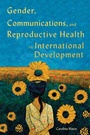
Buch
06/2023
McGill-Queen's University Press
37,50 €
Versand in 15-20 Tagen
Person
Carolina Matos is senior lecturer in the Department of Media, Culture and the Creative Industries at the City, University of London and visiting associate professor in the School of Communications at the University of Miami.
Inhalt
- Cover
- Copyright
- Contents
- Tables
- Acknowledgements
- Abbreviations
- Introduction
- 1 Gender, Communications, and Women's Reproductive Rights in International Development
- 2 Transnational Feminism, the 'Female Body', and Global Gender Justice
- 3 'Northern' and 'Southern' NGOs and Advocacy on 'Female Bodies' and Reproductive Health
- 4 Latin American Feminisms and the Struggle for Gender Equality and SRHR in Brazil and Beyond
- 5 Health Advocacy and Feminist Activism for SRHR in South Asia
- 6 Development Communications and Advocacy for Women's Health and Rights
- 7 Making Development Work for Women
- 8 NGOs, Advocacy Communications, and Feminist Digital Activism on Sexual and Reproductive Health and Rights
- 9 Content Analysis of Institutional Websites and NGO Communication Strategies
- 10 Deconstructing 'Gender Ideology' Myths and Digital Storytelling through Critical Discourse Analysis
- 11 The NGOs' Blog Posts and Digital Storytelling on SRHR
- 12 Social Media and Advocacy Communications from South Asian NGOs Working on Sexuality and Reproductive Health
- 13 Gender Development, Women's Reproductive Health, and Sexual Rightsin Challenging Times
- Appendices
- Appendix A List of Organisations
- Appendix B NGOs by Region
- Appendix C Budget Information for Twenty-Two NGOs
- Appendix D NGOs and Type of Communications (Sample)
- Appendix E Tables and References from the NGOs' Blogs
- Appendix F South Asian NGOs' Social Media Engagement Figures
- Notes
- References
- Index
