

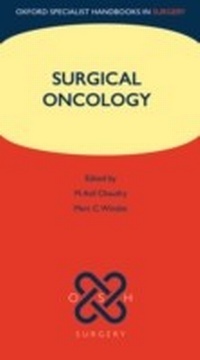
Surgical Oncology
1. Auflage
Erschienen am 23. Juli 2009
702 Seiten
978-0-19-157534-1 (ISBN)
Beschreibung

How should surgeons deal with cancer patients? The cornerstone of effective treatment is a multidisciplinary collaboration between many specialties in which surgeons are not only concerned about operative accessibility and technique but rather have a deep understanding of the fundamental biology of the malignancy they are dealing with and appreciate the reach of multi-modal treatment. This handbook is a practical reference for today's surgeons who actively manage cancer patients in both the acute and out-patient setting. It covers all the key areas, from initial presentation and diagnosis, investigation and staging, to active discussion in collaborative multidisciplinary cancer network meetings, operative management, post-operative care, and long term surveillance and palliation. Drawing together all the varied guidelines and source materials that form the basis of thiscomplex subject, it is the first surgical oncology text that provides instant access to detailed clinical algorithms and operative techniques covering the wide range of cancers that general surgeons encounter, from GI tract to breast and endocrine cancers. Consistently sourced from current evidence basedguidelines with a concise summary of underlying pathology and molecular biology, Surgical Oncology will enable the reader to knowledgably manage cancer patients from initial assessment to long term surveillance. It is an essential accompaniment for all higher surgical trainees from MRCS to the exit FRCS and EBSQ exams, and will be particularly useful for trainees rotating between surgical subspecialties, as well as having wide appeal to other members of the multidisciplinaryteam.
Weitere Details
Weitere Ausgaben
Andere Ausgaben
M. Asif Chaudry | Marc Christopher Winslet
Surgical Oncology
Buch
07/2009
Oxford University Press
58,63 €
Artikel ist vergriffen; siehe andere Ausgabe
Inhalt
- Intro
- Contents
- 1 Cancer radiology
- 1. Common imaging modalities
- Plain film 'X-rays' and barium studies
- Ultrasound
- Computed tomography
- Magnetic resonance imaging
- Positron emission tomography (PET) - CT
- Radionuclide imaging
- 2. Regional cancer imaging
- Head and neck cancer
- Thyroid cancer
- Breast cancer
- Oesophageal cancer
- Gastric cancer
- Primary tumours of liver and biliary tract
- Cancers of the pancreas
- Colon and rectal cancer
- Carcinoma of the anal region
- Renal cancer
- Adrenal malignancy
- Bladder cancer
- Prostate cancer
- Testicular cancer
- Neuroendocrine tumours
- Soft tissue sarcomas
- Skin cancers
- 3. Cancer and interventional radiology
- Fine needle aspiration cytology and percutaneous biopsy
- Radiotherapy planning
- Radionuclide therapy
- Central venous access for chemotherapy
- Vascular embolotherapy
- Tumour ablation
- Percutaneous drainage procedures
- Pain control
- Feeding techniques
- Oesophageal stenting
- Tracheobronchial stenting
- Malignant central venous obstruction
- Breast intervention
- 2 Breast cancer
- Breast cancer epidemiology, aetiology, and risk factors
- Familial breast cancer and genetics
- Pathology and biology of invasive breast cancer
- Breast screening
- Evaluation of breast cancer
- Investigations: cytology and histology
- Investigations: imaging
- Staging of breast cancer
- Prognostic factors
- Management of early breast cancer
- Surgical anatomy: breast and axilla
- Surgical anatomy: breast reconstruction
- Breast conserving surgery
- Mastectomy
- Reconstruction in breast conserving surgery
- Post-mastectomy reconstruction
- Systemic endocrine treatment
- Chemotherapy and other systemic therapy
- Adjuvant radiotherapy
- Post-treatment follow-up and surveillance
- Management of advanced breast cancer
- Non-invasive cancer: DCIS and LCIS
- Breast cancer: special conditions
- Other breast cancers and pathology
- Management of breast cancer risk
- Breast cancer: key trials and evidence base
- Organization of breast cancer care and medicolegal aspects
- 3 Thyroid and parathyroid tumours
- Thyroid cancer
- Neck lumps: differential and clinical evaluation
- Thyroid status
- Solitary/dominant nodule
- Differentiated thyroid cancer
- Medullary thyroid carcinoma and multiple endocrine neoplasia (MEN)
- Anaplastic carcinoma
- Rare thyroid tumours: lymphomas, SCC, and secondaries
- Indications for thyroid lobectomy and total thyroidectomy
- Pre-operative assessment: thyroidectomy
- Surgical anatomy of thyroids and parathyroids
- Operative technique: FNA thyroid lump
- Operative technique: total thyroidectomy
- Post-thryoidectomy: emergencies and complications
- Adjuvant treatment: radioiodine therapy and radiotherapy
- Surveillance and management of recurrence
- Parathyroid cancer: clinical evaluation and staging
- Management of deranged serum calcium
- Operative technique: parathyroidectomy/exploration
- Adjuvant therapy and recurrence
- 4 Oesophageal cancer
- Epidemiology, presentation, and clinical evaluation
- Barrett's oesophagus
- Adenocarcinoma
- Squamous cell carcinoma
- Staging classification
- Staging and pre-operative preparation
- Management algorithms
- Neo-adjuvant therapy
- Primary chemoradiotherapy
- Operative considerations
- Surgical anatomy of the oesophagus
- Operative technique: left thoracolaparotomy and subtotal oesophagectomy
- Operative technique: Ivor-Lewis oesophagectomy
- Operative technique: transhiatal oesophagectomy
- Operative technique: further techniques
- Laparoscopic oesophagectomy
- Operative technique: anastomosis
- Replacement conduits: stomach
- Replacement conduits: colon
- Replacement conduits: jejunum
- Post-operative care and complications
- Adjuvant therapy
- Follow-up and surveillance protocols
- Chemotherapy for metastatic disease
- Palliative therapy
- Oesophageal cancer and the future
- 5 Gastric cancer
- Epidemiology
- Pathology
- Clinical presentation
- Clinical evaluation and staging
- Neoadjuvant treatment
- Surgical anatomy of the stomach
- Surgical management
- Operative techniques: total gastrectomy with Roux-en-Y reconstruction
- Operative technique: subtotal gastrectomy
- Complications of gastric surgery
- Adjuvant chemoradiotherapy
- Chemotherapy for advanced or metastatic disease
- Palliation
- Surveillance
- 6 Liver and biliary cancers
- Clinical presentation and evaluation
- Primary liver cancers
- Staging
- Management: hepatic resection
- Management: liver transplantation
- Local ablative treatment
- Embolic therapies
- Liver metastases
- Surgical anatomy
- Operative techniques: liver resection
- Operative techniques: right hepatic lobectomy/left hepatic lobectomy
- Operative techniques: laparoscopic liver resection
- Operative techniques: donor liver retrieval
- Operative techniques: orthotopic liver transplant
- Operative technique: piggy back liver transplant
- Post-operative hepatic ITU care
- Bile duct tumours/cholangiocarcinoma
- ERCP
- Extrahepatic biliary tumours staging
- Treatment
- Operative technique: hilar carcinoma
- Operative technique: hepaticojejunostomy
- Operative technique: palliative bypass
- Carcinoma of the gallbladder
- Staging of gallbladder tumours
- Surgery for gallbladder tumours
- Adjuvant and palliative treatment for gallbladder tumours
- Operative technique: open cholecystectomy
- 7 Cancers of the pancreas
- Epidemiology, aetiology, and pathology
- Non-invasive pancreatic tumours
- Adenocarcinoma of the pancreas
- Clinical presentation and evaluation
- Investigation
- Management
- Controversial issues in management
- Resectability criteria
- Pre-operative assessment
- Staging and prognosis
- Surgical anatomy of the pancreas
- Surgical management of pancreatic adenocarcinoma
- Operative technique: pylorus preserving pancreatico-duodenectomy (PPPD)
- Operative technique: distal pancreatectomy
- Operative technique: total pancreatectomy
- Adjuvant therapy
- Neoadjuvant therapy
- Management of locally advanced (unresectable) disease
- Management of metastatic disease
- Pancreatic endocrine tumours (PET)
- Insulinomas
- Gastrinomas
- 8 Small bowel and rare GI cancers
- Epidemiology and presentation
- Clinical evaluation
- Adenocarcinoma
- Staging of small bowel malignancy
- Carcinoid tumours and syndrome
- Carcinoid: presentation
- Carcinoid: investigation
- Carcinoid: treatment
- Lymphoma: epidemiology and classification
- Lymphoma: clinical evaluation
- Small bowel sarcoma
- Predisposing conditions
- 9 Colorectal cancer
- Epidemiology and aetiology
- Colorectal adenocarcinoma biology
- Inheritance and CRC
- Familial adenomatous polyposis
- Other rare polyposis syndromes
- Inflammation and CRC
- Squamous cell colorectal carcinoma
- Screening for cancer and premalignant polyps
- Colorectal cancer screening recommendations
- Diagnosis
- Pre-operative assessment and preparation
- Staging and prognosis
- Neoadjuvant therapy: rectal cancer
- Management of colonic cancer basic resection algorithm
- Surgical anatomy of the colon and rectum
- Operative technique: right hemicolectomy
- Operative technique: left hemicolectomy
- Operative technique: total mesorectal excision (TME) anterior resection
- Operative technique: Hartmann's procedure
- Operative technique: abdomino-perineal excision
- Other operative techniques: laparoscopic resection
- Laparoscopic right hemicolectomy
- Laparoscopic left hemicolectomy
- Laparoscopic total mesorectal excision (TME): anterior resection
- Local excision for rectal cancer
- Post-operative care and complications
- Adjuvant therapy
- Metastatic colorectal disease
- Chemotherapy and targeted therapy for advanced metastatic disease
- Interventional palliative therapies
- Follow-up and surveillance
- Colorectal cancer and the future
- 10 Anal cancer
- Epidemiology and presentation
- Squamous cell anal cancer
- Treatment
- 11 Renal cancer
- Haematuria protocols
- Renal cell carcinoma
- Investigation of renal cell carcinoma
- Localized renal cell carcinoma: staging
- Localized renal cell carcinoma: management
- Operative technique: radical nephrectomy
- Operative technique: laparoscopic nephrectomy
- Operative technique: nephron sparing partial nephrectomy
- Surveillance
- Advanced renal cell carcinoma
- 12 Bladder and upper urinary tract cancer
- Bladder tumours
- Investigation and staging
- Stage and grade of bladder tumours
- Upper urinary tract tumours
- Treatment of non-invasive bladder cancer (TURBT)
- Surveillance of non-invasive bladder tumours
- Operative technique: transurethral resection of bladder tumour (TURBT)
- Treatment of invasive bladder cancer
- Surveillance protocol
- Treatment of upper urinary tract tumours
- Operative technique: radical cystectomy
- Operative technique: ileal conduit formation
- Operative technique: orthotopic bladder substitution
- Nephro-uretectomy
- 13 Prostate carcinoma
- Clinical presentation and evaluation
- Transrectal ultrasound and biopsy
- Gleason grading and staging
- Management 1
- Management 2
- Operative technique: radical prostatectomy
- Hormonal therapy strategies
- Testosterone-lowering therapy (castration)
- Side effects of hormonal approaches
- Follow-up after treatment with curative intent
- Management of PSA relapse after radical prostatectomy
- Management of PSA relapse after radiation therapy
- Chemotherapy
- 14 Testicular cancer
- Clinical presentation and evaluation
- Testicular cancer histology
- Staging
- Prognostic groups
- Treatment: seminomas
- Treatment non-seminomatous germ cell tumours
- Treatment of metastatic germ cell tumours
- Operative technique: radical orchidectomy
- Operative technique: retroperitoneal lymph node dissection
- 15 Soft tissue sarcoma
- Introduction
- Biopsy in sarcoma surgery
- Staging
- Principles of sarcoma surgery
- Gastrointestinal stromal tumours (GIST)
- Other intra-abdominal sarcomas
- Desmoid tumours
- Retroperitoneal sarcoma
- Angiosarcomas
- Dermatofibrosarcoma protuberans
- Fibrosarcoma
- Kaposi's sarcoma
- Leiomyosarcomas
- Liposarcomas
- Malignant peripheral nerve sheath tumours
- Malignant fibrous histiocytomas/myxofibrosarcomas
- Rhabdomyosarcoma
- Synovial sarcomas
- Extremity sarcoma
- Index
- A
- B
- C
- D
- E
- F
- G
- H
- I
- J
- K
- L
- M
- N
- O
- P
- R
- S
- T
- U
- V
- W
- X
