

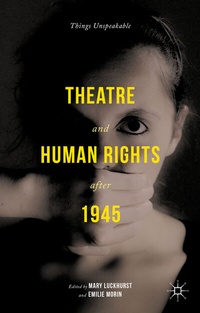
Theatre and Human Rights after 1945
Beschreibung

Rezensionen / Stimmen
"Editors . have collected an impressive range of international perspectives on human rights and theatre. . What the volume as a whole achieves is an insistence on theatre's roles in wider cultural (often global) contexts that are about testimony, the recognition of past injustices, mediation, advocacy, and potential catharsis. Contributors offer engaging accounts of examples from a range of places (and eras) in which performance speaks of and through human rights abuses at the level of institutions, states, and international collusion." (Aylwyn Walsh, New Theatre Quarterly, Vol. 33 (1), February, 2017)
"I describe this book as vital to playwrights, artistic directors and serious artistic thinkers alike. . I learned much from this book and itwill assist my own work as a playwright. . I suggest that whether you are a theatre practitioner or an audience member, your stage experience will be improved by reading these essays. As I said at the outset, Mary Luckhurst and Emilie Morin have compiled and edited a vital series of essays." (Hubert O'Hearn, San Diego Book Review, October, 2015)
Weitere Details
Weitere Ausgaben
Andere Ausgaben

Personen
Inhalt
1. Introduction: Theatre and the Rise of Human Rights; Mary Luckhurst and Emilie Morin Part I: COLONIAL LEGACIES AND THE UNSPEAKABLE 2. Unspeakable Tragedies: Censorship and the New Political Theatre of the Algerian War of Independence; Emilie Morin 3. Beyond Articulation: Brian Friel, Civil Rights, and the Northern Irish Conflict; Michael McAteer Part II: UNSPEAKABILITY AND ETHNICITY 4. 'Lapsing into Democracy': Magnet Theatre and the Drama of Unspeakability in the New South Africa; Mark Fleishman 5. The Great Australian Silence: Aboriginal Theatre and Human Rights; Maryrose Casey Part III: RETURNING HISTORIES, LISTENING, AND TRAUMA 6. Disappearing History: Listening and Trauma in Ariel Dorfman's Death and the Maiden; Cathy Caruth 7. Hungry Ghosts and Inalienable Remains: Performing Rights of Repatriation; Emma Cox 8. Representing Genocide at Home: Ishi, Again; Catherine M. Cole Part IV: THEATRES OF ADVOCACY AND WESTERN LIBERALISM 9. The Politics of Telling and Workers' Rights: The Case of Mike Daisey; Carol Martin 10. Gender-based Violence and Human Rights: Participatory Theatre in Post-Genocide Rwanda; Ananda Breed 11. Jalila Baccar and Tunisian Theatre: 'We Will Not Be Silent'; Marvin Carlson Part V: MILITANCY AND CONTEMPORARY INVISIBILITIES 12. Defixio: Disability and the Speakable Legacy of John Belluso; Michael M. Chemers 13. Theatre and Elder Abuse; Mary Luckhurst Select Bibliography Index
