

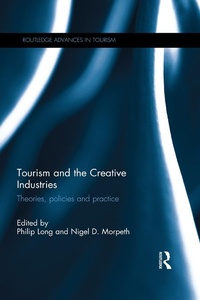
Tourism and the Creative Industries
Theories, policies and practice
Erschienen am 20. Mai 2016
208 Seiten
978-1-317-56528-4 (ISBN)
Beschreibung

This book focuses on the theoretical, policy and practice linkages and disjunctures between tourism and the creative industries. There are clear and strong intersections between the sectors, for example in the development and application of new and emerging media in tourism; festivals and cultural events showcasing the creative identity of place; tours and place identities associated with film, TV, music and arts tourism; as well as particular destinations being promoted on the basis of their 'creative' endowments such as theatre breaks, art exhibitions and fashion shows.
Tourism and the Creative Industries explores a variety of relationships in one volume and offers innovative and critical insights into how creative industries and tourism together contribute to place identity, tourist experience, destination marketing and management. The book is aligned with the sectors that have been demarcated by the UK Government Department of Culture, Media and Sport as comprising the creative industries: advertising and marketing; architecture; design and designer fashion; film, TV, video, radio and photography; IT, software and computer services; publishing and music; performing and visual arts. The title of this volume demonstrates how the exclusion of tourism from the creative industries is arguably perverse, given that much of the work by destination managers and of private sector tourism is characterised by creativity and innovation. Interdisciplinary research and international context bring a broader perspective on how the creative industries operate in varying cultural and policy contexts in relation to tourism.
This book brings together the parallel and disparate inter-disciplinary fields of tourism and the creative industries and will be of interest to students, academics and researchers interested in tourism, creative industries, marketing and management.
Tourism and the Creative Industries explores a variety of relationships in one volume and offers innovative and critical insights into how creative industries and tourism together contribute to place identity, tourist experience, destination marketing and management. The book is aligned with the sectors that have been demarcated by the UK Government Department of Culture, Media and Sport as comprising the creative industries: advertising and marketing; architecture; design and designer fashion; film, TV, video, radio and photography; IT, software and computer services; publishing and music; performing and visual arts. The title of this volume demonstrates how the exclusion of tourism from the creative industries is arguably perverse, given that much of the work by destination managers and of private sector tourism is characterised by creativity and innovation. Interdisciplinary research and international context bring a broader perspective on how the creative industries operate in varying cultural and policy contexts in relation to tourism.
This book brings together the parallel and disparate inter-disciplinary fields of tourism and the creative industries and will be of interest to students, academics and researchers interested in tourism, creative industries, marketing and management.
Weitere Details
Reihe
Sprache
Englisch
Verlagsort
London
Großbritannien
Verlagsgruppe
Taylor & Francis Ltd
Zielgruppe
Für höhere Schule und Studium
Illustrationen
4 s/w Zeichnungen, 7 s/w Photographien bzw. Rasterbilder, 11 s/w Abbildungen, 8 s/w Tabellen
8 Tables, black and white; 4 Line drawings, black and white; 7 Halftones, black and white; 11 Illustrations, black and white
Dateigröße
2,59 MB
ISBN-13
978-1-317-56528-4 (9781317565284)
Copyright in bibliographic data and cover images is held by Nielsen Book Services Limited or by the publishers or by their respective licensors: all rights reserved.
Schweitzer Klassifikation
Weitere Ausgaben
Andere Ausgaben

Ariadne Rushford
Cute Cats
A Fun Coloring Book with Cute Cats for Toddlers, Kindergarten, and Preschoolers Ages 2+
Buch
06/2021
Natalia Dodon
7,37 €
Versand in 15-20 Tagen
Buch
04/2018
1. Auflage
Routledge
71,10 €
Versand in 10-20 Tagen
Buch
05/2016
1. Auflage
Routledge
241,60 €
Versand in 10-20 Tagen
Personen
Philip Long is a Principal Academic at Bournemouth University. His research interests include: relationships between tourism and popular culture; festivals; international film and television; diaspora communities; and social exclusion. He is a board member of the International Festivals and Events Association (Europe).
Nigel D. Morpeth is an academic and artist based at Leeds Beckett University. He has previously worked for UK local authorities in community-based leisure, festival and events organisation, and has worked in the field of Tourism Education over the last 26 years. His teaching and research is focused on diverse interdisciplinary academic approaches to Tourism, Cultural Studies, the Creative Industries, and Sport and Leisure. In a recent book, Planning for Tourism: Towards a Sustainable Future, he has written about the linkages between community initiatives and sustainability. He has delivered over 25 international conference papers including a keynote address on Tourism and the Arts at Ostfalia University in Germany and has delivered a presentation on public art at the Courtauld Institute, Somerset House, London.
Nigel D. Morpeth is an academic and artist based at Leeds Beckett University. He has previously worked for UK local authorities in community-based leisure, festival and events organisation, and has worked in the field of Tourism Education over the last 26 years. His teaching and research is focused on diverse interdisciplinary academic approaches to Tourism, Cultural Studies, the Creative Industries, and Sport and Leisure. In a recent book, Planning for Tourism: Towards a Sustainable Future, he has written about the linkages between community initiatives and sustainability. He has delivered over 25 international conference papers including a keynote address on Tourism and the Arts at Ostfalia University in Germany and has delivered a presentation on public art at the Courtauld Institute, Somerset House, London.
Inhalt
1. Introduction
(Philip E. Long and Nigel D Morpeth)
2. Film, Mobility and Urban Space
(Les Roberts)
3. Creativity, the visual arts and tourism
(Nigel D Morpeth and Philip E. Long)
4. Tourism and Advertising as Creative Industry Sector
(Mark Passera)
5. Tourism and the Creative Industries: Design and Designer Fashion
(Corinna Budnarowska and Ruth Marciniak)
6. Urban Planning, Architecture And The Making of Creative Spaces
(Ian Strange)
7. Challenges and opportunities for South Korean Tourism and Creative Industries
(Sangkyun Kim & Chanwoo Nam)
8. Genius loci reloaded: The creative renaissance of Nantes and Saint Etienne
(Charles Ambrosino, Vincent Guillon, Dominique Sagot Duvauroux)
9. Creating a Cosmopolitan Tourism Destination: The visual arts and music in the Ouseburn Valley, Newcastle upon Tyne, UK
(James Whiting and Kevin Hannam)
10. The virtual tourist: the simulated environments and impossible geographies of videogames.
(Michael Salmond and Jacqueline Salmond)
11. Travel and Transformation in the Fantasy Genre
(Warwick Frost and Jennifer Laing)
12. Conclusions
(Philip E. Long and Nigel D. Morpeth)
(Philip E. Long and Nigel D Morpeth)
2. Film, Mobility and Urban Space
(Les Roberts)
3. Creativity, the visual arts and tourism
(Nigel D Morpeth and Philip E. Long)
4. Tourism and Advertising as Creative Industry Sector
(Mark Passera)
5. Tourism and the Creative Industries: Design and Designer Fashion
(Corinna Budnarowska and Ruth Marciniak)
6. Urban Planning, Architecture And The Making of Creative Spaces
(Ian Strange)
7. Challenges and opportunities for South Korean Tourism and Creative Industries
(Sangkyun Kim & Chanwoo Nam)
8. Genius loci reloaded: The creative renaissance of Nantes and Saint Etienne
(Charles Ambrosino, Vincent Guillon, Dominique Sagot Duvauroux)
9. Creating a Cosmopolitan Tourism Destination: The visual arts and music in the Ouseburn Valley, Newcastle upon Tyne, UK
(James Whiting and Kevin Hannam)
10. The virtual tourist: the simulated environments and impossible geographies of videogames.
(Michael Salmond and Jacqueline Salmond)
11. Travel and Transformation in the Fantasy Genre
(Warwick Frost and Jennifer Laing)
12. Conclusions
(Philip E. Long and Nigel D. Morpeth)
