

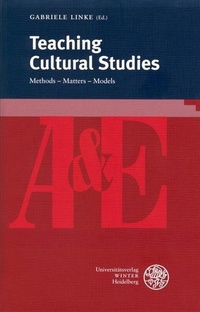
Teaching Cultural Studies
Methods - Matters - Models
Erschienen im Januar 2012
334 Seiten
978-3-8253-7306-1 (ISBN)
Beschreibung

In previous years, many introductions to cultural studies have been published, but there have been few studies that reflected on and systematised teaching experiences, course design, and teaching and learning techniques in the field. This volume is an attempt to close this gap by recording instructors' experiences and insights and presenting successful models of instruction.
The contributions assembled do not only aim to broaden the scope of cultural studies instruction but also to facilitate the design of cultural studies courses. Therefore they contain case studies and examples of courses which demonstrate the effective integration into cultural studies of theories and models taken from well-established disciplines such as history, sociology, museum studies, post-colonial and literary studies. Moreover, the brief overviews of a range of academic disciplines, methods and topics which are offered in the articles provide excellent introductory readings in classes on, for example, place, gender, identity, visual culture, reggae, social movements or the Angry Young Men. In addition, there are articles that focus on teaching (with) Web 2.0, on the nature and functions of stereotypes and on learning and teaching techniques for cultural studies classes. Because of the variety of topics and approaches it covers, this volume may become a valuable resource not only for instructors but also for students and researchers of cultural studies.
The contributions assembled do not only aim to broaden the scope of cultural studies instruction but also to facilitate the design of cultural studies courses. Therefore they contain case studies and examples of courses which demonstrate the effective integration into cultural studies of theories and models taken from well-established disciplines such as history, sociology, museum studies, post-colonial and literary studies. Moreover, the brief overviews of a range of academic disciplines, methods and topics which are offered in the articles provide excellent introductory readings in classes on, for example, place, gender, identity, visual culture, reggae, social movements or the Angry Young Men. In addition, there are articles that focus on teaching (with) Web 2.0, on the nature and functions of stereotypes and on learning and teaching techniques for cultural studies classes. Because of the variety of topics and approaches it covers, this volume may become a valuable resource not only for instructors but also for students and researchers of cultural studies.
Weitere Details
Weitere Ausgaben
Andere Ausgaben
Buch
07/2011
1. Auflage
Universitätsverlag Winter
23,00 €
Keine Lieferinformation verfügbar
Inhalt
- Intro
- Contents
- Introduction
- METHODS
- Laurenz Volkmann - On the Nature and Function of Stereotypes in Intercultural Learning
- E. Grünkemeier, M. Krebs - Assessment of Student Performance in Cultural Studies
- E. Voigts-Virchow - Teaching Web 2.0 and Cultural Studies
- Kathleen Starck - "Yet the Details are not simple.
- MATTERS
- Ralf Schneider - Sociology: The Private and the Public Life of Societies
- J. Schwarzkopf, R. Stinshoff - The Uses of History in Cultural Studies
- Sebastian Berg - Social Criticism in Britain and the United States
- Andrea Ochsner - Opportunism versus Defeatism in "Room at the Top" and "Saturday Night and Sunday Morning
- Renate Brosch - Teaching Visual Cluture in an English Literature Class
- Frauke Hofmeister - Places
- Holger Rossow - How to Teach Identity: Britisness at the Beginning of the 21st Century
- MATERIALS
- Andrea Zittlau - Museum Lessons
- C.U. Viol - Teaching Reggae. Problems, Projects, Perspectives
- Gabriele Linke - Teaching Post/Colonial Culture through Film
