

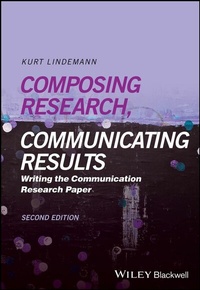
Composing Research, Communicating Results
Beschreibung

Offers practical guidance on writing communication research papers in an evolving academic landscape
Writing remains central to student assessment and professional development, yet many students enter communication classes without the skills needed to craft effective, scholarly work. Composing Research, Communicating Results: Writing the Communication Research Paper is a comprehensive, practice-based guide to academic writing in communication and related social sciences. Walking students through every stage of the writing process-from brainstorming and outlining to constructing sentences and presenting their final papers-Kurt Lindemann demystifies writing through clear explanations, practical exercises, and real student examples.
With the rapid emergence of AI writing tools, students need more than tips-they need ethical frameworks and critical strategies for integrating these technologies into their work. This edition addresses these needs head-on, providing real-world advice on maintaining academic integrity when using AI in the writing process. Expanded content also includes a new chapter on incorporating feedback into revisions, and enhanced discussions on inclusive language, citation practices, and diversity in source selection.
Applying writing principles specifically to communication-focused assignments such as literature reviews and application papers, Composing Research, Communicating Results:
- Offers the most comprehensive treatment available of sentence and paragraph construction in communication writing
- Equips students to present and submit papers to academic and professional outlets, including conferences and podcasts
- Introduces the TESLA Method for effective paragraph development and writing flow
- Highlights common grammar issues with accessible, relatable explanations
- Features pedagogical tools such as 'Write Away' exercises, 'Building Blocks' assignments, 'Engaging Ethics' tips, and 'Student Spotlight' examples
Composing Research, Communicating Results: Writing the Communication Research Paper, Second Edition, is perfect for upper-division undergraduate and graduate-level courses in Communication, including methods, media, interpersonal, intercultural, and organizational communication. It fits within Communication and related social science degree programs as a writing companion text or course supplement.
KURT LINDEMANN is a Professor of Communication and Associate Dean at San Diego State University. With over three decades of teaching experience, he has designed and led courses in public speaking, writing, performance studies, and research methods. His scholarly and creative work has appeared in both academic journals and public media, and he is a frequent presenter at national and international conferences.
Weitere Details
Weitere Ausgaben
Andere Ausgaben
Person
KURT LINDEMANN is a Professor of Communication and Associate Dean at San Diego State University. With over three decades of teaching experience, he has designed and led courses in public speaking, writing, performance studies, and research methods. His scholarly and creative work has appeared in both academic journals and public media, and he is a frequent presenter at national and international conferences.
Inhalt
Preface vi
Acknowledgments x
1 So You Have to Write a Research Paper 1
2 Brainstorm and Research: Formulating and Answering Questions 26
3 Making Arguments, Providing Support 53
4 Style and Format: How to Say What You Want to Say 91
5 Writing the Literature Review: Arguing for Audiences 123
6 Application and Reaction Papers 144
7 Writing Empirical Research Papers 157
8 What Next? Presenting and Publishing Papers 177
9 What Next? Using Feedback to Improve Your Papers 198
Index 210
