

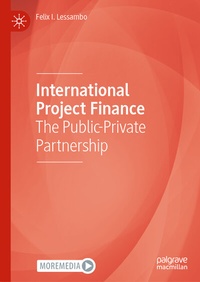
International Project Finance
Beschreibung

Economic growth and development critically depends on the quality of infrastructure. Each aspect of the economy and its infrastructure are linked systemically. Public-Private Partnerships (PPPs) are increasingly being promoted as the solution to the shortfall in financing needed to achieve the Sustainable Development Goals (SDGs). Public-private partnerships enable the public entity to utilize the expertise and efficiencies of the private sector to deliver services and facilities that traditionally have been delivered by the public sector, either through public sector employees or by traditional procurement methods. To be beneficial to all stakeholders, a PPP project requires careful planning, implementation, and strong governance. This book breaks down the steps involved and the traps to circumvent.
Despite its globally growing importance, project finance has been somewhat underrepresented in research. This book analyzes project finance from an interdisciplinary perspective-finance, management, and international business-and includes international laws of arbitrage and perspectives of international financial institutions as never endeavored by any previous research projects. The book also includes case studies assessing the relevance of private-public partnerships by comparing the country expectations and the real outcomes. The gap between expectations and results does not necessarily mean that significant progress has not been made. To the contrary, the book suggests that some of the original targets set may have been unrealistic, and that the requisite financial resources-or the financial sector policies that could have generated those resources-may have been lacking.
Weitere Details
Weitere Ausgaben
Andere Ausgaben
Person
Felix I. Lessambo is Adjunct Associate Professor at Fordham University, USA, where he teaches Corporate Tax and Audit & Assurance Services. He was an Associate Professor at Central Connecticut State University School of Business where he taught Financial Statements Analysis, Global Financial Reporting, and Law & Finance. He has practiced international tax, transfer pricing, and alternative investment management where he structured and advised on hedge funds and private equity cross-border transactions. He is the author of several books in finance including The International Banking System , The International Corporate Governance System , International Financial Institutions and Their Challenges , International Aspects of US Taxation System , Audit-Assurance Services & Forensics , Financial Statements: Analysis & Reporting, The US Banking System , Mergers in the Global Markets , International Finance , and The US Mergers & Acquisitions: Legal & Financial Aspects .
Inhalt
Chapter 1.Introduction to Project Finance.- Chapter 2.Project Financing and Direct Conventional Financing.- Chapter 3.Sources of project funds.- Chapter 4.Bankability.- Chapter 5.Public Procurement: Laws and Regulations.- Chapter 6.Assessment of project's viability and analytical tools.- Chapter 7.The Identification and Management of Risks.- Chapter 8.The Project Finance contractual arrangement.- Chapter 9.Alternative Dispute Resolution.- Chapter 10.Project Finance Governance.- Chapter11.International Project Finance and Corruption.- Chapter 12.Infrastructure Projects Finance.- Chapter 13.Public Fiscal Risk Assessment Model.- Chapter 14.Cases study.
