

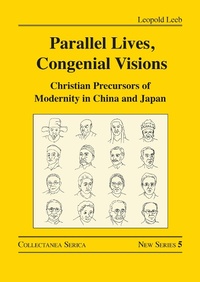
Parallel Lives, Congenial Visions
Christian Precursors of Modernity in China and Japan
1. Auflage
Erschienen am 29. März 2024
294 Seiten
978-1-003-85821-8 (ISBN)
Beschreibung

This book introduces the history of cultural exchanges between East Asia and the West through comparative biographical sketches of sixty personalities from China and Japan. These sketches illustrate how both countries, starting from a shared cultural heritage in script and Confucian, Buddhist, and Daoist worldviews, took rather different approaches in their encounters with the European world since the 16th to 17th centuries. In particular in the 19th century under external and internal pressure, both nations strove to modernize their societies by introducing technology and new ideas from the Western world, turning them into political rivals and even enemies. Thus, these biographical sketches also shed some light on the general dynamics of cross-cultural interactions between China, Japan, and the West up to the early 20th century.
The Chinese and Japanese men and women presented in this book are outstanding personalities who tried to open up the road to international relationships, pioneers in their respective domains who introduced Western culture to their nations, precursors who strove for modernization, e.g., in the fields of translation, education, medicine, media, and social welfare. They testify to individual agency in these cross-cultural exchanges. Many of those who tried to be "cultural bridge-builders" since the 16th century were Christians, simply because the missionaries, who worked hard to learn the native languages of China and Japan, were the first to introduce new cultural elements to these countries. The universal scope and vision of the Christian faith enabled both missionaries and native believers to overcome narrow nationalism or xenophobia and turned them into cross-cultural mediators.
The Chinese and Japanese men and women presented in this book are outstanding personalities who tried to open up the road to international relationships, pioneers in their respective domains who introduced Western culture to their nations, precursors who strove for modernization, e.g., in the fields of translation, education, medicine, media, and social welfare. They testify to individual agency in these cross-cultural exchanges. Many of those who tried to be "cultural bridge-builders" since the 16th century were Christians, simply because the missionaries, who worked hard to learn the native languages of China and Japan, were the first to introduce new cultural elements to these countries. The universal scope and vision of the Christian faith enabled both missionaries and native believers to overcome narrow nationalism or xenophobia and turned them into cross-cultural mediators.
Weitere Details
Reihe
Auflage
1. Auflage
Sprache
Englisch
Verlagsort
London
Großbritannien
Verlagsgruppe
Taylor & Francis Ebooks
Zielgruppe
Für höhere Schule und Studium
Produkt-Hinweis
Reflowable
Illustrationen
2 Tables, black and white; 41 Halftones, black and white; 41 Illustrations, black and white
ISBN-13
978-1-003-85821-8 (9781003858218)
Copyright in bibliographic data and cover images is held by Nielsen Book Services Limited or by the publishers or by their respective licensors: all rights reserved.
Schweitzer Klassifikation
Weitere Ausgaben
Andere Ausgaben
Buch
07/2025
1. Auflage
Routledge
67,70 €
Versand in 10-20 Tagen
Buch
03/2024
1. Auflage
Routledge
206,30 €
Versand in 10-20 Tagen
Person
Leopold Leeb studied philosophy and theology in Moedling (near Vienna) and Chinese philosophy at Fu Jen Catholic University, Taipei, and at Beijing University. He received his Ph.D. from the latter with a dissertation on the Han dynasty mathematician, astronomer and writer Zhang Heng. From 1999 till 2004 he worked as a researcher and translator at the Chinese Academy of Social Sciences. Since 2004 he is professor at Renmin University, Beijing, where he teaches Latin, Ancient Greek, Ancient Hebrew, and the history of Western literature. His research also focuses on the history of Christianity in China. He has published widely in China, among others an introduction to the language and thought of the Bible, language courses in Latin, Latin dictionaries, a dictionary on Chinese theology and the series "English-Chinese Summaries of Western Classics," of which volume 5 has been published 2020. Recently, he published the monograph One Dragon, Two Doves: A Comparative History of the Catholic Church in China and in Vietnam (2022).
Inhalt
Preface by He Guanghu
Preface by Muraoka Takamitsu
Preface by the Author
Introduction
Chapter One: The Trailblazers' Guides: Anjiro (ca. 1520-1565) and Zhong Mingren (1562-1621)
Chapter Two: The First Translators of European Texts: Yohoken (ca. 1510-1596) and Xu Ruohan
(ca. 1670-1740) 9
Chapter Three: Noble Promoters of Military Reforms: Otomo Sorin (1530-1587) and Xu Guangqi
(1562-1633)
Chapter Four: "Grace" and "Brilliance": Hosokawa Garasha (1563-1600) and Candida Xu
(1607-1680)
Chapter Five: Pioneers of Comparative Philosophy: Fukansai (1565-1621) and Yang Tingyun
(ca. 1557-1628)
Chapter Six: The First Native Priests: Kimura (1565-1622) and Luo Wenzao (1617-1691)
Chapter Seven: The First Travelers to Europe: Ito Mancio (1569-1612) and Zheng Manuo
(1633-1673)
Chapter Eight: Precursors of the Internationalization of the Script: Dourado (1567-1620) and
Wang Zheng (1571-1644)
Chapter Nine: The First Editors of Bilingual Dictionaries: Martin Hara (1568-1629) and
Huang Risheng (1679-1716)
Chapter Ten: The Earliest Celebrities in Europe: Hasekura Tsunenaga (1571-1622) and
Shen Fuzong (ca. 1658-1692)
Chapter Eleven: Western Art in the East: Jacobus Niva (Ni Yagu, 1579-1638) and You Wenhui
(1575-1633)
Chapter Twelve: Hope of the Suppressed: Amakusa Shiro (1622-1638) and Wang Maria
(ca. 1855-1900)
Chapter Thirteen: Interrogation of a Messenger from the West: Arai Hakuseki (1657-1725) and
Kangxi (r. 1662-1722)
Chapter Fourteen: Early Students of Western Medicine: Gao Leisi (1732-1795), Yang Dewang
(1733-1798), and Sugita Genpaku (1733-1817)
Chapter Fifteen: The First Teachers of Western Languages: Ogata Koan (1810-1863) and Xue Madou
(ca. 1780-1860)
Chapter Sixteen: Organizers of Modern Media: Fukuzawa Yukichi (1835-1901) and Ying Lianzhi
(1866-1926)
Chapter Seventeen: Creators of Universities: Yan Yongjing (1838-1898) and Niijima Jo
(1843-1890)
Chapter Eighteen: Entrepreneurs and Philanthropists: Shibusawa Eiichi (1840-1931) and Lu Bohong
(1875-1937)
Chapter Nineteen: The First Female Physicians: Ogino Ginko (1851-1913) and Jin Yamei (1864-1934) 135
Chapter Twenty: Pioneers of Women's Education: Tsuda Umeko (1864-1929) and Zeng Baosun
(1893-1978)
Chapter Twenty-One: Faith on the Way to Inculturation: Uemura Masahisa (1858-1925) and Zhao Zichen
(T.C. Chao, 1888-1979)
Chapter Twenty-Two: Fathers of Constitutional Law: Ume Kenjiro (1860-1910) and Wu Jingxiong
(1899-1986)
Chapter Twenty-Three: Creators of an Image of the East: Nitobe Inazo (1862-1933) and Gu Hongming
(1857-1928)
Chapter Twenty-Four: Independent Prophets: Uchimura Kanzo (1861-1930) and Wang Mingdao
(1900-1991)
Chapter Twenty-Five: Pioneers in the Study of History: Saeki Yoshiro (1871-1965) and Chen Yuan
(1880-1971)
Chapter Twenty-Six: The First Students of Classical Hebrew: Kotsuji Setsuzo (1887-1965) and
Li Rongfang (1899-1973)
Chapter Twenty-Seven: Indigenization of Christian Art: Chen Yuandu (1903-1967) and Watanabe Sadao
(1913-1996)
Chapter Twenty-Eight: A Life for the Poor: Wu Yongbo (1916-2002) and Kitahara Satoko (1929-1958)
Conclusion: Two Nations on the Way to Modernity
Preface by Muraoka Takamitsu
Preface by the Author
Introduction
Chapter One: The Trailblazers' Guides: Anjiro (ca. 1520-1565) and Zhong Mingren (1562-1621)
Chapter Two: The First Translators of European Texts: Yohoken (ca. 1510-1596) and Xu Ruohan
(ca. 1670-1740) 9
Chapter Three: Noble Promoters of Military Reforms: Otomo Sorin (1530-1587) and Xu Guangqi
(1562-1633)
Chapter Four: "Grace" and "Brilliance": Hosokawa Garasha (1563-1600) and Candida Xu
(1607-1680)
Chapter Five: Pioneers of Comparative Philosophy: Fukansai (1565-1621) and Yang Tingyun
(ca. 1557-1628)
Chapter Six: The First Native Priests: Kimura (1565-1622) and Luo Wenzao (1617-1691)
Chapter Seven: The First Travelers to Europe: Ito Mancio (1569-1612) and Zheng Manuo
(1633-1673)
Chapter Eight: Precursors of the Internationalization of the Script: Dourado (1567-1620) and
Wang Zheng (1571-1644)
Chapter Nine: The First Editors of Bilingual Dictionaries: Martin Hara (1568-1629) and
Huang Risheng (1679-1716)
Chapter Ten: The Earliest Celebrities in Europe: Hasekura Tsunenaga (1571-1622) and
Shen Fuzong (ca. 1658-1692)
Chapter Eleven: Western Art in the East: Jacobus Niva (Ni Yagu, 1579-1638) and You Wenhui
(1575-1633)
Chapter Twelve: Hope of the Suppressed: Amakusa Shiro (1622-1638) and Wang Maria
(ca. 1855-1900)
Chapter Thirteen: Interrogation of a Messenger from the West: Arai Hakuseki (1657-1725) and
Kangxi (r. 1662-1722)
Chapter Fourteen: Early Students of Western Medicine: Gao Leisi (1732-1795), Yang Dewang
(1733-1798), and Sugita Genpaku (1733-1817)
Chapter Fifteen: The First Teachers of Western Languages: Ogata Koan (1810-1863) and Xue Madou
(ca. 1780-1860)
Chapter Sixteen: Organizers of Modern Media: Fukuzawa Yukichi (1835-1901) and Ying Lianzhi
(1866-1926)
Chapter Seventeen: Creators of Universities: Yan Yongjing (1838-1898) and Niijima Jo
(1843-1890)
Chapter Eighteen: Entrepreneurs and Philanthropists: Shibusawa Eiichi (1840-1931) and Lu Bohong
(1875-1937)
Chapter Nineteen: The First Female Physicians: Ogino Ginko (1851-1913) and Jin Yamei (1864-1934) 135
Chapter Twenty: Pioneers of Women's Education: Tsuda Umeko (1864-1929) and Zeng Baosun
(1893-1978)
Chapter Twenty-One: Faith on the Way to Inculturation: Uemura Masahisa (1858-1925) and Zhao Zichen
(T.C. Chao, 1888-1979)
Chapter Twenty-Two: Fathers of Constitutional Law: Ume Kenjiro (1860-1910) and Wu Jingxiong
(1899-1986)
Chapter Twenty-Three: Creators of an Image of the East: Nitobe Inazo (1862-1933) and Gu Hongming
(1857-1928)
Chapter Twenty-Four: Independent Prophets: Uchimura Kanzo (1861-1930) and Wang Mingdao
(1900-1991)
Chapter Twenty-Five: Pioneers in the Study of History: Saeki Yoshiro (1871-1965) and Chen Yuan
(1880-1971)
Chapter Twenty-Six: The First Students of Classical Hebrew: Kotsuji Setsuzo (1887-1965) and
Li Rongfang (1899-1973)
Chapter Twenty-Seven: Indigenization of Christian Art: Chen Yuandu (1903-1967) and Watanabe Sadao
(1913-1996)
Chapter Twenty-Eight: A Life for the Poor: Wu Yongbo (1916-2002) and Kitahara Satoko (1929-1958)
Conclusion: Two Nations on the Way to Modernity
