

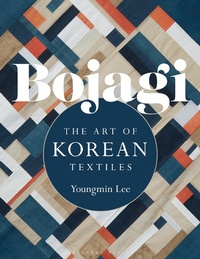
Bojagi
The Art of Korean Textiles
1. Auflage
Erschienen am 18. Juli 2024
160 Seiten
978-1-78994-185-2 (ISBN)
Beschreibung

A creative guide to a unique and beautiful form of Korean art, steeped in ancient tradition.
Bojagi are textiles that wrap, cover, carry, or store objects. Some are made from whole pieces of fabric and some are patched together from small scraps of cloth - they are a unique form of Korean textile art. The careful arrangement of shapes and colours shows an abstract composition which has made bojagi popular with textile artists and quilters today.
In this book, experienced artist and educator Youngmin Lee gives you comprehensive step-by-step instructions on traditional bojagi techniques and materials, and provides a history of the art form in Korean culture - which dates back to the Joseon dynasty - where it continues to occupy a prominent place in the daily lives of Koreans. Learn hand stitch techniques, seam finishes and decorative motifs on a range of materials from ramie, hemp and cotton to silk and naturally dyed, eco-printed materials.
Youngmin introduces a variety of beautifully illustrated projects, with a modern twist - from gift wrap to wall hangings to cushions and accessories - whilst always being true to ancient Korean textile traditions.
Bojagi are textiles that wrap, cover, carry, or store objects. Some are made from whole pieces of fabric and some are patched together from small scraps of cloth - they are a unique form of Korean textile art. The careful arrangement of shapes and colours shows an abstract composition which has made bojagi popular with textile artists and quilters today.
In this book, experienced artist and educator Youngmin Lee gives you comprehensive step-by-step instructions on traditional bojagi techniques and materials, and provides a history of the art form in Korean culture - which dates back to the Joseon dynasty - where it continues to occupy a prominent place in the daily lives of Koreans. Learn hand stitch techniques, seam finishes and decorative motifs on a range of materials from ramie, hemp and cotton to silk and naturally dyed, eco-printed materials.
Youngmin introduces a variety of beautifully illustrated projects, with a modern twist - from gift wrap to wall hangings to cushions and accessories - whilst always being true to ancient Korean textile traditions.
Weitere Details
Auflage
1. Auflage
Sprache
Englisch
Verlagsort
London
Großbritannien
Verlagsgruppe
Bloomsbury Publishing PLC
Illustrationen
200 colour illustrations
ISBN-13
978-1-78994-185-2 (9781789941852)
Copyright in bibliographic data and cover images is held by Nielsen Book Services Limited or by the publishers or by their respective licensors: all rights reserved.
Schweitzer Klassifikation
Weitere Ausgaben
Andere Ausgaben
Buch
07/2024
Herbert Press Ltd
25,00 €
Versand in 3-4 Wochen
Person
Youngmin Lee is a textile artist living in the San Francisco Bay Area. She studied Clothing and Textile and received an MFA in Fashion Design at Ewha Woman's University, Seoul. She worked as a fashion designer in Seoul, South Korea and now teaches numerous workshops about bojagi and Korean traditional textiles both online and in person. Youngmin's bojagi have been exhibited and collected throughout the United States and abroad.
Inhalt
1. Introduction
2. What are Bojagi?
3. Tools
4. Colors and Patterns
5. Materials
6. Techniques
7. Before you start
8. Projects:
- Flower Pincushion (OyatKkot)
- Lotus Leaf Mat (Yeonnip)
- Four-Point Cushion (Nemo Bangseok)
- Gift-wrap Bojagi (Yemulbo)
- Covering Bojagi (Sangbo)
- Flower Shaped Pouch (KkotJumeoni)
- Jogakbo Style Placemat
- Jogakbo Tote Bag
- Ssamsol Jogakbo
- Window covering
- Barbara's Boat Coaster
- Book Sleeve
- Yeouijumun Brooch
- A Good Luck Charm (Goebul Norigae)
- Wind Chime (Punggyeong)
- Dumpling-Shaped Square Mobile (Mandu)
- Gwi Jumeoni Sachet
9. My Work and Collection
Bibliography
Acknowledgments
Photo credits
Glossary of Korean Words
Conversion Chart
2. What are Bojagi?
3. Tools
4. Colors and Patterns
5. Materials
6. Techniques
7. Before you start
8. Projects:
- Flower Pincushion (OyatKkot)
- Lotus Leaf Mat (Yeonnip)
- Four-Point Cushion (Nemo Bangseok)
- Gift-wrap Bojagi (Yemulbo)
- Covering Bojagi (Sangbo)
- Flower Shaped Pouch (KkotJumeoni)
- Jogakbo Style Placemat
- Jogakbo Tote Bag
- Ssamsol Jogakbo
- Window covering
- Barbara's Boat Coaster
- Book Sleeve
- Yeouijumun Brooch
- A Good Luck Charm (Goebul Norigae)
- Wind Chime (Punggyeong)
- Dumpling-Shaped Square Mobile (Mandu)
- Gwi Jumeoni Sachet
9. My Work and Collection
Bibliography
Acknowledgments
Photo credits
Glossary of Korean Words
Conversion Chart
