

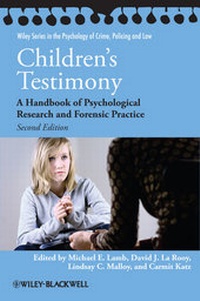
Children's Testimony
A Handbook of Psychological Research and Forensic Practice
2. Auflage
Erschienen am 1. Juni 2011
480 Seiten
978-1-119-99850-1 (ISBN)
Beschreibung
The second edition of Children's Testimony is a fullyup-to-date resource for practitioners and researchers working inforensic contexts and concerned with children's ability to providereliable testimony about abuse.
* Written for both practitioners and researchers working inforensic contexts, including investigative interviewers, policeofficers, lawyers, judges, expert witnesses, and socialworkers
* Explores a range of issues involved with children's testimonyand their ability to provide reliable testimony about experiencedor witnessed events, including abuse
* Avoids jargon and highly technical language
* Includes a comprehensive range of contributions from aninternational group of practitioners and researchers to ensuretopicality and relevance
* Written for both practitioners and researchers working inforensic contexts, including investigative interviewers, policeofficers, lawyers, judges, expert witnesses, and socialworkers
* Explores a range of issues involved with children's testimonyand their ability to provide reliable testimony about experiencedor witnessed events, including abuse
* Avoids jargon and highly technical language
* Includes a comprehensive range of contributions from aninternational group of practitioners and researchers to ensuretopicality and relevance
Weitere Details
Weitere Ausgaben
Personen
Michael E. Lamb is Head of the Department of Social andDevelopmental Psychology at the University of Cambridge, UK.
David J. La Rooy holds a Research Lectureship funded bythe Scottish Institute for Policing Research at the University ofAbertay Dundee, where he is responsible for the ForensicPsychobiology Degree.
Lindsay C. Malloy is Assistant Professor of Legal andDevelopmental Psychology at Florida International University,US.
Carmit Katz is Research Associate in AppliedDevelopmental Psychology at the University of Cambridge, UK.
David J. La Rooy holds a Research Lectureship funded bythe Scottish Institute for Policing Research at the University ofAbertay Dundee, where he is responsible for the ForensicPsychobiology Degree.
Lindsay C. Malloy is Assistant Professor of Legal andDevelopmental Psychology at Florida International University,US.
Carmit Katz is Research Associate in AppliedDevelopmental Psychology at the University of Cambridge, UK.
Inhalt
Contributors.
Series Preface.
Acknowledgements.
1 Developmentally Sensitive Interviewing for Legal Purposes(Lindsay C. Malloy, David J. La Rooy, Michael E. Lamb, andCarmit Katz).
2 Setting Realistic Expectations: Developmental Characteristics,Capacities and Limitations (Michael E. Lamb, Lindsay C. Malloy,and David J. La Rooy).
3 The Development of Memory in Childhood (David J. La Rooy,Lindsay C. Malloy, and Michael E. Lamb).
4 Assessing the Competency of Child Witnesses: Best PracticeInformed by Psychology and Law (Thomas D. Lyon).
5 Planning the Interview (Kevin Smith and RebeccaMilne).
6 Rapport Building in Investigative Interviews of Children(Irit Hershkowitz).
7 Practice Narratives (Kim P. Roberts, Sonja P. Brubacher,Martine B. Powell, and Heather L. Price).
8 Investigating Substantive Issues (Yael Orbach andMargaret-Ellen Pipe).
9 Reviewing the Case (Post-interview) (Trond Myklebust andGavin E. Oxburgh).
10 Managing Children's Emotional and Clinical Needs (KathrynKuehnle and Mary Connell).
11 Training Forensic Interviewers (Heather Stewart, CarmitKatz, and David J. La Rooy).
12 The Use of Supplementary Techniques in Forensic Interviewswith Children (Deirdre A. Brown).
13 Children with Intellectual Disabilities and DevelopmentalDisorders (Lucy A. Henry, Caroline Bettenay, and Daniel P.J.Carney).
14 Evidence and Cross-Examination (John R. Spencer).
15 Children's Disclosure Statements as Evidence in the UnitedStates Legal System (John E.B. Myers).
16 Consequences of Legal Involvement on Child Victims ofMaltreatment (Jodi A. Quas and Mariya Sumaroka).
17 Expert Testimony (Bryan Tully).
18 Relationship between Research and Practice (Graham M.Davies and Lindsay C. Malloy).
19 Child Protection Considerations in the United States(Richard J. Gelles and Rebecca Brigham).
20 Facilitating Effective Participation by Children in the LegalSystem (Lindsay C. Malloy, David J. La Rooy, and Michael E.Lamb).
Appendix: The National Institute of Child Health and HumanDevelopment (NICHD) Protocol: Interview Guide.
Index.
Series Preface.
Acknowledgements.
1 Developmentally Sensitive Interviewing for Legal Purposes(Lindsay C. Malloy, David J. La Rooy, Michael E. Lamb, andCarmit Katz).
2 Setting Realistic Expectations: Developmental Characteristics,Capacities and Limitations (Michael E. Lamb, Lindsay C. Malloy,and David J. La Rooy).
3 The Development of Memory in Childhood (David J. La Rooy,Lindsay C. Malloy, and Michael E. Lamb).
4 Assessing the Competency of Child Witnesses: Best PracticeInformed by Psychology and Law (Thomas D. Lyon).
5 Planning the Interview (Kevin Smith and RebeccaMilne).
6 Rapport Building in Investigative Interviews of Children(Irit Hershkowitz).
7 Practice Narratives (Kim P. Roberts, Sonja P. Brubacher,Martine B. Powell, and Heather L. Price).
8 Investigating Substantive Issues (Yael Orbach andMargaret-Ellen Pipe).
9 Reviewing the Case (Post-interview) (Trond Myklebust andGavin E. Oxburgh).
10 Managing Children's Emotional and Clinical Needs (KathrynKuehnle and Mary Connell).
11 Training Forensic Interviewers (Heather Stewart, CarmitKatz, and David J. La Rooy).
12 The Use of Supplementary Techniques in Forensic Interviewswith Children (Deirdre A. Brown).
13 Children with Intellectual Disabilities and DevelopmentalDisorders (Lucy A. Henry, Caroline Bettenay, and Daniel P.J.Carney).
14 Evidence and Cross-Examination (John R. Spencer).
15 Children's Disclosure Statements as Evidence in the UnitedStates Legal System (John E.B. Myers).
16 Consequences of Legal Involvement on Child Victims ofMaltreatment (Jodi A. Quas and Mariya Sumaroka).
17 Expert Testimony (Bryan Tully).
18 Relationship between Research and Practice (Graham M.Davies and Lindsay C. Malloy).
19 Child Protection Considerations in the United States(Richard J. Gelles and Rebecca Brigham).
20 Facilitating Effective Participation by Children in the LegalSystem (Lindsay C. Malloy, David J. La Rooy, and Michael E.Lamb).
Appendix: The National Institute of Child Health and HumanDevelopment (NICHD) Protocol: Interview Guide.
Index.
