

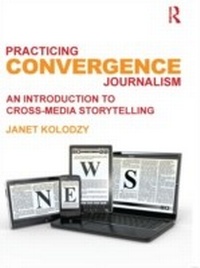
Practicing Convergence Journalism
An Introduction to Cross-Media Storytelling
1. Auflage
Erschienen am 12. Oktober 2012
216 Seiten
978-1-136-22283-2 (ISBN)
Beschreibung

Practicing Convergence Journalism teaches budding journalists how to make the most of digital technology to tell their stories effectively across multiple media platforms-in print, audio, video and online. Janet Kolodzy addresses multi-media and cross-media thinking, organizing, reporting and producing for both short-form spot news and long-form features. Her approach focuses on storytelling principles, not just specific technical practices, providing journalists with the mindset and skills they need to adapt their writing and reporting for the tools of today and tomorrow.
With this book and the aid of its companion website, students learn how to:
Develop a cross-media mode of journalistic thinking that will result in stories suitable for a fast-paced, multitasking and mobile audience.
Decide when visuals are useful and necessary, and understand how to capture, select and organize them to effectively enhance a reader's understanding of a story.
Put together various elements of storytelling (writing, audio, moving and still pictures) for an interactive journalistic experience.
With this book and the aid of its companion website, students learn how to:
Develop a cross-media mode of journalistic thinking that will result in stories suitable for a fast-paced, multitasking and mobile audience.
Decide when visuals are useful and necessary, and understand how to capture, select and organize them to effectively enhance a reader's understanding of a story.
Put together various elements of storytelling (writing, audio, moving and still pictures) for an interactive journalistic experience.
Rezensionen / Stimmen
"A solid overview of the issues and current landscape facing aspiring cross-platform journalists. Offers practical advice and thoughtful analysis of why and how journalistic standards still apply in the digital age."--Michelle Johnson, Associate Professor of the Practice, Multimedia Journalism, Boston University"In Practicing Convergence Journalism, Janet Kolodzy deftly explains how convergence journalism has moved far beyond the cross-platform partnerships of a decade ago. Her holistic theory and strategies blend the best of the old and the new." --Camille R. Kraeplin, Associate Professor, Southern Methodist University Division of Journalism
Weitere Details
Sprache
Englisch
Verlagsort
London
Großbritannien
Verlagsgruppe
Taylor & Francis Ltd
Zielgruppe
Für höhere Schule und Studium
Illustrationen
40 s/w Photographien bzw. Rasterbilder
40 Halftones, black and white
Dateigröße
4,13 MB
ISBN-13
978-1-136-22283-2 (9781136222832)
Copyright in bibliographic data and cover images is held by Nielsen Book Services Limited or by the publishers or by their respective licensors: all rights reserved.
Schweitzer Klassifikation
Weitere Ausgaben
Andere Ausgaben
Buch
08/2012
1. Auflage
Routledge
230,30 €
Versand in 15-20 Tagen
Buch
08/2012
1. Auflage
Routledge
80,60 €
Versand in 15-20 Tagen
Person
Janet Kolodzy is Associate Professor of Journalism at Emerson College. She is the author of Convergence Journalism: Writing and Reporting across the News Media, and has been a reporter, writer, and producer for newspapers and broadcast news.
Inhalt
What's Old is New, What's New is Old
Eight Elements of a News Story and the Tools to Build It
Sources and Background Information: Reporting before the Reporting
Short and Fast: Covering a Spot News Story
Law & Ethics: Reporting Rules of the Road
Building the Spot Single Story
Capturing Context and Tone: Using Words, Pictures and/or Sound
Packaging the Story: The Daily Wrap
The Multimedia Story: How to help audiences get what they want
Feature or Enterprise News Stories
Digital Storytelling: Design and Data
Law and Ethics: Producing and Disseminating News
Eight Elements of a News Story and the Tools to Build It
Sources and Background Information: Reporting before the Reporting
Short and Fast: Covering a Spot News Story
Law & Ethics: Reporting Rules of the Road
Building the Spot Single Story
Capturing Context and Tone: Using Words, Pictures and/or Sound
Packaging the Story: The Daily Wrap
The Multimedia Story: How to help audiences get what they want
Feature or Enterprise News Stories
Digital Storytelling: Design and Data
Law and Ethics: Producing and Disseminating News
