

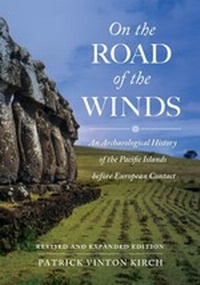
On the Road of the Winds
An Archaeological History of the Pacific Islands before European Contact, Revised and Expanded Edition
2. Auflage
Erschienen am 7. November 2017
408 Seiten
978-0-520-96889-9 (ISBN)
Beschreibung

The Pacific Ocean covers one-third of the earth's surface and encompasses many thousands of islands that are home to numerous human societies and cultures. Among these indigenous Oceanic cultures are the intrepid Polynesian double-hulled canoe navigators, the atoll dwellers of Micronesia, the statue carvers of remote Easter Island, and the famed traders of Melanesia. Decades of archaeological excavations-combined with allied research in historical linguistics, biological anthropology, and comparative ethnography-have revealed much new information about the long-term history of these societies and cultures. On the Road of the Winds synthesizes the grand sweep of human history in the Pacific Islands, beginning with the movement of early people out from Asia more than 40,000 years ago and tracing the development of myriad indigenous cultures up to the time of European contact in the sixteenth to eighteenth centuries. This updated edition, enhanced with many new illustrations and an extensive bibliography, synthesizes the latest archaeological, linguistic, and biological discoveries that reveal the vastness of ancient history in the Pacific Islands.
Weitere Details
Weitere Ausgaben
Andere Ausgaben
Patrick Vinton Kirch
On the Road of the Winds
An Archaeological History of the Pacific Islands before European Contact, Revised and Expanded Edition
Buch
11/2017
2. Auflage
University of California Press
46,91 €
Versand in 10-20 Tagen
Person
KirchPatrick Vinton:
Patrick Vinton Kirch is Chancellor's Professor Emeritus of Anthropology at the University of California, Berkeley, and the author of twelve books including A Shark Going Inland Is My Chief: The Island Civilization of Ancient Hawai'i and Anahulu: The Anthropology of History in the Kingdom of Hawaii.
Patrick Vinton Kirch is Chancellor's Professor Emeritus of Anthropology at the University of California, Berkeley, and the author of twelve books including A Shark Going Inland Is My Chief: The Island Civilization of Ancient Hawai'i and Anahulu: The Anthropology of History in the Kingdom of Hawaii.
Inhalt
List of Maps /
List of Figures /
List of Tables /
Preface /
INTRODUCTION /
Defining Oceania /
Linguistic, Human Biological, and Cultural Variation in Oceania /
About This Book /
A Note on Dates and Time /
1 DISCOVERING THE OCEANIC PAST /
Enlightenment Voyagers /
Outposts of Empire: Missionaries, Colonists, and Academic Beginnings /
"The Problem of Polynesian Origins" /
Te Rangi Hiroa and the "Micronesian Route" to Polynesia /
The Discovery of Time Depth and Culture Change /
The Search for Polynesian Sequences /
Broadening Research Horizons /
Moving beyond Polynesia: Archaeology in Melanesia and New Guinea /
Francophone Archaeology in the Pacific /
Not an Ivory Tower: Public Archaeology in the Pacific /
Recent Advances in Pacific Archaeology /
2 THE PACIFIC ISLANDS AS A HUMAN ENVIRONMENT /
Origins and Development of the Pacific Islands /
Types of Islands /
Climatic Factors in the Pacific /
Island Life and Biogeography /
The Microbiotic World and Human Populations /
Island Ecosystems /
Humans and Island Socioecosystems /
3 SAHUL AND THE PREHISTORY OF "OLD" MELANESIA /
The Pleistocene Geography of Sahul and Near Oceania /
Initial Human Arrival in Sahul and Near Oceania /
Pleistocene Voyaging in Near Oceania /
Near Oceania during the Pleistocene /
Cultural Innovations of the Early Holocene /
A Paradox and a Hypothesis /
4 LAPITA AND THE AUSTRONESIAN EXPANSION /
The Human Landscape of Near Oceania at 2000-1300 b.c. /
The Advent of Lapita /
Lapita Origins: The Austronesian Expansion /
Lapita across Time and Space /
Lapita in Linguistic and Biological Perspective /
The Lapita Ceramic Series /
Lapita Sites and Settlements /
Lapita Subsistence Economies /
Exchange between Lapita Communities /
Ancestral Oceanic Societies /
5 THE PREHISTORY OF "NEW" MELANESIA /
Trading Societies of Papua and the Massim /
The Late Holocene in Highland New Guinea /
The Bismarck Archipelago after Lapita /
The Solomon Islands /
Vanuatu /
The Polynesian Outliers in Melanesia /
Ethnogenesis in La Grande Terre /
Fiji: An Archipelago "in Between" /
Larger Themes in Melanesian Prehistory /
6 MICRONESIA: IN THE "SEA OF LITTLE LANDS" /
Colonization and Early Settlement in Micronesia /
Cultural Sequences in Micronesia /
Tuvalu and the Polynesian Outliers in Micronesia /
Atoll Adaptations /
Later Prehistory in Western Micronesia /
Development of Sociopolitical Complexity in the Caroline High Islands /
7 POLYNESIA: ORIGINS AND DISPERSALS /
Polynesian Origins /
Polynesia as a Phyletic Unit /
Ancestral Polynesia /
Cultural Sequences in Western Polynesia /
The Settlement of Eastern Polynesia /
Early Settlement Sites in Eastern Polynesia /
Polynesian Voyaging /
Summary /
8 POLYNESIAN CHIEFDOMS AND ARCHAIC STATES /
Polynesian Chiefdoms: Ethnographic Background and Anthropological Significance /
The "Traditional" Societies /
Sociopolitical Transformation in the Open Societies /
The Emergence of Stratified Chiefdoms /
From Chiefdom to Archaic State: Tonga and Hawai'i /
Polynesian History: A Concluding Note /
9 BIG STRUCTURES AND LARGE PROCESSES IN OCEANIC PREHISTORY /
Voyaging and the Human "Conquest" of the Pacific /
History Written in the Present: Correlations between Language, Biology, and Culture /
The Role of Demographic Transitions in Oceanic History /
Oceanic Populations on the Eve of European Contact /
The Political Economy of Dynamic Landscapes /
Intensification and Specialization in Island Economies /
Transformations of Status and Power /
On Comparison: A Closing Comment /
Notes /
References /
Index /
List of Figures /
List of Tables /
Preface /
INTRODUCTION /
Defining Oceania /
Linguistic, Human Biological, and Cultural Variation in Oceania /
About This Book /
A Note on Dates and Time /
1 DISCOVERING THE OCEANIC PAST /
Enlightenment Voyagers /
Outposts of Empire: Missionaries, Colonists, and Academic Beginnings /
"The Problem of Polynesian Origins" /
Te Rangi Hiroa and the "Micronesian Route" to Polynesia /
The Discovery of Time Depth and Culture Change /
The Search for Polynesian Sequences /
Broadening Research Horizons /
Moving beyond Polynesia: Archaeology in Melanesia and New Guinea /
Francophone Archaeology in the Pacific /
Not an Ivory Tower: Public Archaeology in the Pacific /
Recent Advances in Pacific Archaeology /
2 THE PACIFIC ISLANDS AS A HUMAN ENVIRONMENT /
Origins and Development of the Pacific Islands /
Types of Islands /
Climatic Factors in the Pacific /
Island Life and Biogeography /
The Microbiotic World and Human Populations /
Island Ecosystems /
Humans and Island Socioecosystems /
3 SAHUL AND THE PREHISTORY OF "OLD" MELANESIA /
The Pleistocene Geography of Sahul and Near Oceania /
Initial Human Arrival in Sahul and Near Oceania /
Pleistocene Voyaging in Near Oceania /
Near Oceania during the Pleistocene /
Cultural Innovations of the Early Holocene /
A Paradox and a Hypothesis /
4 LAPITA AND THE AUSTRONESIAN EXPANSION /
The Human Landscape of Near Oceania at 2000-1300 b.c. /
The Advent of Lapita /
Lapita Origins: The Austronesian Expansion /
Lapita across Time and Space /
Lapita in Linguistic and Biological Perspective /
The Lapita Ceramic Series /
Lapita Sites and Settlements /
Lapita Subsistence Economies /
Exchange between Lapita Communities /
Ancestral Oceanic Societies /
5 THE PREHISTORY OF "NEW" MELANESIA /
Trading Societies of Papua and the Massim /
The Late Holocene in Highland New Guinea /
The Bismarck Archipelago after Lapita /
The Solomon Islands /
Vanuatu /
The Polynesian Outliers in Melanesia /
Ethnogenesis in La Grande Terre /
Fiji: An Archipelago "in Between" /
Larger Themes in Melanesian Prehistory /
6 MICRONESIA: IN THE "SEA OF LITTLE LANDS" /
Colonization and Early Settlement in Micronesia /
Cultural Sequences in Micronesia /
Tuvalu and the Polynesian Outliers in Micronesia /
Atoll Adaptations /
Later Prehistory in Western Micronesia /
Development of Sociopolitical Complexity in the Caroline High Islands /
7 POLYNESIA: ORIGINS AND DISPERSALS /
Polynesian Origins /
Polynesia as a Phyletic Unit /
Ancestral Polynesia /
Cultural Sequences in Western Polynesia /
The Settlement of Eastern Polynesia /
Early Settlement Sites in Eastern Polynesia /
Polynesian Voyaging /
Summary /
8 POLYNESIAN CHIEFDOMS AND ARCHAIC STATES /
Polynesian Chiefdoms: Ethnographic Background and Anthropological Significance /
The "Traditional" Societies /
Sociopolitical Transformation in the Open Societies /
The Emergence of Stratified Chiefdoms /
From Chiefdom to Archaic State: Tonga and Hawai'i /
Polynesian History: A Concluding Note /
9 BIG STRUCTURES AND LARGE PROCESSES IN OCEANIC PREHISTORY /
Voyaging and the Human "Conquest" of the Pacific /
History Written in the Present: Correlations between Language, Biology, and Culture /
The Role of Demographic Transitions in Oceanic History /
Oceanic Populations on the Eve of European Contact /
The Political Economy of Dynamic Landscapes /
Intensification and Specialization in Island Economies /
Transformations of Status and Power /
On Comparison: A Closing Comment /
Notes /
References /
Index /
