

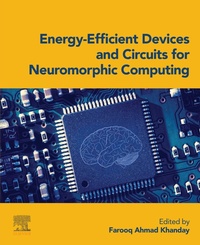
Energy-Efficient Devices and Circuits for Neuromorphic Computing
Erschienen am 12. November 2025
540 Seiten
978-0-443-29982-7 (ISBN)
Beschreibung
Energy-Efficient Devices and Circuits for Neuromorphic Computing is an important contribution to this field, covering topics from neuron dynamics to energy-efficient CMOS devices and circuits. The book delves into theoretical analysis of learning processes in spiking neural networks, two-terminal neuromorphic devices, material-engineered neuromorphic devices, and novel biomimetic Si devices. It offers insights into the latest developments in non-volatile memory crossbar arrays and emerging post-CMOS devices. Overall, it provides a comprehensive overview of energy-efficient neuromorphic computing architecture. This book is an essential resource for researchers, engineers, and students working in neuromorphic computing and energy-efficient electronics.
- Provides comprehensive coverage of neuromorphic computing based upon energy-efficient electronic devices and circuits
- Presents practical guidance and numerous examples, making it an excellent resource for researchers, engineers, and students designing energy-efficient neuromorphic computing systems
- Includes detailed coverage of emerging post-CMOS devices such as memristors and MTJs and their potential applications in energy-efficient synapses and neurons
Weitere Details
Weitere Ausgaben
Inhalt
1. Biological neural systems NEW2. Fundamentals of neuron dynamics and Neural Networks NEW3. Foundations, recent developments and applications of spiking neural networks (SNNs)4. Training and learning processes of SNNs5. Introduction to Neuromorphic Computing6. The Need for Energy Efficiency in Neuromorphic Computing v Review of Neuromorphic devices and Circuits7. Energy-efficient devices for Neuromorphic computing8. Novel biomimetic devices for energy efficient synapses and neurons OLD9. Analog and Digital CMOS circuits for Energy Efficient Neuromorphic Computing10. Energy-efficient Neuromorphic computing systems with emerging post-CMOS devices11. Energy Efficient Neuromorphic Computing Architectures and Processing12. Nonvolatile memory crossbar arrays for energy efficient neuromorphic computing13. Energy Efficient Neuromorphic Vision Systems14. Neuromorphic sensors and in-sensor computing15. Practical Applications of Energy-Efficient Neuromorphic Computing16. Current and future challenges of Neuromorphic Computing
