

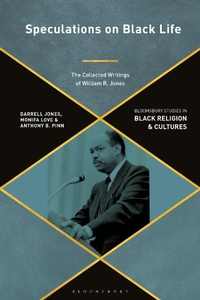
Speculations on Black Life
The Collected Writings of William R. Jones
1. Auflage
Erschienen am 18. Mai 2023
288 Seiten
978-1-350-33875-3 (ISBN)
Beschreibung
Is God a white racist? Posed by William R. Jones in his ground-breaking book of the same name, this question disrupted the theological assumptions that marked Black religious thought from early writings of the 1800s to the formation of Black theology in the 1960s. This book compiles his key and essential writings related to over three decades of critical reflection on race, religion, secularism, and oppression in the United States.
Over the course of 30 years, Jones pushed questions and considerations that refined Black theology and that gave greater shape to and understanding of Black philosophers' intervention into issues of racial and structural inequality. His philosophical work, related to the grid of oppression, fosters an approach to the nature and meaning of oppression in the United States, encouraging rational interrogation of structures of injustice and thought patterns supporting those structures.
Still relevant today, the straightforward style of communication used by Jones makes these essays easily accessible to a popular audience, while maintaining intellectual rigor, making the book also suitable for an academy-based audience.
Over the course of 30 years, Jones pushed questions and considerations that refined Black theology and that gave greater shape to and understanding of Black philosophers' intervention into issues of racial and structural inequality. His philosophical work, related to the grid of oppression, fosters an approach to the nature and meaning of oppression in the United States, encouraging rational interrogation of structures of injustice and thought patterns supporting those structures.
Still relevant today, the straightforward style of communication used by Jones makes these essays easily accessible to a popular audience, while maintaining intellectual rigor, making the book also suitable for an academy-based audience.
Weitere Details
Reihe
Auflage
1. Auflage
Sprache
Englisch
Verlagsort
London
Großbritannien
Verlagsgruppe
Bloomsbury Publishing PLC
Zielgruppe
Für Beruf und Forschung
Illustrationen
10 bw illus
ISBN-13
978-1-350-33875-3 (9781350338753)
Copyright in bibliographic data and cover images is held by Nielsen Book Services Limited or by the publishers or by their respective licensors: all rights reserved.
Schweitzer Klassifikation
Weitere Ausgaben
Personen
Darrell Jones is the son of William R. Jones, and Associate Professor in the Department of Dance at Columbia College, USA, where he specializes in contemporary dance technique, improvisation, and movement for actors.
Monifa Love is Associate Dean at Bowie State University, USA. Having worked with William R. Jones at Florida State, she is an expert on Jones' philosophy of religion and theories of race.
Anthony B. Pinn is Agnes Cullen Arnold Distinguished Professor of Humanities, Professor of Religious Studies, and Director of the Center for Engaged Research and Collaborative Learning (CERCL) at Rice University, USA.
Monifa Love is Associate Dean at Bowie State University, USA. Having worked with William R. Jones at Florida State, she is an expert on Jones' philosophy of religion and theories of race.
Anthony B. Pinn is Agnes Cullen Arnold Distinguished Professor of Humanities, Professor of Religious Studies, and Director of the Center for Engaged Research and Collaborative Learning (CERCL) at Rice University, USA.
Inhalt
Foreword. Peter Paris, Princeton Theological Seminary, USA
Introduction Monifa Love, Bowie State University, USA
Part I. (Black) Humanism
1. Black Power and Unitarianism: A Personal View [1967]
2. Theism and Religious Humanism: The Chasm Narrows [1975]
3. The Concept of Functional Authority in Religious Humanism [1978]
4. The Case for Black Humanism [1978]
5. Religious Humanism: Its Problems and Prospects in Black Religion and Culture [1979]
6. Toward a UU Concept of Authority [1979]
7. Is Faith in God Necessary for a Just Society? [1987]
8. Oppression, Race, and Humanism (Skinner House Volume) [1992]
Part II. Theology and Philosophy
9. Theodicy and Methodology in Black Theology: A Critique of Washington, Cone and Cleage [1971]
10. Reconciliation and Liberation in Black Theology [1972]
11. Toward an Interim Assessment of Black Theology [1972]
12. Theodicy: The Controlling Category for Black Theology [1973]
13. Crisis in Philosophy: The Black Presence [1973]
14. Toward a Black Theology [1974]
15. Theological Response: The Church and Urban Policy [1978]
16. Toward a Humanist Framework for Black Theology, in Black Theology II [1978]
17. The Legitimacy and Necessity of Black Philosophy [1978]
18. Liberation Strategies in Black Theology: Mao, Martin, or Malcolm? [1983]
19. The Religious Legitimation of Counterviolence: Insights from Latin American Liberation Theology [1987]
20. Purpose and Method in Liberation Theology: Implications for an Interim Assessment [1987]
21. Coping with the Four R's: Reading, 'Riting, 'Rithmetic, and Racism: Insights from Liberation Theology [1987]
22. Process Theology: Guardian of the Oppressor or Goad to the Oppressed: An Interim Assessment [1989]
Part III. The Politics of Race
23. Power and Anti-Power [1977]
24. Towards a Norm for Assessing the Christianization of Africa [1981]
25. Moral Decision-Making in the Post-Modern World: Implications for Unitarian-Universalist Religious Education [1985]
26. Religion as Legitimator and Liberator: Insights from the Underclass for Public Policy [1987]
27. Guidelines for the Diagnosis of Social Reality in America [1988]
28. Hypocrisy, Bibliogracy, and Democracy [1993]
29. The Disguise of Discrimination [1995]
30. Towards a New Paradigm for Uncovering Neo-racism in American Institutions [2003]
Part IV. Critical Reflection on Jones' Writings
Essay One. Anthony Pinn, Rice University, USA
Essay Two. Jamil Drake, Florida State University, USA
Essay Three. Jawole Zollar, MacArthur award-winning dance choreographer
Essay Four. Brittany O'Neal, Lehman College, USA
Afterword. Darrell Jones, Columbia College, Chicago, USA
Bibliography
Index
Introduction Monifa Love, Bowie State University, USA
Part I. (Black) Humanism
1. Black Power and Unitarianism: A Personal View [1967]
2. Theism and Religious Humanism: The Chasm Narrows [1975]
3. The Concept of Functional Authority in Religious Humanism [1978]
4. The Case for Black Humanism [1978]
5. Religious Humanism: Its Problems and Prospects in Black Religion and Culture [1979]
6. Toward a UU Concept of Authority [1979]
7. Is Faith in God Necessary for a Just Society? [1987]
8. Oppression, Race, and Humanism (Skinner House Volume) [1992]
Part II. Theology and Philosophy
9. Theodicy and Methodology in Black Theology: A Critique of Washington, Cone and Cleage [1971]
10. Reconciliation and Liberation in Black Theology [1972]
11. Toward an Interim Assessment of Black Theology [1972]
12. Theodicy: The Controlling Category for Black Theology [1973]
13. Crisis in Philosophy: The Black Presence [1973]
14. Toward a Black Theology [1974]
15. Theological Response: The Church and Urban Policy [1978]
16. Toward a Humanist Framework for Black Theology, in Black Theology II [1978]
17. The Legitimacy and Necessity of Black Philosophy [1978]
18. Liberation Strategies in Black Theology: Mao, Martin, or Malcolm? [1983]
19. The Religious Legitimation of Counterviolence: Insights from Latin American Liberation Theology [1987]
20. Purpose and Method in Liberation Theology: Implications for an Interim Assessment [1987]
21. Coping with the Four R's: Reading, 'Riting, 'Rithmetic, and Racism: Insights from Liberation Theology [1987]
22. Process Theology: Guardian of the Oppressor or Goad to the Oppressed: An Interim Assessment [1989]
Part III. The Politics of Race
23. Power and Anti-Power [1977]
24. Towards a Norm for Assessing the Christianization of Africa [1981]
25. Moral Decision-Making in the Post-Modern World: Implications for Unitarian-Universalist Religious Education [1985]
26. Religion as Legitimator and Liberator: Insights from the Underclass for Public Policy [1987]
27. Guidelines for the Diagnosis of Social Reality in America [1988]
28. Hypocrisy, Bibliogracy, and Democracy [1993]
29. The Disguise of Discrimination [1995]
30. Towards a New Paradigm for Uncovering Neo-racism in American Institutions [2003]
Part IV. Critical Reflection on Jones' Writings
Essay One. Anthony Pinn, Rice University, USA
Essay Two. Jamil Drake, Florida State University, USA
Essay Three. Jawole Zollar, MacArthur award-winning dance choreographer
Essay Four. Brittany O'Neal, Lehman College, USA
Afterword. Darrell Jones, Columbia College, Chicago, USA
Bibliography
Index
