

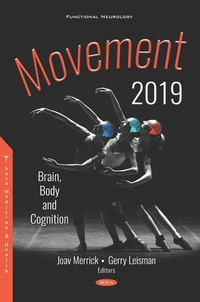
Movement 2019: Brain, Body and Cognition
Erschienen am 15. Januar 2020
462 Seiten
978-1-5361-6715-3 (ISBN)
Beschreibung

This book is based on the conference on "Movement and Cognition" held in July 2019 at the Tel Aviv University in Israel, where an opportunity was provided for researchers, clinicians and practitioners from various disciplines to share their knowledge and experience in an academic environment. In this book you will find all the abstracts from this conference gathered in one publication. We believe that movement facilitates cognition throughout the life span and hope that this book will be of interest to both researcher, clinicians, practitioners and other people who are interested in the issue of movement and the brain.
Weitere Details
Weitere Ausgaben
Andere Ausgaben
Buch
02/2020
Nova Science Publishers Inc
354,06 €
Versand in 15-20 Tagen
Inhalt
- Intro
- Contents
- Introduction
- Chapter 1
- Movement, brain, body and cognition: A reflection of functional connectivity in the nervous system
- Introduction
- Conclusion
- References
- Section one: Abstracts
- Chapter 2
- Deformity of feet, knees, hips, pelvis and spine caused by "minimal brain dysfunctions"
- Chapter 3
- Biomechanical etiology of the so-called idiopathic scoliosis (1995-2007): New classification, new treatment and rules of causal prophylactics
- Chapter 4
- Pelvic schema and graphic-metric representation improve following dynamic neuro-cognitive imagery training in people with Parkinson's disease
- Chapter 5
- Then mechanism of levodopa in Parkinson's disease: A directed functional connectivity pathway analysis
- Chapter 6
- Only three fingers write, but the whole brain works: A high-density EEG study showing advantages of drawing over typing for learning
- Chapter 7
- Towards an embodied language for everyone: A dance workshop
- About the Author
- Chapter 8
- Not just a body language: Facilitated vs choreographed methods so that everyone can dance and everyone can dance with anyone
- Chapter 9
- Advances in pharmacotherapy of traumatic brain injury: Neural support versus neural protection
- Chapter 10
- Enhancing pelvic mobility and schema in dance performance with dynamic neuro-cognitive imagery
- Chapter 11
- A novel outlook on correlation between acute and chronic inflammatory states: 21 case studies of neurological/psychiatric/ musculoskeletal disorders
- Chapter 12
- Exploring musculoskeletal redundancy using null space projection
- Chapter 13
- A learning process which improves symmetry in the dynamics of thoracic rotation: A new hope for the amelioration
- of motor disabilities
- Chapter 14
- "As time goes by": Movement literacy and the representation of time in children's self-generated graphical movement representations
- Chapter 15
- Intelligent brain-machine interface for neuro-feedback reduces abnormal work anxiety
- Chapter 16
- Cognitive style differences in visuospatial processing assessed using a task incorporating the perception of biological motion
- Chapter 17
- Psychometric properties of motor and cognitive dual-task studies with the aim of developing a test protocol for vestibular-impaired patients
- Chapter 18
- Intensive neurorehabilitative training aiming towards triggering brain remapping and remyelination in multiple sclerosis patients
- Chapter 19
- Movement-based prevention of emotional-behavioral disorders in elementary school children
- Chapter 20
- Reconnecting to the Self: Working with refugees using dance therapy and Laban/Bartenieff movement studies
- Chapter 21
- Why do only some arm recover after stroke? A story of mirror neurons in BA44
- Chapter 22
- Efficacy of using movement intervention in adults living with cerebral palsy: A qualitative study
- Chapter 23
- The challenge of coordination: A practical workshop
- Chapter 24
- Development of multiple intelligence
- Chapter 25
- The anticipatory movement
- Chapter 26
- Perception of time: Variability in duration discrimination of short audio stimuli
- Chapter 27
- Laban movement analysis as a framework for cognition of movement in research and intervention
- Chapter 28
- Overview: How the Laban/Bartenieff movement taxonomy supports cognition of movement in research and intervention
- Chapter 29
- How the body speaks: The nonverbal cues of trauma between mother and toddler
- Chapter 30
- Moving out the fear of movement: Laban movement analysis applications in a population with kinesiophobia due to chronic pain conditions
- Chapter 31
- Moving ourselves: Creative interventions for change using the Laban/Bartenieff movement system
- Chapter 32
- Spatial cognition in movement: The body-space relationship to the forms of the Icosahedron and its dual, the Dodecahedron
- Chapter 33
- Relationship between humans and their acoustic environments
- Chapter 34
- Embodied rhythms: Quadrato motor training may benefit cortical functional connectivity in prodromal Alzheimer's disease: An EEG study
- Chapter 35
- QMT-induced molecular and cognitive effects: The case of autism
- Chapter 36
- Diagonal thinking: EEG modulations of during the quadrato motor training
- Chapter 37
- Quadrato motor training effects on CNV and motor preparation: Implications for heathy aging
- Chapter 38
- Old brain-body dancing
- Chapter 39
- Psychological and cognitive effects of dancing in old age
- Chapter 40
- Implications for healthy aging
- Chapter 41
- The YES Manifesto to the elderly body 3: The physiological aesthetic of the elderly non-dancer body
- Chapter 42
- "GO" (short presentation from the show)
- Chapter 43
- Autism spectrum: A new therapy intervention "Le reveil actions"
- Chapter 44
- Decision making "on the move": How can movement inform our decisions?
- Chapter 45
- Taking time: Attentional experiences of dancers who move slowly
- Chapter 46
- Sense making through movement, dance and cognition: The mindful choreographer
- Chapter 47
- Back and forth: Combining movement, cognition and movement notation
- Chapter 48
- The role of imagery, touch, and interoception in activating cortical and subcortical circuits through somatic movement practices: A science-based appraisal
- Chapter 49
- Visual mental imagery: Beyond what the eye can see
- Chapter 50
- Neural mechanisms associated with interoception and movement in somatic practices: Past and future studies
- Chapter 51
- What happens in vagal doesn't stay in vagal: The Feldenkrais Method's® impact on parasympathetic response through touch and movement
- Chapter 52
- Somatic movement, physical exercise, and meditation: Exploring similar and distinct brain structures and cognitive benefits
- Chapter 53
- Early parental-envelop experiences shape emotional and physical potentials, allowing to anticipate and shape current and future abilities of the self to cope with crises
- Chapter 54
- Shirodhara: An Ayurveda treatment in the management of brain behavior disorders
- Chapter 55
- Change processes: Non-verbal synchrony as a lynchpin of clients' adaptive emotion regulation in coaching
- Chapter 56
- Effects of the impact of different types of training on activities of daily living and their perception by old age people
- Chapter 57
- Exploring the neural mechanism of volitional quality: A brain morphometry study on national-level athletes
- Chapter 58
- Diverse exercises similarly reduce older adults' mobility limitations
- Chapter 59
- Vastly different exercise programs similarly improve parkinsonian symptoms: A randomized clinical trial
- Chapter 60
- Executive function performance and prefrontal activation when cycling on an active workstation in young adults
- Chapter 61
- Cortical activation during walking while smartphone texting: A dual task based fNRIS study
- Chapter 62
- Virtual reality training to improve upper limb motor function in multiple sclerosis: A feasibility study protocol
- Chapter 63
- From top-down to bottom-up or the other way around
- Chapter 64
- Thinking on your feet: Decision making in dance creating
- Chapter 65
- Bridging the feeling/thinking dichotomy in choreography teaching
- Chapter 66
- Seeing the rhythm within the movements: How attention modulates the observation of whole-body movement sequences
- Chapter 67
- Conceptual presentation of dance pedagogy conflicts within the dance realm: Dance as a meeting point between two cultures?
- Chapter 68
- Motoric abilities assessment of preschool age children with intellectual disabilities
- Chapter 69
- Using developmental profile 3 screening test to assess effectiveness of sensory-motor-perceptual program for 5 and 6 years old children
- Chapter 70
- Changing Habitual movement and thought patterns using Alexander technique and dance: A lecture performance
- Chapter 71
- Body-mind dancing as an intersection for two conflicts: Technique vs improvisation and beginning vs advanced skill levels
- Chapter 72
- Membranes as change agents: A dynamic embodiment approach to embodying our cells while dancing
- Chapter 73
- Diving into our fluid body: The movement of continuum
- Chapter 74
- Real time composition
- Chapter 75
- Neuromotor resources for integrating secure attachment and trauma recovery
- Chapter 76
- Learning with VR-based assistive systems
- Chapter 77
- Individual cognitive diagnostic in work processes for people with cognitive disabilities
- Chapter 78
- On the prenatal cognitive life of the fetus in action
- Chapter 79
- Moving the mind: Embodied cognition in psychotherapy
- Chapter 80
- Augmenting arousal based neurofeedback with bio-playback to improve generalizing skills in ASD
- Chapter 81
- The influence of occupational therapy activities on daily living and quality of life of children having acute lymphoblastic leukemia
- Chapter 82
- School-age children life peculiarities during oncohematological disease
- Chapter 83
- Tai Chi intervention program for improving postural stability and gait in People with Parkinson's disease: A study protocol
- Chapter 84
- Visual cues dominate action-planning while sensorimotor processes dominate perception in object manipulation in the young and elderly
- Chapter 85
- Different myoelectric patterns predict manual repetitive task difficulty and endurance in young and old adults
- Chapter 86
- Exploration in the presence of mother in typically and non-typically developing pre-walking human infants
- Chapter 87
- Validity and inter-observer reliability of the TURN 180 test to identify older adults who reported falls
- Chapter 88
- A multi-level model for understanding the factors predicting health behaviors: Physical activity and healthy nutrition habits among students in Israel
- Chapter 89
- Targeted transcranial electric stimulation to mitigate the dual-task cost to gait speed in older adults
- Chapter 90
- Evolution of motor cortex excitability through unilateral arm immobilization over nine hours
- Chapter 91
- Emergence of gestural symbols and conversational protocols in gestural dialogue experiments
- Chapter 92
- Cardiorespiratory fitness is associated with hippocampal-related cognitive reserve in older adults with amnestic mild cognitive impairment
- Chapter 93
- Augmenting learning through dance
- Chapter 94
- Investigating learning through developmental dance movement as an early intervention
- Chapter 95
- Expectations and experiences of a dance program for children with autism spectrum disorders: A qualitative study of parents, teachers and therapists
- Chapter 96
- Movement self portraits
- Chapter 97
- Documentation in movement-orientated mind-body-therapies taking the example of Eurythmy-therapy
- Chapter 98
- The relationship of cardiorespiratory fitness and creativity in children
- Chapter 99
- Self-generated auditory cues enhance gait kinematics for people with Parkinson disease
- Chapter 100
- Sing while you stride: A workshop combining movement with song
- Chapter 101
- The significance of the vestibular function in child development
- Chapter 102
- Associations between backache and personal vulnerability among Israeli schoolchildren
- Chapter 103
- Associations between self-report physical activity and perceived school performance of young adolescents in Israel
- Chapter 104
- Perception of teachers of basic education about movement, cognitive activities and needs of children development
- Chapter 105
- Effect of acute active playing on neuroelectric measures in children
- Chapter 106
- Learning neuroscience through music, dance and active playing
- Chapter 107
- The application of the syncytiotrophoblast for the treatment of atherosclerotic plaque
- Chapter 108
- Prefrontal cortex functioning in older adults: Preliminary neurobehavioral findings indicating prodromal accelerated cognitive decline in aging individuals
- Chapter 109
- Adapted ballroom and Latin dance program: A primer for application in people with movement disorders in order to improve balance, functional mobility, cognition and the quality of life
- Chapter 110
- The utility of Clinical Pilates Method as a tool for clinicians with the purpose of mental and physical health, trauma prevention and rehabilitation
- Chapter 111
- Novice walkers solve a motor challenge: Does sleep quality predict performance?
- Chapter 112
- Oxygen: A limiting factor for brain recovery and enhanced cognitive-motor performance
- Chapter 113
- The relationship between volumetric MRI and movement variation and adaptability in preterm infants
- Chapter 114
- Effects of Tango Argentine on the relationship experience in patients with Parkinson's disease (PD) from the perspective of the patient
- Chapter 115
- The effects of Tango Argentine on body experience in patients with Parkinson's disease (PD)
- Chapter 116
- Tango Argentine in patients with Parkinson's disease (PD). Effects on the relationship experience from the perspective of the healthy dance partner
- Chapter 117
- The effects of Tango dancing on the motivation in patients with Parkinson's disease (PD)
- Chapter 118
- Supporting early interaction behaviors through movement pattern analysis in children who are congenitally deaf-blind
- Chapter 119
- Cortical integration of cerebellar signals during motor learning
- Chapter 120
- The healing space and implicit language: The neurology of the space "in-between" in the application of the I-thou relationship of Martin Buber
- Chapter 121
- Cognitive imaging of movement in persistent vegetative states: Brain, body and cognition
- Chapter 122
- Biomechanical basis of Tai Chi movements for intervention of low back pain patients associated with muscle disorders: A pilot study
- Chapter 123
- East and West: Towards an integrative Grand Unified Therapy (GUT)
- Chapter 124
- Dance participation stabilizes motor and cognitive symptoms of Parkinson's disease and age-related diseases
- Chapter 125
- Locomotion and movement complexity
- Chapter 126
- Monocular and binocular observations and dominant and non-dominant eye observations can modulate the perceived strengths of visually induced self-motion (vection)
- Chapter 127
- A challenge to make movies "What is vection!?" and the evaluations of them by seven professional creators of visual images
- Chapter 128
- Kinesio taping can do harm in patients with type 1 complex regional pain syndrome (CRPS-1) after stroke
- Chapter 129
- The perception of our movements depends on our emotional state
- Chapter 130
- The neuromodulative effects of tiredness and mental fatigue on cognition and the use of medication
- Chapter 131
- Body perception in stroke survivors: A pilot study on the effect of Expressive Arts-based Intervention
- Chapter 132
- Multidisciplinary intensive outpatient rehabilitation program for patients with advanced Parkinson's disease: Feasibility and primary proof of concept
- Chapter 133
- Multidisciplinary group program integrating voice and dance movement therapy for Parkinson's disease patients: Preliminary experience
- Chapter 134
- A MoCo-intervention reduces the reliance on cortical resources during physical tasks of daily living
- Chapter 135
- Functional neurology in a nutshell: A model for scientific understanding of nervous system function and clinical application
- Chapter 136
- The use of unilateral sensory/motor stimulation to inhibit primitive reflexes and promote hemispheric integration in children, adolescents and adults with neurobehavioral mental health disorders
- Chapter 137
- The impact of intensive multimodal functional neurological applications on cognitive outcomes in a population with post-concussion syndrome and associated learning and behavioral disorders
- Chapter 138
- Functional neurological rehabilitation for vestibular disorders
- Chapter 139
- The impact of digital therapy on movement and cognition
- Chapter 140
- The use of early movement vocabulary for rehabilitation
- Chapter 141
- Migraine treatment with eurythmy therapy
- Chapter 142
- Somatic Pilates: Thinking with our body, moving with our brain, working with our heart
- Chapter 143
- Associated changes in procedural memory of Parkinson's patients after participation in rock steady boxing
- Chapter 144
- Why the body's oldest systems are the key to solving our newest problems
- Chapter 145
- Overcoming stage-fright through the body, using Laban-Bartenieff Movement System
- Chapter 146
- Should ballet dancers vary postures and under-foot surfaces when practicing postural balance?
- Chapter 147
- The oriental concept of smooth and harmonious Qi flow in the meridians for the optimization of the elite athlete's movement and for sports injury prevention
- Chapter 148
- The impact of aerobic and non-aerobic walking on cognitive abilities in science in elementary school children
- Chapter 149
- Determining the neurocognitive status and the functional ability of patients to screen for HIV-Associated Neurocognitive Disorder (HAND)
- Chapter 150
- Transferring the learning of movement or learn one thing and know many things
- Chapter 151
- Retained primitive reflexes and articulation disorders in Polish preschool children: A pilot study
- Chapter 152
- Influence of pestel factors in the appearance of musculoskeletal disorders in the manufacturing industry: Documentary review
- Chapter 153
- Manual directional gestures facilitate cross-modal perceptual learning
- Chapter 154
- Motor-cognitive dual-tasking: Insights from cerebellar stroke patients
- Chapter 155
- Body cognition method (BCM): The improvement of quality of life and cognitive functions, supported by two recent studies
- Chapter 156
- Rhythmic limb movements affect speech output differently in individuals
- Chapter 157
- Shared movement approach: Dance/movement interventions into interpersonal attunement with children and adolescents on the autistic spectrum
- Chapter 158
- Effects of a myofascial self-massage of the plantar fascia on the mobility of the hips depending on different massage durations
- Chapter 159
- Fluency through synchrony: A cognitive account of the social functions of dance
- Chapter 160
- Interhemispheric interactions across basal ganglia and cerebellar circuits during motor control
- Chapter 161
- Concepts of positive and negative neuroplasticity after brain lesion - rehabilitation implications: A review
- Chapter 162
- Movement and gesture analysis with machine learning in schizophrenic patients
- Chapter 163
- Individually guided dance rehabilitation may improve reasoning, executive functions, mood and trunk control in chronic state of traumatic brain injury
- Chapter 164
- Associations between dual tasking, inner ear function and falls among older persons: A longitudinal prospective cohort study with a follow-up
- Chapter 165
- Developmental trajectories of neuroanatomical alterations associated with the 16p11.2 copy number variations
- Chapter 166
- Mental health users who consume addictive substances, diagnosed with HIV in Tijuana, Mexico
- Chapter 167
- A retrospective study of prodromal variables associated with the development of autism among a diverse group of infants during their first fifteen months of life
- Chapter 168
- Tracking behavioral and sensory-motor developmental variables associated with the prodrome of autism: A longitudinal case study of an infant's first two years of life
- Chapter 169
- Collective movement activity as a critical phase in learning the physics concept of angular velocity
- Chapter 170
- Feldenkrais Guild workshop: Using non-habitual conditions to revive novelty and learning: Exploring the principles and applications of the Feldenkrais method
- Chapter 171
- Researching the Feldenkrais method: A guide for the perplexed
- Chapter 172
- A way to study the Feldenkrais method
- Chapter 173
- A neuroplasticity scale for assessing the Feldenkrais method for MS patients based on individual reports
- Chapter 174
- Executive functions and audio-motor synchronization in athletes
- Chapter 175
- Correlation of a quantitative MRI scoring system with motor function in children with cerebral palsy
- Chapter 176
- The self-knowing body as an inspiration for dance
- Chapter 177
- Physical somatic images vs emotional images as a platform for a somatic experience and improvised dance
- Chapter 178
- Investigating language density effect on eye movement behavior (Russian vs English)
- Chapter 179
- The link between gaze following behaviors and early language
- Chapter 180
- Late-life motor impairments: An understudied Alzheimer disease phenotype
- Chapter 181
- Dual task assessment during treadmill walking for children and adolescents with sport concussion
- Chapter 182
- Spacing the stage: The inner stage of the dancer
- Chapter 183
- Proximal versus distal upper extremity motor impairments post-stroke
- Chapter 184
- Changes in respiratory excursion and standard quality of life measures following physical training focused on proprioception and fluid fascial movement
- Chapter 185
- Dancer's somatic of musicality
- Chapter 186
- An approach tailored for special needs students: Shall we dance?
- Chapter 187
- The process of space perception: How do we perceive architecture?
- Chapter 188
- Acquired acrodermatitis enteropathica after enteral nutrition in an elderly female
- Chapter 189
- Motor and cognitive aspects of sexuality
- Chapter 190
- Mapped taxonomies for electronic technology, brain, body, cognition research and body art
- Chapter 191
- Transferring driver training and safety research in decision making under stress, into controlling impulsivity and inattention in mental health remediation for general population
- Chapter 192
- Writing an effective case report for publication
- Chapter 193
- Spasticity is related to pressure ulcer prevalence in advanced dementia patients
- Chapter 194
- Researching the Feldenkrais method through principles of judo
- Chapter 195
- Fake news in neurology
- Chapter 196
- Validity, reliability, interclass and intraclass correlations and characteristics of norms of the Zur Balance Scale
- Chapter 197
- Giving them wings: Keys to integrated dynamic shoulder function in rehabilitation
- Chapter 198
- A funny thing happened on the way to the conference: Perception of humor in Parkinson's disease
- Chapter 199
- Readout of kinematic information in autism experts
- Section two: Acknowledgments
- Chapter 200
- About the authors
- Chapter 201
- About the National Institute of Child Health and Human Development in Israel
- Mission
- Service and academic activities
- Research activities
- National collaborations
- International collaborations
- Targets
- Contact
- Chapter 202
- About the The Institute for Brain and Rehabilittion Sciences
- Contact
- Chapter 203
- About the book series "Functional neurology"
- Contact
- Section three: Index
- Index
- Blank Page
