

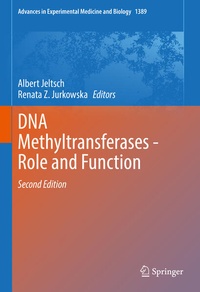
DNA Methyltransferases - Role and Function
Beschreibung

This 2 nd edition of the book on DNA methyltransferases has been comprehensively updated to reflect many novel research findings regarding the structure, function, and technology of these enzymes that have emerged over the past 6 years.
Like the previous edition, this 2 nd edition explains the biochemical properties of DNA methyltransferases, describing their structures, mechanisms and biological roles in bacteria, humans and plants. It also discusses the biological processes of reading DNA methylation and the mechanisms of DNA demethylation. This volume highlights the newest findings on DNA methyltransferase inhibitors and their use in cancer therapy as well as the latest epigenome editing systems based on these enzymes.
Overall, this 2 nd edition comprehensively summarizes the current state of research in the field of DNA methylation and DNA methyltransferase and is essential reading for early career and advanced researchers in this exciting field.
Weitere Details
Weitere Ausgaben
Andere Ausgaben
Vorauflage

Personen
Prof. Albert Jeltsch is a biochemist who received his PhD in Biochemistry 1994 at the Medical University Hannover (Germany). After PostDoc and Assistant Professorship (2003) at Justus-Liebig University in Giessen, he was appointed as Associate Professor of Biochemistry at Jacobs University Bremen in 2003, where he became Full Professor of Biochemistry in 2006. Prof. Jeltsch moved to the University of Stuttgart in 2011, where he is heading the Department of Biochemistry at the Institute of Biochemistry and Technical Biochemistry. For more than 25 years, the group of Prof. Jeltsch is investigating the structure, mechanism and function of bacterial and mammalian DNA methyltransferases. They have long-standing expertise in the field of rational and evolutionary protein design of DNA interacting enzymes and in the design of chimeric methylation enzymes for epigenome editing and gene regulation in eukaryotic cells. In addition, they study the specificity and activity of protein lysine methyltransferases and methyllysine reading domains and the biological role of protein methylation in cells.
Dr Renata Jurkowska is a molecular biologist with general interests in epigenetics, stem cells and lung biology. She obtained her M.Sc. degree in Biotechnology at Warsaw University (Poland) and went on to complete her PhD in Biochemistry and two postdocs in Germany, where she investigated the specificity and molecular mechanism of mammalian DNA methyltransferases and other epigenetic enzymes for 10 years. In 2015, she joined BioMed X Innovation Center (Germany) as a Principal Investigator, where she worked at the interface between academia and industry, leading a biomedical preclinical project in the field of respiratory medicine and epigenetics. In September 2019 she was appointed Senior Lecturer in the School of Biosciences at Cardiff University, UK. Her current research focuses on understanding how epigenetic regulation drives cellular identity in the healthy lung and how dysregulation of epigenetic processes due to environmental insults contributes to the development of lung diseases. Her group uses epigenomics technologies in combination with molecular biology tools to advance the mechanistic understanding of lung diseases, identify epigenetic biomarkers for diagnosis, and devise novel epigenetic therapeutic strategies.
