

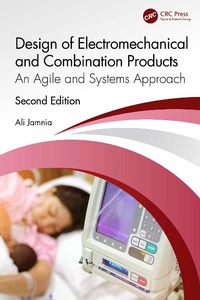
Design of Electromechanical and Combination Products
An Agile and Systems Approach
2. Auflage
Erschienen am 31. August 2023
460 Seiten
978-1-000-93015-3 (ISBN)
Beschreibung

The second edition of this work, now with the expanded title of Design of Electromechanical and Combination Products, covers the design and development of electromechanical products, updated throughout to focus not only on an Agile Systems approach but also its application to disposables and consumables.
Providing a practical set of guidelines and thorough examination of best practices, this book focuses on cutting-edge research on sustainability of electromechanical and combination products.
Key Features
Presents the design, development, and life cycle management of electromechanical and combination products
Provides a practical set of guidelines and best practices for world-class design
Explains the role of costing and pricing in product design
Covers Design for X and its role in product life-cycle management
Examines the dynamics of cross-functional design and product development teams
Develops DHF and DMR as tools and inherent components of configuration management
Includes numerous real-world examples of electromechanical and combination product designs
This book is intended for scientists, engineers, designers, and technical managers, and provides a gateway to developing a product's design history file (DHF) and device master record (DMR). These tools enable the design team to communicate a product's design, manufacturability, and service procedures with various cross-functional teams.
Providing a practical set of guidelines and thorough examination of best practices, this book focuses on cutting-edge research on sustainability of electromechanical and combination products.
Key Features
Presents the design, development, and life cycle management of electromechanical and combination products
Provides a practical set of guidelines and best practices for world-class design
Explains the role of costing and pricing in product design
Covers Design for X and its role in product life-cycle management
Examines the dynamics of cross-functional design and product development teams
Develops DHF and DMR as tools and inherent components of configuration management
Includes numerous real-world examples of electromechanical and combination product designs
This book is intended for scientists, engineers, designers, and technical managers, and provides a gateway to developing a product's design history file (DHF) and device master record (DMR). These tools enable the design team to communicate a product's design, manufacturability, and service procedures with various cross-functional teams.
Weitere Details
Auflage
2nd edition
Sprache
Englisch
Verlagsort
London
Großbritannien
Verlagsgruppe
Taylor & Francis Ltd
Zielgruppe
Für Beruf und Forschung
Illustrationen
69 Tables, black and white; 177 Line drawings, black and white; 8 Halftones, black and white; 185 Illustrations, black and white
ISBN-13
978-1-000-93015-3 (9781000930153)
Copyright in bibliographic data and cover images is held by Nielsen Book Services Limited or by the publishers or by their respective licensors: all rights reserved.
Schweitzer Klassifikation
Weitere Ausgaben
Andere Ausgaben
Buch
09/2025
2. Auflage
CRC Press
74,90 €
Versand in 10-20 Tagen
Buch
08/2023
2. Auflage
CRC Press
160,00 €
Versand in 10-20 Tagen
Person
Ali Jamnia, PhD, an innovative and dynamic leader with hands-on experience solving design issues via expertise in mechanical engineering, product development, and reliability practices, excels in high-volume environments with ability to navigate ever-changing business needs.
He cultivates partnerships and build trusted relationships, working with internal and external stakeholders, partners, and professionals during large-scale, complex projects. He leads diverse on- and off-shore teams, ensuring a high level of performance standards, while simultaneously enhancing workstreams and output. His experience is complemented by a PhD and MS in Engineering Mechanics at Clemson University, as well as experience in securing 12 patents. He has published four books by CRC Press along with a number of technical and nontechnical papers and presentations. His expertise includes Innovation, Product Development and Design, Reliability, Mechanical Engineering, Testing, Process Improvements, Problem Solving, and Out of the Box Thinking.
He cultivates partnerships and build trusted relationships, working with internal and external stakeholders, partners, and professionals during large-scale, complex projects. He leads diverse on- and off-shore teams, ensuring a high level of performance standards, while simultaneously enhancing workstreams and output. His experience is complemented by a PhD and MS in Engineering Mechanics at Clemson University, as well as experience in securing 12 patents. He has published four books by CRC Press along with a number of technical and nontechnical papers and presentations. His expertise includes Innovation, Product Development and Design, Reliability, Mechanical Engineering, Testing, Process Improvements, Problem Solving, and Out of the Box Thinking.
Inhalt
Section I Front End: Product Development Lifecycle Management and Roadmap
Chapter 1 Product Lifecycle Management Models
Section II Requirements and Their Cascade
Chapter 2 Systems and Requirements
Chapter 3 Developing a Product's Requirements
Chapter 4 Concept Development and Selection
Chapter 5 Initial DFMEA and Product Risk Assessment
Chapter 6 Transfer Functions
Section III The Nuts and Bolts of the Design
Chapter 7 The Virtual Product
Chapter 8 The 2D Engineering Drawings
Chapter 9 Design for X (DfX)
Section IV Preparation for Product Launch
Chapter 10 Cost Requirements Cascade and Purchasing
Chapter 11 Detailed DFMEA, PFMEA, and Control Plans
Chapter 12 Design Verification, Product Validation, and Design Transfer
Section V More on Agile
Chapter 13 Market and Customer Changing Needs
Section VI Sustaining a Marketed Product
Chapter 14 Configuration and Change Management
Chapter 15 Product Retirement and End of Life
Section VII Best Practices and Guidelines
Chapter 16 Tolerance Specification and Analysis
Chapter 17 Data, Measurements, Tests and Experiments
Chapter 18 Failure Analysis and Product Improvements
Chapter 19 Technical Reviews and Checklists
Chapter 20 Technical Writing and Communication Skills
Appendix A What Is Agile?
Appendix B A Case Study for Employing Agile Methodology
Chapter 1 Product Lifecycle Management Models
Section II Requirements and Their Cascade
Chapter 2 Systems and Requirements
Chapter 3 Developing a Product's Requirements
Chapter 4 Concept Development and Selection
Chapter 5 Initial DFMEA and Product Risk Assessment
Chapter 6 Transfer Functions
Section III The Nuts and Bolts of the Design
Chapter 7 The Virtual Product
Chapter 8 The 2D Engineering Drawings
Chapter 9 Design for X (DfX)
Section IV Preparation for Product Launch
Chapter 10 Cost Requirements Cascade and Purchasing
Chapter 11 Detailed DFMEA, PFMEA, and Control Plans
Chapter 12 Design Verification, Product Validation, and Design Transfer
Section V More on Agile
Chapter 13 Market and Customer Changing Needs
Section VI Sustaining a Marketed Product
Chapter 14 Configuration and Change Management
Chapter 15 Product Retirement and End of Life
Section VII Best Practices and Guidelines
Chapter 16 Tolerance Specification and Analysis
Chapter 17 Data, Measurements, Tests and Experiments
Chapter 18 Failure Analysis and Product Improvements
Chapter 19 Technical Reviews and Checklists
Chapter 20 Technical Writing and Communication Skills
Appendix A What Is Agile?
Appendix B A Case Study for Employing Agile Methodology
