

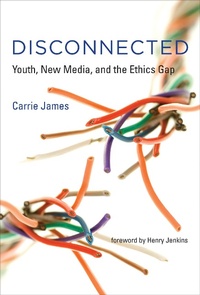
Disconnected
Beschreibung

Fresh from a party, a teen posts a photo on Facebook of a friend drinking a beer. A college student repurposes an article from Wikipedia for a paper. A group of players in a multiplayer online game routinely cheat new players by selling them worthless virtual accessories for high prices. In Disconnected, Carrie James examines how young people and the adults in their lives think about these sorts of online dilemmas, describing ethical blind spots and disconnects.
Drawing on extensive interviews with young people between the ages of 10 and 25, James describes the nature of their thinking about privacy, property, and participation online. She identifies three ways that young people approach online activities. A teen might practice self-focused thinking, concerned mostly about consequences for herself; moral thinking, concerned about the consequences for people he knows; or ethical thinking, concerned about unknown individuals and larger communities. James finds, among other things, that youth are often blind to moral or ethical concerns about privacy; that attitudes toward property range from "what's theirs is theirs” to "free for all”; that hostile speech can be met with a belief that online content is "just a joke”; and that adults who are consulted about such dilemmas often emphasize personal safety issues over online ethics and citizenship.
Considering ways to address the digital ethics gap, James offers a vision of conscientious connectivity, which involves ethical thinking skills but, perhaps more important, is marked by sensitivity to the dilemmas posed by online life, a motivation to wrestle with them, and a sense of moral agency that supports socially positive online actions.
Weitere Details
Weitere Ausgaben
Andere Ausgaben
Person
Henry Jenkins is Provost's Professor of Communication, Journalism and Cinematic Arts at the Annenberg School for Communication, University of Southern California. He is the coeditor of From Barbie to Mortal Kombat: Gender and Computer Games (MIT Press, 1998).
