

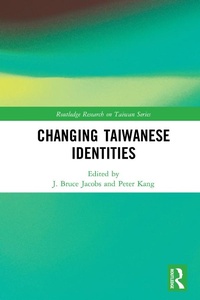
Changing Taiwanese Identities
Erschienen am 3. August 2017
142 Seiten
978-1-351-79494-7 (ISBN)
Beschreibung
The peoples of Taiwan have been influenced by many different cultures and migrations throughout the island's history. In the 20th and early 21st centuries especially it has been a stage for cultural and ethnic conflict, not least because of the arrival of mainland Chinese fleeing the Chinese Communist Revolution. The subsequent tensions between those who see Taiwan as a natural territory of China and those who would prefer to see it remain independent have brought to the fore questions of what it is to be 'Taiwanese'.
This book addresses the question of how Taiwanese identities have changed after the Taiwanization process which began in the 1990s. It also examines the impact of this process on cross-strait relations between Taiwan and the People's Republic of China after the return of the Kuomintang to power after 2008 and the Sunflower movement in 2014. The various contributors between them cover a range of topics including the waves of migration to Taiwan, changes of political regimes, generational differences and social movements. Taken as a whole, this book presents a nuanced picture of the patchwork of identities which exist in contemporary Taiwan.
This book addresses the question of how Taiwanese identities have changed after the Taiwanization process which began in the 1990s. It also examines the impact of this process on cross-strait relations between Taiwan and the People's Republic of China after the return of the Kuomintang to power after 2008 and the Sunflower movement in 2014. The various contributors between them cover a range of topics including the waves of migration to Taiwan, changes of political regimes, generational differences and social movements. Taken as a whole, this book presents a nuanced picture of the patchwork of identities which exist in contemporary Taiwan.
Rezensionen / Stimmen
'Here we have a smart book on an important but ever changing and complex reality: Taiwanese identities.' - Jean-Pierre Cabestan, Professor in Political Science, Hong Kong Baptist University, Hong Kong'An important 'change of identity' as outlined in Chapter 2 by Jolan Hsieh is that of the Plains Indigenous Peoples. Their changes, although occurring at similar stages to their settler counterparts, must be understood in their own context.' - Niki J.P. Alsford, Reader in Asia Pacific Studies, University of Central Lancashire, UK
Weitere Details
Reihe
Sprache
Englisch
Verlagsort
London
Großbritannien
Verlagsgruppe
Taylor & Francis Ltd
Zielgruppe
Für höhere Schule und Studium
Illustrationen
2 s/w Tabellen, 1 s/w Photographie bzw. Rasterbild, 1 s/w Zeichnung
2 Tables, black and white; 1 Line drawings, black and white; 1 Halftones, black and white; 2 Illustrations, black and white
Dateigröße
1,04 MB
ISBN-13
978-1-351-79494-7 (9781351794947)
Copyright in bibliographic data and cover images is held by Nielsen Book Services Limited or by the publishers or by their respective licensors: all rights reserved.
Schweitzer Klassifikation
Weitere Ausgaben
Personen
J. Bruce Jacobs is Emeritus Professor of Asian Languages and Studies at Monash University in Melbourne, Australia. His recent books on Taiwan include Local Politics in Rural Taiwan under Dictatorship and Democracy (Norwalk, CT: EastBridge, 2008), Democratizing Taiwan (Leiden and Boston: Brill, 2012), and The Kaohsiung Incident in Taiwan and Memoirs of a Foreign Big Beard (Leiden and Boston: Brill, 2016). He has also edited the four-volume Critical Readings on China-Taiwan Relations (Leiden and Boston: Brill, 2014). His current project is A History of Taiwan.
Peter Kang is Professor, International Master's Program in Asia-Pacific Area Studies / Department of Taiwan and Regional Studies, National Donghwa University, Taiwan. Email: kang@gms.ndhu.edu.tw
Peter Kang is Professor, International Master's Program in Asia-Pacific Area Studies / Department of Taiwan and Regional Studies, National Donghwa University, Taiwan. Email: kang@gms.ndhu.edu.tw
Inhalt
Chapter 1: Introduction
Chapter 2: The Changing Identities of Taiwan's Plains
Chapter 3: Seeking "Roots" in Taiwan: "Red Hair" and the Dutch Princess of Eight Treasures
Chapter 4: Languages under Colonization: The Taiwanese Language Movement
Chapter 5: Taiwanese Youth and National Identity under Ma Ying-jeou
Chapter 6: Lee Teng-hui and the formation of Taiwanese Identity
Chapter 7: Cyberspace and the Rise of Taiwanese Identity
Chapter 8: WANG Shi: Changes in the National Identification of a Third Generation Mainlander under Ma Ying-jeou
Chapter 2: The Changing Identities of Taiwan's Plains
Chapter 3: Seeking "Roots" in Taiwan: "Red Hair" and the Dutch Princess of Eight Treasures
Chapter 4: Languages under Colonization: The Taiwanese Language Movement
Chapter 5: Taiwanese Youth and National Identity under Ma Ying-jeou
Chapter 6: Lee Teng-hui and the formation of Taiwanese Identity
Chapter 7: Cyberspace and the Rise of Taiwanese Identity
Chapter 8: WANG Shi: Changes in the National Identification of a Third Generation Mainlander under Ma Ying-jeou
