

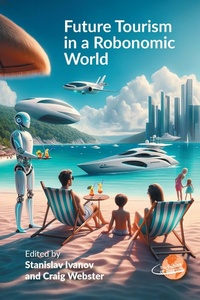
Future Tourism in a Robonomic World
Erschienen am 15. Oktober 2024
276 Seiten
978-1-84541-985-1 (ISBN)
Beschreibung

This book envisions the future of tourism in an economy that is largely automated. 'Robonomics' is the term given to this economic system that relies on robots, artificial intelligence and automation technologies for the production of goods and delivery of services instead of human labour. The volume examines the unique technological, socioeconomic and political situation that such an economy will create, and reflects on how tourism is then produced, consumed and paid for. The chapters explore some controversial solutions to the challenges of the robonomic economic system, such as redefinition of human rights, robot rights and universal basic income schemes. The chapters also consider the transition to a robonomic tourism ecosystem and the adjustments and innovations that will be required of consumers, industry and society.
Rezensionen / Stimmen
The contributors of this thought-provoking and forward-looking book expertly explain and illustrate how automation, and the economic principles connected to it, will transform every aspect of tourism. Understanding the foundations and potential implications of robonomics in tourism is a must for anyone who studies, researches, governs, designs, benefits from, or depends on tourism. * Ulrike Gretzel, University of Southern California, USA * Glad to endorse this book as an essential survival manual for navigating the tourism and hospitality industry in the era of robotics and automation. Offering invaluable insights into the opportunities and obstacles of future tourism within a robonomic world, where robots, artificial intelligence, and automation technologies reign supreme, it equips industry professionals with the knowledge and strategies needed to thrive in this rapidly evolving landscape. * Dimitrios Buhalis, Bournemouth University, UK * Robotic servers are an inescapable reality and are revolutionizing tourism. Penned by a team of robonomics experts, this eye-opening book takes readers on a journey toward the future of tourism, inspiring them to embrace the transformative potential of robotics in tourism. No one can escape robots, so prepare for a robotic-driven future of tourism with this must-read guide exploring the frontier. * Rosanna Leung, National Kaohsiung University of Hospitality and Tourism, Taiwan *Weitere Details
Reihe
Sprache
Englisch
Verlagsort
Bristol
Großbritannien
Verlagsgruppe
Channel View Publications Ltd
Zielgruppe
Für höhere Schule und Studium
Produkt-Hinweis
Reflowable
ISBN-13
978-1-84541-985-1 (9781845419851)
Copyright in bibliographic data and cover images is held by Nielsen Book Services Limited or by the publishers or by their respective licensors: all rights reserved.
Schweitzer Klassifikation
Weitere Ausgaben
Andere Ausgaben
Stanislav Ivanov | Craig Webster
Future Tourism in a Robonomic World
Buch
10/2024
Channel View Publications
51,40 €
Versand in 10-20 Tagen
Personen
Stanislav Ivanov is Professor at Varna University of Management, Bulgaria and Director of Zangador Research Institute, Bulgaria. He is the Editor-in-Chief of ROBONOMICS: The Journal of the Automated Economy and co-Editor-in-Chief of the European Journal of Tourism Research.
Craig Webster is Professor at Ball State University, USA. He is Editor-in-Chief of Tourism Today and Coordinating Editor of the International Journal of Hospitality Management.
Craig Webster is Professor at Ball State University, USA. He is Editor-in-Chief of Tourism Today and Coordinating Editor of the International Journal of Hospitality Management.
Inhalt
Contributors
Preface
Part 1: The Future History of Tourism
Chapter 0.1968 Craig Webster: Diary of Samantha Smith
Chapter 0.2068 Craig Webster: Diary of Siri Wang
Chapter 0.5 Craig Webster: The Transformation from 1968 to 2068
Part 2: Foundations of Robonomics
Chapter 1. Stanislav Ivanov: Principles and Drivers of Robonomics
Chapter 2. Stanislav Ivanov: Consequences of Robonomics
Chapter 3. Stanislav Ivanov: Solutions to the Challenges of Robonomics
Part 3: Robonomics and Future Tourism
Chapter 4. Craig Webster and Stanislav Ivanov: Implications of Robonomics on Future Tourism: An Overview
Chapter 5. Ellis Urquhart: Future Trajectories for Automated Tourism and Hospitality Services
Chapter 6. Stanislav Ivanov and May Kristin Vespestad: The Automated Tourism and Hospitality Company of the Future
Chapter 7. Katerina Berezina, Lisa Cain, Katerina Volchek and Cihan Cobanoglu: Creating Experiences through Automation Technologies
Chapter 8. Katerina Berezina, Olena Ciftci and Fernando Arroyo Lopez: Development of Robot-Friendly Hospitality Facilities
Chapter 9. Daniel Wright: Sex, Health and Wellness: Considering the Future Potential for Robots and Human Relationships within Tourism Resorts
Chapter 10. Craig Webster, Fernando J. Garrigos-Simon and Yeamduan Narangajavana-Kaosiri: The Sustainability of Tourism in Robonomics
Chapter 11. Stanislav Ivanov and Craig Webster: Future Tourism in a Robonomic World: An AI-Generated Chapter
Craig Webster and Stanislav Ivanov: Conclusion: The History of the Future: Robonomics and Tourism
Preface
Part 1: The Future History of Tourism
Chapter 0.1968 Craig Webster: Diary of Samantha Smith
Chapter 0.2068 Craig Webster: Diary of Siri Wang
Chapter 0.5 Craig Webster: The Transformation from 1968 to 2068
Part 2: Foundations of Robonomics
Chapter 1. Stanislav Ivanov: Principles and Drivers of Robonomics
Chapter 2. Stanislav Ivanov: Consequences of Robonomics
Chapter 3. Stanislav Ivanov: Solutions to the Challenges of Robonomics
Part 3: Robonomics and Future Tourism
Chapter 4. Craig Webster and Stanislav Ivanov: Implications of Robonomics on Future Tourism: An Overview
Chapter 5. Ellis Urquhart: Future Trajectories for Automated Tourism and Hospitality Services
Chapter 6. Stanislav Ivanov and May Kristin Vespestad: The Automated Tourism and Hospitality Company of the Future
Chapter 7. Katerina Berezina, Lisa Cain, Katerina Volchek and Cihan Cobanoglu: Creating Experiences through Automation Technologies
Chapter 8. Katerina Berezina, Olena Ciftci and Fernando Arroyo Lopez: Development of Robot-Friendly Hospitality Facilities
Chapter 9. Daniel Wright: Sex, Health and Wellness: Considering the Future Potential for Robots and Human Relationships within Tourism Resorts
Chapter 10. Craig Webster, Fernando J. Garrigos-Simon and Yeamduan Narangajavana-Kaosiri: The Sustainability of Tourism in Robonomics
Chapter 11. Stanislav Ivanov and Craig Webster: Future Tourism in a Robonomic World: An AI-Generated Chapter
Craig Webster and Stanislav Ivanov: Conclusion: The History of the Future: Robonomics and Tourism
