

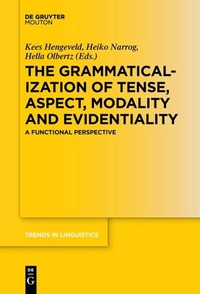
The Grammaticalization of Tense, Aspect, Modality and Evidentiality
Beschreibung

This book brings together a series of contributions to the study of grammaticalization of tense, aspect, and modality from a functional perspective. All contributions share the aim to uncover the functional motivations behind the processes of grammaticalization under discussion, but they do so from different points of view.
Rezensionen / Stimmen
"[...] this volume contains careful, high quality research by both leading and emerging scholars in the field and provides an important contribution to the study of the grammaticalization of TAME."
Brendon Yoder in: LINGUIST List 29.3638 (21.09.2018), https://linguistlist.org/issues/29/29-3638.html
Weitere Details
Weitere Ausgaben
Andere Ausgaben
Personen
K. Hengeveld , University of Amsterdam; H. Narrog , Tohoku University, Japan; H. Olbertz , University of Amsterdam.
Inhalt
- Intro
- Contents
- A functional perspective on the grammaticalization of tense, aspect, modality, and evidentiality
- A hierarchical approach to grammaticalization
- The interaction of components in a Functional Discourse Grammar account of grammaticalization
- Relationship of form and function in grammaticalization - the case of modality
- Modality and aspect marking in Surinamese Javanese: Grammaticalization and contact-induced change
- Grammaticalization of modality and evidentiality in Tundra Nenets
- The grammaticalization of progressive aspect in Persian
- Grammaticalization as morphosyntax and representation: Mood from tense markers in the Old Irish and Romance conditional
- The end of a cycle: Grammaticalization of the future tense in Mexican Spanish
- The grammaticalization of tenses and lexical aspect - the case of German and French perfects
- The grammaticalization of Dutch moeten: modal and post-modal meanings
- Name index
- Language index
- Subject index
