

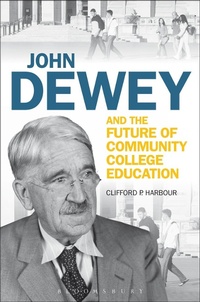
John Dewey and the Future of Community College Education
1. Auflage
Erschienen am 15. Januar 2015
240 Seiten
978-1-4411-2609-2 (ISBN)
Beschreibung
'Honorable Mention' 2016 PROSE Award - Education Theory
Today, community colleges enroll 40% of all undergraduates in the United States. In the years ahead, these institutions are expected to serve an even larger share of this student population. However, faced with increasing government pressure to significantly improve student completion rates, many community colleges will be forced to reconsider their traditional commitment to expand educational opportunity. Community colleges, therefore, are at a crossroads. Should they focus on improving student completion rates and divert resources from student recruitment programs? Should they improve completion rates by closing developmental studies programs and limiting enrollment to college-ready students? Or, can community colleges simultaneously expand educational opportunity and improve student completion?
In John Dewey and the Future of Community College Education, Cliff Harbour argues that before these questions can be answered, community colleges must articulate the values and priorities that will guide them in the future. Harbour proposes that leaders across the institution come together and adopt a new democracy-based normative vision grounded in the writings of John Dewey, which would call upon colleges to do much more than improve completion rates and expand educational opportunity. It would look beyond the national economic measures that dominate higher education policy debates today and would prioritize individual student growth and the development of democratic communities. Harbour argues that this, in turn, would help community colleges contribute to the vital work of reconstructing American democracy.
John Dewey and the Future of Community College Education is essential reading for all community college advocates interested in taking a more active role in developing the community college of the future.
Today, community colleges enroll 40% of all undergraduates in the United States. In the years ahead, these institutions are expected to serve an even larger share of this student population. However, faced with increasing government pressure to significantly improve student completion rates, many community colleges will be forced to reconsider their traditional commitment to expand educational opportunity. Community colleges, therefore, are at a crossroads. Should they focus on improving student completion rates and divert resources from student recruitment programs? Should they improve completion rates by closing developmental studies programs and limiting enrollment to college-ready students? Or, can community colleges simultaneously expand educational opportunity and improve student completion?
In John Dewey and the Future of Community College Education, Cliff Harbour argues that before these questions can be answered, community colleges must articulate the values and priorities that will guide them in the future. Harbour proposes that leaders across the institution come together and adopt a new democracy-based normative vision grounded in the writings of John Dewey, which would call upon colleges to do much more than improve completion rates and expand educational opportunity. It would look beyond the national economic measures that dominate higher education policy debates today and would prioritize individual student growth and the development of democratic communities. Harbour argues that this, in turn, would help community colleges contribute to the vital work of reconstructing American democracy.
John Dewey and the Future of Community College Education is essential reading for all community college advocates interested in taking a more active role in developing the community college of the future.
Rezensionen / Stimmen
The parallel analyses of the historical evolution of community colleges and John Dewey's work on democracy and education are each rich in their own right, but taken together they provide a critical overview of potential and promise. The author makes a compelling call for community college leaders to purposely advance the use of democratic communities to transform community colleges and create a better democracy. * Carlos Nevarez, Professor and Director of Doctorate in Educational Leadership, California State University, Sacramento, USA * In John Dewey and the Future of Community College Education, Harbour takes his readers on a provocative journey of the community colleges' landscape, analyzing their humble beginning, their evolving and transformative mission, and their purpose. Harbour explains the development of the community college and its institutional predecessor, the junior college, to show how these democratic institutions acquired their traditional vision of expanding educational opportunity and access. This is a fantastic read for both practitioners and non-practitioners, which will shed some light on the current state of community colleges in the USA and the competing interests and priorities that these institutions must grapple with. * Rassoul Dastmozd, President, Saint Paul College, USA * In an era of growing and dangerous inequalities, Cliff Harbour reaches back to John Dewey for the ideas, will and courage to recommit to a new version for what "America's College" should be. Harbour also reminds us of the value of knowing the past and calling forth those ideas that were - and still are - compelling of the betterment of us all. He connects current issues to our collective past and to our values, and identifies what could be lost if we don't change course. This book is well-researched and referenced; it will prove accessible to a wide range of readers. * William M. Timpson, Professor of Teaching and Learning, Colorado State University, USA * Harbour provides an alluring overview of the historical evolution of the community college and of the life and times of Dewey. Grounded in this context, he uses battle-tested Deweyan philosophy to articulate a bold, new, and innovative vision for community colleges that prioritizes individual growth and the development of democratic communities. The volume is a must-read for community college practitioners and scholars who seek to improve the institutions capacity to facilitate the upward social and economic mobility of individuals and communities. The volume is written in an accessible tone, which allows readers to envelop themselves in a history and story that compels them to reconsider the future. * J. Luke Wood, Doctorate in Education Director and Associate Professor of Community College Leadership, San Diego State University, USA *Weitere Details
Auflage
1. Auflage
Sprache
Englisch
Verlagsort
New York
USA
Verlagsgruppe
Bloomsbury Publishing PLC (Digital)
ISBN-13
978-1-4411-2609-2 (9781441126092)
Copyright in bibliographic data and cover images is held by Nielsen Book Services Limited or by the publishers or by their respective licensors: all rights reserved.
Schweitzer Klassifikation
Weitere Ausgaben
Person
Clifford P. Harbour is Associate Professor in the College of Education at the University of Wyoming, USA and President of the Council for the Study of Community Colleges, USA. He was a community college faculty member and administrator for 14 years.
Inhalt
Preface
Introduction
Part I: The Context
1. The Contemporary Community College
2. The Community College of The Future
3. Introducing John Dewey
Part II: The Evolution of the Community College
4 The Junior College Movement
5. The Great Depression and the Junior College
6. The Late 20th Century Normative Vision
7. Turning to a New Normative Vision
Part III: Dewey on Education, Democracy, and Community
8. The Relationship Between Democracy and Education
9. The Great Society and the Great Community
10. Dewey and the Great Depression
11. The Deweyan Community College
Bibliography
Index
Introduction
Part I: The Context
1. The Contemporary Community College
2. The Community College of The Future
3. Introducing John Dewey
Part II: The Evolution of the Community College
4 The Junior College Movement
5. The Great Depression and the Junior College
6. The Late 20th Century Normative Vision
7. Turning to a New Normative Vision
Part III: Dewey on Education, Democracy, and Community
8. The Relationship Between Democracy and Education
9. The Great Society and the Great Community
10. Dewey and the Great Depression
11. The Deweyan Community College
Bibliography
Index
