

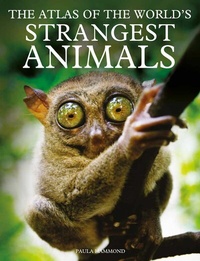
The Atlas of the World's Strangest Animals
Erschienen am 5. September 2023
224 Seiten
978-1-78274-232-6 (ISBN)
Beschreibung

How does a mudskipper fish manage to "walk" on land? Why is the Hoatzin also known as 'The Stinkbird'? And once the female Pipa toad has laid her eggs, where does she put them? The answers? The mudskipper can "walk" using its pectoral fins, the Hoatzin has a unique digestive system which gives the bird a manure-like odour, and the female Pipa Toad embeds its eggs on its back where they develop to adult stage. Illustrated throughout with outstanding full-colour artwork and detailed photographs, The Atlas of the World's Strangest Animals presents an in-depth look at 50 of the most unusual species. The selection spans a broad spectrum of wildlife, from the tallest land living mammal, the Giraffe, to the light, laughing chorus of Australian kookaburra birds to the intelligence of the Bottlenosed dolphin to the slow pace of the three-toed sloth. With chapters devoted to each of the continents and the world's oceans, the book's text describes the unusual characteristics of each animal and a map illustrates its geographical distribution. Four pages is given to each animal, with a 'Key Facts' box offering fascinating details on the animal's vital statistics such as weight, length, height, as well as information on their typical diet and life span. Ranging from the World's Oceans to the tropics and including egg-laying mammals, birds, reptiles, amphibians, cannibalistic insects and other invertebrates, The Atlas of the World's Strangest Animals is a fascinating introduction to some of nature's most curious beasts.
Alle Preise
Weitere Details
Auflage
Digital original
Sprache
Englisch
Verlagsort
Großbritannien
Verlagsgruppe
Amber Books Ltd
Zielgruppe
Für Kinder
Für Jugendliche
Reading Age: From 7 to 99 years
Editions-Typ
Digitale Ausgabe
Produkt-Hinweis
Reflowable
Illustrationen
180 colour artworks and 60 photos; 240 Illustrations
Dateigröße
43,94 MB
ISBN-13
978-1-78274-232-6 (9781782742326)
Copyright in bibliographic data and cover images is held by Nielsen Book Services Limited or by the publishers or by their respective licensors: all rights reserved.
Schweitzer Klassifikation
Person
Paula Hammond is the author of a range of children's books, including Atlas of the World's Strangest Animals, Atlas of the World's Endangered Animals, and Sharks & Underwater Monsters. She lives in London.
Inhalt
Contents
AFRICA Aardvark - A long-nosed, burrowing, sub-Saharan mammal. Jackson's chameleon - A reptile that can change colour depending on mood, health and temperature. Giraffe - The tallest of all land-living animal species, and the largest ruminant Hoopoe - A colourful bird that is found across Africa and Eurasia, the hoopoe is notable for its distinctive 'crown' of feathers. It is the only extant species in the family Upupidae and was considered sacred by the Ancient Egyptians. Naked Mole Rat - An extremely ugly mammal with very little hair. Gecko - A brightly-coloured lizard that is able to walk on ceilings.
ASIA Gharial - One of the longest living crocodiles. It has an unusual snout that gets thinner with age. Japanese Macaque - The most northern-dwelling non-human primate, the Japanese macaque is a very intelligent species. It is the only animal other than humans and raccoons that is known to wash its food before eating it. Mudskipper - An amphibious fish that can use its pectoral fins to "walk" on land. Probiscus Monkey - A distinctive trait of this monkey is the male's large protruding nose, from which it takes its name. Ratel (honeybadger) - A mammal that is known for being an intelligent tool-maker and is one of the most fearless animals. Siamese Fighting Fish - A colourful fish that follows an elaborate mating system in which the male has to protect the fertilised eggs from being eaten by the adult female. Tarsier - A quirky-looking primate with enormous eyes.
AUSTRALASIA Duck-billed Platypus - The only mammal that lays eggs. It also has a bizarre appearance. Red Kangaroo - The baby (joey) Kangaroo is only the size of a kidney bean when born, but has sufficient forearm strength to climb into its mother's pouch and grow there for nine months. Emu - The second largest bird in the world. The Emu is the only bird with muscles in the lower leg (calf muscles). Koala - The Koala is a thickset tree-dwelling marsupial herbivore. Its brain has shrunk over generations, perhaps due to its low nutrition diet of eucalyptus branches. Laughing Kookaburra - Known for its distinctive call, the small and stocky Kookaburra bird starts with a low, hiccupping chuckle, then throws its head back in raucous laughter: often several others join in. Short-Beaked Echidna - The Short-beaked Echidna is covered in fur and spines and has a distinctive snout and a specialized tongue, which it uses to catch its prey at a great speed. Sugarglider - This small gliding marsupial is native to Australia and New Guinea.
NORTH AMERICA American Bullfrog - This amphibian possesses a just-visible parietal eye between its eyes, which is photoreceptive and used for regulating the animal's circadian rhythm. American Mink - The mink is very territorial and males will fight other minks that invade their territory. Big Brown Bat - Big Brown Bats navigate through the night skies by use of echolocation, producing ultrasonic sounds through the mouth or nose. It is one of two vespertilionids to produce audible sound during flight. Its voice is a click or a sound like escaping steam. Southern Flying Squirrel - have a furry membrane called a patagium which extends between the front and rear legs, used to glide through the air. Great Grey Shrike - This songbird sings to its mate, to neighbours and mimics the song of smaller birds to lure them in for food. American Cockroach - Is one of the fastest running insects. Praying Mantis - A cannibalistic insect. Females are known to decapitate males after mating.
CENTRAL & SOUTH AMERICA Giant Otter - This is the noisiest otter species and distinct vocalizations have been documented that indicate alarm, aggressiveness, and reassurance. Hoatzin - A bird with an unusual digestive system. Scientists are unsure where it fits into the world of birds in general. Emperor Tamarin - A small mammal with a long curly, white moustache that lives in the rainforests. Pipa (Surinam) Toad - A toad that looks like a leaf. Pygmy Marmoset - An unusual, small, tree-dwelling monkey. Red Howler Monkey - A monkey that is considered to be the loudest land animal. Southern Tamandua - An anteater: one of the only mammals where the adults have no teeth. Three-toed Sloth - An odd-looking, four-legged mammal, the three-toed sloth swims well, lives mainly in trees and can only move on the ground by dragging itself along.
EUROPE Compass Jellyfish - Unlike many animals, jellyfish do not have a brain, a central nervous system, a respiratory or a digestive system. The Compass jellyfish is coloured white with brown. Cuckoo - The adult female cuckoo lays her egg in the nest of smaller birds, throwing one of those eggs out. The cuckoo chick then grows bigger than the other chicks in its nest and evicts them. Death's Head Hawkmoth - A moth that mimics the scent of bees. European Honey Bee - This insect uses quorum sensing, a method of collective decision making to decide where to build the next nest. Skylark - A small brown bird renowned for its display flight and song. Great Diving beetle - A sizeable aquatic diving beetle. Wels Catfish - A freshwater fish that is scaleless and has six barbels on its mouth.
THE WORLD'S OCEANS Bottlenose Dolphin - Dolphins are noted for their use of echolocation, their intelligence, sociability and friendliness towards humans and other mammals. Cleaner Wrasse - This fish is notable for its symbiotic relationship with bigger fish at cleaning stations: the bigger fish allow the Wrasse to eat parasites off its skin. Also, all Cleaner Wrasse are born female. Common Octopus - An Octopus is intelligent enough to learn how to unscrew a jar and is known to raid lobster traps. Angler Fish - A fleshy growth from the fish's head acts as a lure. Also, anglerfish are bioluminescent. Narwhal - A whale with a characteristic long, straight, helical tusk extending from its upper left jaw. Opalescent Squid - An Opalescent squid can change its colour shades depending on mood and for camouflage. Sea Anemone - A Sea Anemone is capable of both sexual and asexual reproduction. Seahorse - A distinct-looking fish. During social moments or in unusual surroundings, seahorses turn bright colours.
Index
AFRICA Aardvark - A long-nosed, burrowing, sub-Saharan mammal. Jackson's chameleon - A reptile that can change colour depending on mood, health and temperature. Giraffe - The tallest of all land-living animal species, and the largest ruminant Hoopoe - A colourful bird that is found across Africa and Eurasia, the hoopoe is notable for its distinctive 'crown' of feathers. It is the only extant species in the family Upupidae and was considered sacred by the Ancient Egyptians. Naked Mole Rat - An extremely ugly mammal with very little hair. Gecko - A brightly-coloured lizard that is able to walk on ceilings.
ASIA Gharial - One of the longest living crocodiles. It has an unusual snout that gets thinner with age. Japanese Macaque - The most northern-dwelling non-human primate, the Japanese macaque is a very intelligent species. It is the only animal other than humans and raccoons that is known to wash its food before eating it. Mudskipper - An amphibious fish that can use its pectoral fins to "walk" on land. Probiscus Monkey - A distinctive trait of this monkey is the male's large protruding nose, from which it takes its name. Ratel (honeybadger) - A mammal that is known for being an intelligent tool-maker and is one of the most fearless animals. Siamese Fighting Fish - A colourful fish that follows an elaborate mating system in which the male has to protect the fertilised eggs from being eaten by the adult female. Tarsier - A quirky-looking primate with enormous eyes.
AUSTRALASIA Duck-billed Platypus - The only mammal that lays eggs. It also has a bizarre appearance. Red Kangaroo - The baby (joey) Kangaroo is only the size of a kidney bean when born, but has sufficient forearm strength to climb into its mother's pouch and grow there for nine months. Emu - The second largest bird in the world. The Emu is the only bird with muscles in the lower leg (calf muscles). Koala - The Koala is a thickset tree-dwelling marsupial herbivore. Its brain has shrunk over generations, perhaps due to its low nutrition diet of eucalyptus branches. Laughing Kookaburra - Known for its distinctive call, the small and stocky Kookaburra bird starts with a low, hiccupping chuckle, then throws its head back in raucous laughter: often several others join in. Short-Beaked Echidna - The Short-beaked Echidna is covered in fur and spines and has a distinctive snout and a specialized tongue, which it uses to catch its prey at a great speed. Sugarglider - This small gliding marsupial is native to Australia and New Guinea.
NORTH AMERICA American Bullfrog - This amphibian possesses a just-visible parietal eye between its eyes, which is photoreceptive and used for regulating the animal's circadian rhythm. American Mink - The mink is very territorial and males will fight other minks that invade their territory. Big Brown Bat - Big Brown Bats navigate through the night skies by use of echolocation, producing ultrasonic sounds through the mouth or nose. It is one of two vespertilionids to produce audible sound during flight. Its voice is a click or a sound like escaping steam. Southern Flying Squirrel - have a furry membrane called a patagium which extends between the front and rear legs, used to glide through the air. Great Grey Shrike - This songbird sings to its mate, to neighbours and mimics the song of smaller birds to lure them in for food. American Cockroach - Is one of the fastest running insects. Praying Mantis - A cannibalistic insect. Females are known to decapitate males after mating.
CENTRAL & SOUTH AMERICA Giant Otter - This is the noisiest otter species and distinct vocalizations have been documented that indicate alarm, aggressiveness, and reassurance. Hoatzin - A bird with an unusual digestive system. Scientists are unsure where it fits into the world of birds in general. Emperor Tamarin - A small mammal with a long curly, white moustache that lives in the rainforests. Pipa (Surinam) Toad - A toad that looks like a leaf. Pygmy Marmoset - An unusual, small, tree-dwelling monkey. Red Howler Monkey - A monkey that is considered to be the loudest land animal. Southern Tamandua - An anteater: one of the only mammals where the adults have no teeth. Three-toed Sloth - An odd-looking, four-legged mammal, the three-toed sloth swims well, lives mainly in trees and can only move on the ground by dragging itself along.
EUROPE Compass Jellyfish - Unlike many animals, jellyfish do not have a brain, a central nervous system, a respiratory or a digestive system. The Compass jellyfish is coloured white with brown. Cuckoo - The adult female cuckoo lays her egg in the nest of smaller birds, throwing one of those eggs out. The cuckoo chick then grows bigger than the other chicks in its nest and evicts them. Death's Head Hawkmoth - A moth that mimics the scent of bees. European Honey Bee - This insect uses quorum sensing, a method of collective decision making to decide where to build the next nest. Skylark - A small brown bird renowned for its display flight and song. Great Diving beetle - A sizeable aquatic diving beetle. Wels Catfish - A freshwater fish that is scaleless and has six barbels on its mouth.
THE WORLD'S OCEANS Bottlenose Dolphin - Dolphins are noted for their use of echolocation, their intelligence, sociability and friendliness towards humans and other mammals. Cleaner Wrasse - This fish is notable for its symbiotic relationship with bigger fish at cleaning stations: the bigger fish allow the Wrasse to eat parasites off its skin. Also, all Cleaner Wrasse are born female. Common Octopus - An Octopus is intelligent enough to learn how to unscrew a jar and is known to raid lobster traps. Angler Fish - A fleshy growth from the fish's head acts as a lure. Also, anglerfish are bioluminescent. Narwhal - A whale with a characteristic long, straight, helical tusk extending from its upper left jaw. Opalescent Squid - An Opalescent squid can change its colour shades depending on mood and for camouflage. Sea Anemone - A Sea Anemone is capable of both sexual and asexual reproduction. Seahorse - A distinct-looking fish. During social moments or in unusual surroundings, seahorses turn bright colours.
Index
