

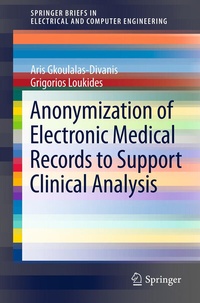
Anonymization of Electronic Medical Records to Support Clinical Analysis
Beschreibung

Anonymization of Electronic Medical Records to Support Clinical Analysis closely examines the privacy threats that may arise from medical data sharing, and surveys the state-of-the-art methods developed to safeguard data against these threats.
To motivate the need for computational methods, the book first explores the main challenges facing the privacy-protection of medical data using the existing policies, practices and regulations. Then, it takes an in-depth look at the popular computational privacy-preserving methods that have been developed for demographic, clinical and genomic data sharing, and closely analyzes the privacy principles behind these methods, as well as the optimization and algorithmic strategies that they employ. Finally, through a series of in-depth case studies that highlight data from the US Census as well as the Vanderbilt University Medical Center, the book outlines a new, innovative class of privacy-preserving methods designed to ensure the integrityof transferred medical data for subsequent analysis, such as discovering or validating associations between clinical and genomic information.
Anonymization of Electronic Medical Records to Support Clinical Analysis is intended for professionals as a reference guide for safeguarding the privacy and data integrity of sensitive medical records. Academics and other research scientists will also find the book invaluable.
Weitere Details
Weitere Ausgaben
Andere Ausgaben
Inhalt
Introduction.- Overview of patient data anonymization.- Re-identification of clinical data through diagnosis information.- Preventing re-identification while supporting GWAS.- Case study on electronic medical records data.- Conclusions and open research challenges.- Index.
