

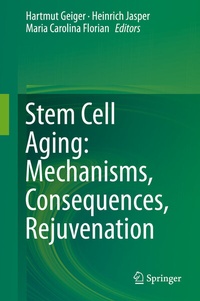
Stem Cell Aging: Mechanisms, Consequences, Rejuvenation
Beschreibung

Aging of somatic stem cells reduces cell function and results in dysfunctional organs and tissues, making it an underlying cause of diseases associated with aging. It might even be the primary cause for age-associated attrition of tissue function in organs that heavily rely on stem cells for maintaining homeostasis, like the skin, blood and intestines. Understanding the molecular and cellular mechanisms involved is critical for developing approaches to attenuate stem cell aging and could pave the way for improved quality of life among the elderly. Written by highly prominent experts in the field, this book presents the current state of knowledge on these mechanisms. It offers insights into stem cell function, explains in detail the mechanisms of stem cell aging in model organisms as well as mammalian systems and describes related diseases and approaches to attenuating stem cell aging or achieving rejuvenation. The book is intended for all scientists and clinicians working with stemcells, aging mechanisms or age-related diseases.
Rezensionen / Stimmen
"This book discusses the impact of aging on the many stem cell populations, the pathologies associated with the decline of stem cell functions, and the use of stem cells to attenuate stem cell aging. . The purpose is to provide a reference for researchers working in the field of healthy aging. The audience is clinicians and all scientists working in the field of aging, stem cells, and regenerative medicine." (Michele Fornaro, Doody's Book Reviews, October, 2015)
Weitere Details
Weitere Ausgaben
Andere Ausgaben
Personen
Hartmut Geiger studied chemistry and biochemistry at the Universities of Karlsruhe and Witten/Herdecke in Germany. He received his PhD from the Max-Planck-Institute for Immunobiology in Freiburg, Germany in 1999. From 1999 to 2002 he was scientific research fellow at the University of Kentucky, USA with expertise in stem cells, genetics and aging. From 2002 to 2008 he was Assistant Professor at the Division of Experimental Hematology, Cincinnati Children's Hospital Medical Center, University of Cincinnati, USA. Since 2008 he has been Associate Professor at the University of Cincinnati, USA and Professor at the University of Ulm, Division of Dermatology and Allergic Diseases, Germany. His main research interest lies in the molecular biology of aging.
