

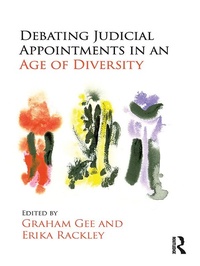
Debating Judicial Appointments in an Age of Diversity
1. Auflage
Erschienen am 11. September 2017
342 Seiten
978-1-315-40005-1 (ISBN)
Beschreibung
What should be the primary goals of a judicial appointments system, and how much weight should be placed on diversity in particular? Why is achieving a diverse judiciary across the UK taking so long? Is it time for positive action? What role should the current judiciary play in the appointment of our future judges?
There is broad agreement within the UK and other common law countries that diversity raises important questions for a legal system and its officials, but much less agreement about the full implications of recognising diversity as an important goal of the judicial appointments regime. Opinions differ, for example, on the methods, forms, timing and motivations for judicial diversity. To mark the tenth anniversary of the creation of the Judicial Appointments Commission (JAC) in England and Wales, this collection includes contributions from current and retired judges, civil servants, practitioners, current and former commissioners on the JAC and leading academics from Australia, Canada, South Africa and across the UK. Together they provide timely and authoritative insights into past, current and future debates on the search for diversity in judicial appointments.
Topics discussed include the role and responsibility of independent appointment bodies; assessments of the JAC's first ten years; appointments to the UK Supreme Court; the pace of change; definitions of 'merit' and 'diversity'; mandatory retirement ages; the use of ceiling quotas; and the appropriate role of judges and politicians in the appointments process.
There is broad agreement within the UK and other common law countries that diversity raises important questions for a legal system and its officials, but much less agreement about the full implications of recognising diversity as an important goal of the judicial appointments regime. Opinions differ, for example, on the methods, forms, timing and motivations for judicial diversity. To mark the tenth anniversary of the creation of the Judicial Appointments Commission (JAC) in England and Wales, this collection includes contributions from current and retired judges, civil servants, practitioners, current and former commissioners on the JAC and leading academics from Australia, Canada, South Africa and across the UK. Together they provide timely and authoritative insights into past, current and future debates on the search for diversity in judicial appointments.
Topics discussed include the role and responsibility of independent appointment bodies; assessments of the JAC's first ten years; appointments to the UK Supreme Court; the pace of change; definitions of 'merit' and 'diversity'; mandatory retirement ages; the use of ceiling quotas; and the appropriate role of judges and politicians in the appointments process.
Rezensionen / Stimmen
"In this excellent book on judicial appointments, the subject-matter is given the Routledge treatment by these two leading professors, Graham Gee and Erika Rackley... Depending on what you are researching, the 22 highly qualified experts cover these topics: a review of the role and responsibility of appointments commissions; assessments of the JAC's first ten years; appointments to the UK Supreme Court; the pace of change; definitions of 'merit' and 'diversity'; mandatory retirement ages; the use of ceiling quotas; and the appropriate role of judges and politicians in the appointments process. So, you should find what you are looking for!"Phillip Taylor MBE, reviews editor, "The Barrister"
Weitere Details
Auflage
1. Auflage
Sprache
Englisch
Verlagsort
London
Großbritannien
Verlagsgruppe
Taylor & Francis Ltd
Zielgruppe
Für höhere Schule und Studium
Illustrationen
5 Tables, black and white
Dateigröße
3,20 MB
ISBN-13
978-1-315-40005-1 (9781315400051)
Copyright in bibliographic data and cover images is held by Nielsen Book Services Limited or by the publishers or by their respective licensors: all rights reserved.
Schweitzer Klassifikation
Weitere Ausgaben
Personen
Graham Gee is Professor of Public Law at the University of Sheffield, UK.
Erika Rackley is Professor of Law at the University of Birmingham, UK.
Erika Rackley is Professor of Law at the University of Birmingham, UK.
Inhalt
Preface
List of Contributors
1. Introduction: Diversity and the JAC's First Decade
Graham Gee and Erika Rackley
2. The JAC's First Ten Years
Christopher Stephens CBE
Reflection
Sir Thomas Legg KCB QC
3. Power and Judicial Appointment: Squaring the Impossible CircleAlan Paterson OBE
4. 'Opening up' Commonwealth Judicial Appointments to Diversity? The Growing Role of
Commissions in Judicial Selection
Jan van Zyl Smit
5. The Judicial Service Commission: Lessons from South Africa
Cora Hoexter
6. Diversity without a Judicial Appointments Commission - The Australian Experience
Andrew Lynch
7. Diversity, Transparency and Inclusion in Canada's Judiciary
Samreen Beg and Lorne Sossin
Reflection
Frances Kirkham CBE
Reflection
Noel Lloyd CBE
8. Judging the JAC: How Much Judicial Influence Over Judicial Appointments Is Too Much?
Graham Gee
9. Judicial Diversity and Mandatory Retirement: Obstacle or Route to Diversity?
Alysia Blackham
Reflection
Karon Monaghan QC
10. Judicial Diversity: Complexity, Continuity and Change
Hilary Sommerlad
11. Beyond Merit: The New Challenge for Judicial Appointments
John Morison
12. Problems of Scale in Achieving Judicial Diversity
Rosemary Hunter
Reflection
Cordella Bart-Stewart
13. The Disruptive Potential of Ceiling Quotas in Addressing Over-Representation in the Judiciary
Kate Malleson
14. Three Models of Diversity
Erika Rackley and Charlie Webb
Reflection
Jenny Rowe CB
15. Appointments to the Supreme Court
Lady Hale DBE
Appendix I: The JAC's Selection Exercise Activity (2006-2016)
Appendix II: Key Officeholders During the JAC's First Decade
Appendix III: Outline of JAC Selection ProcessesAppendix IV: About the Cover Image
Index
List of Contributors
1. Introduction: Diversity and the JAC's First Decade
Graham Gee and Erika Rackley
2. The JAC's First Ten Years
Christopher Stephens CBE
Reflection
Sir Thomas Legg KCB QC
3. Power and Judicial Appointment: Squaring the Impossible CircleAlan Paterson OBE
4. 'Opening up' Commonwealth Judicial Appointments to Diversity? The Growing Role of
Commissions in Judicial Selection
Jan van Zyl Smit
5. The Judicial Service Commission: Lessons from South Africa
Cora Hoexter
6. Diversity without a Judicial Appointments Commission - The Australian Experience
Andrew Lynch
7. Diversity, Transparency and Inclusion in Canada's Judiciary
Samreen Beg and Lorne Sossin
Reflection
Frances Kirkham CBE
Reflection
Noel Lloyd CBE
8. Judging the JAC: How Much Judicial Influence Over Judicial Appointments Is Too Much?
Graham Gee
9. Judicial Diversity and Mandatory Retirement: Obstacle or Route to Diversity?
Alysia Blackham
Reflection
Karon Monaghan QC
10. Judicial Diversity: Complexity, Continuity and Change
Hilary Sommerlad
11. Beyond Merit: The New Challenge for Judicial Appointments
John Morison
12. Problems of Scale in Achieving Judicial Diversity
Rosemary Hunter
Reflection
Cordella Bart-Stewart
13. The Disruptive Potential of Ceiling Quotas in Addressing Over-Representation in the Judiciary
Kate Malleson
14. Three Models of Diversity
Erika Rackley and Charlie Webb
Reflection
Jenny Rowe CB
15. Appointments to the Supreme Court
Lady Hale DBE
Appendix I: The JAC's Selection Exercise Activity (2006-2016)
Appendix II: Key Officeholders During the JAC's First Decade
Appendix III: Outline of JAC Selection ProcessesAppendix IV: About the Cover Image
Index
