

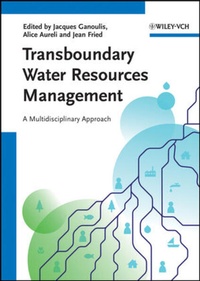
Transboundary Water Resources Management
A Multidisciplinary Approach
1. Auflage
Erschienen am 13. September 2013
XXXV, 382 Seiten
978-3-527-63667-9 (ISBN)
Beschreibung

Based on an international symposium addressing a key issue in global development, this reference includes both the latest methodologies for and practical examples of effective management of transboundary water resources. Its multidisciplinary approach combines hydrology and environmental science with economic and political approaches, in line with new UNESCO and EU recommendations, which have been formulated and implemented with the active involvement of all three editors.
By providing a theoretical framework as well as abundant case studies from southern Europe, Africa, Asia and South America, this handbook provides hydrologists, geologists, engineers and decision-makers with all the knowledge they need for their daily work.
By providing a theoretical framework as well as abundant case studies from southern Europe, Africa, Asia and South America, this handbook provides hydrologists, geologists, engineers and decision-makers with all the knowledge they need for their daily work.
Weitere Details
Weitere Ausgaben
Andere Ausgaben
Jacques Ganoulis | Alice Aureli | Jean Fried
Transboundary Water Resources Management
A Multidisciplinary Approach
Buch
09/2011
1. Auflage
Wiley-VCH
182,00 €
Versand in 5-7 Tagen
Software
09/2011
Wiley-VCH
228,94 €
Keine Lieferinformation verfügbar
Personen
Jacques Ganoulis is a Professor of Civil Engineering at the Aristotle University of Thessaloniki (Greece). He holds a PhD from the University of Toulouse (France) and has been a visiting scholar at the Universities of Erlangen (Germany), McGill (Canada), Melbourne (Australia), and Paris VI. He is the coordinator of the UNESCO International Network of Water-Environment Centres for the Balkans (INWEB).
Alice Aureli is the UNESCO Programme Specialist in charge of projects and studies related to aquifer systems and groundwater resources management, based in Paris (France). She graduated from the University of Catania (Italy) and obtained her postgraduate diploma in Hydrogeology from the University of Barcelona (Spain). She obtained her PhD degree in geochemistry from the University of Palermo in 1988.
Jean Fried manages the UNESCO-IHP ISARM project on transboundary groundwater education and training. He is currently a visiting scholar at the University of California at Irvine (USA).
Alice Aureli is the UNESCO Programme Specialist in charge of projects and studies related to aquifer systems and groundwater resources management, based in Paris (France). She graduated from the University of Catania (Italy) and obtained her postgraduate diploma in Hydrogeology from the University of Barcelona (Spain). She obtained her PhD degree in geochemistry from the University of Palermo in 1988.
Jean Fried manages the UNESCO-IHP ISARM project on transboundary groundwater education and training. He is currently a visiting scholar at the University of California at Irvine (USA).
Inhalt
Preface
INTRODUCTION AND STRUCTURE OF THE BOOK
Part I - A Global View
Part II - Physical, Environmental and Technical Approaches
Part III - Legal, Socio-Economic and Institutional Approaches
Part IV - Bridging the Gaps
PART I: A Global View
TRANSBOUNDARY WATER RESOURCES MANAGEMENT: NEEDS FOR A COORDINATED MULTIDISCIPLINARY APPROACH
Introduction
Assessment and Management of Transboundary Waters
The Integrated Water Resources Management (IWRM) Process
Capacity Building and Human Potential: The Role of Education
Conclusions
GLOBAL CHALLENGES AND THE EUROPEAN PARADIGM
Towards Integrated Management of Transboundary River Basins over the World
Antarctic Subglacial Lakes and Waters: The Challenge to Protect a Hidden Resource
Progressive Development of International Groundwater Law: Awareness and Cooperation
The Role of Key International Water Treaties in the Implementation of the Convention on Biological Diversity
The European Union Water Framework Directive, a Driving Force for Shared Water Resources Management
Transfer of Integrated Water Resources Management Principles to Non-European Union Transboundary River Basins
Implementation of the Water Framework Directive Concepts at the Frontiers of Europe for Transboundary Water Resources Management
Implementation of the European Union Water Framework Directive in Non-EU Countries: Serbia in the Danube River Basin
Basic Problems and Prerequisites Regarding Transboundary Integrated Water Resources Management in South East Europe: The Case of the River Evros/Maritza/Meric
PART II: Physical, Environmental and Technical Approaches
TRANSBOUNDARY AQUIFERS
Towards a Methodology for the Assessment of Internationally Shared Aquifers
Challenges in Transboundary Karst Water Resources Management - Sharing Data and Information
The Importance of Modelling as a Tool for Assessing
Hydrogeological Characterization of the Yrenda-Toba-Tarijeno Transboundary Aquifer System, South America
The State of Understanding on Groundwater Recharge for the Sustainable Management of Transboundary Aquifers in the Lake Chad Basin
Development, Management and Impact of Climate Change on Transboundary Aquifers of Indus Basin
Natural Background Levels for Groundwater in the Upper Rhine Valley
Hydrogeological Study of Somes-Szamos Transboundary Alluvial Aquifer
Towards Sustainable Management of Transboundary Hungarian-Servian Aquifer
Transboundary Groundwater Resources Extending over Slovenian Territory
TRANSBOUNDARY LAKES AND RIVERS
Do We Have Comparable Hydrological Data for Transboundary Cooperations?
Limnological and Palaeolimnological Research on Lake Maggiore as a Contribution to Transboundary Cooperation Between Italy and Switzerland
Monitoring in Shared Waters: Developing a Transboundary Monitoring System for the Prespa Park
Integrated Remote Sensing and Geographical Information System Techniques for Improving Transboundary Water Management: The Case of Prespa Region
Transboundary Integrated Water Management of the Kobilje Stream Watershed
Climate Change Impacts on Dams Projects in Transboundary River Basins. The Case of the Mesta/Nestos River Basin, Greece
Assessment of Climate Change Impacts on Water Resources in the Vjosa Basin
Identification and Typology of River Water Bodies in the Hellenic Part of the Strymonas River Basin, as a Transboundary Case Study
Calculation of Sediment Reduction at the Outlet of the Mesta/Nestos River Basis caused by the Dams
Methodologies of Estimation of Periodicities of River Flow and its Long-Range Forecast: The Case of the Transboundary Danube River
PART III: Legal, Socio-Economic and Institutional Approaches
LEGAL APPROACHES
The Law of Transboundary Aquifers: Scope and Rippling Effects
Water Management Policies to Reduce over Allocation of Water Rights in the Rio Grande/Bravo Basin
Interstate Collaboration in the Aral Sea Basin - Successes and Problems
Kidron Valley/Wadi Nar International Master Plan
The Development of Transboundary Cooperation in the Prespa Lakes Basin
I
INTRODUCTION AND STRUCTURE OF THE BOOK
Part I - A Global View
Part II - Physical, Environmental and Technical Approaches
Part III - Legal, Socio-Economic and Institutional Approaches
Part IV - Bridging the Gaps
PART I: A Global View
TRANSBOUNDARY WATER RESOURCES MANAGEMENT: NEEDS FOR A COORDINATED MULTIDISCIPLINARY APPROACH
Introduction
Assessment and Management of Transboundary Waters
The Integrated Water Resources Management (IWRM) Process
Capacity Building and Human Potential: The Role of Education
Conclusions
GLOBAL CHALLENGES AND THE EUROPEAN PARADIGM
Towards Integrated Management of Transboundary River Basins over the World
Antarctic Subglacial Lakes and Waters: The Challenge to Protect a Hidden Resource
Progressive Development of International Groundwater Law: Awareness and Cooperation
The Role of Key International Water Treaties in the Implementation of the Convention on Biological Diversity
The European Union Water Framework Directive, a Driving Force for Shared Water Resources Management
Transfer of Integrated Water Resources Management Principles to Non-European Union Transboundary River Basins
Implementation of the Water Framework Directive Concepts at the Frontiers of Europe for Transboundary Water Resources Management
Implementation of the European Union Water Framework Directive in Non-EU Countries: Serbia in the Danube River Basin
Basic Problems and Prerequisites Regarding Transboundary Integrated Water Resources Management in South East Europe: The Case of the River Evros/Maritza/Meric
PART II: Physical, Environmental and Technical Approaches
TRANSBOUNDARY AQUIFERS
Towards a Methodology for the Assessment of Internationally Shared Aquifers
Challenges in Transboundary Karst Water Resources Management - Sharing Data and Information
The Importance of Modelling as a Tool for Assessing
Hydrogeological Characterization of the Yrenda-Toba-Tarijeno Transboundary Aquifer System, South America
The State of Understanding on Groundwater Recharge for the Sustainable Management of Transboundary Aquifers in the Lake Chad Basin
Development, Management and Impact of Climate Change on Transboundary Aquifers of Indus Basin
Natural Background Levels for Groundwater in the Upper Rhine Valley
Hydrogeological Study of Somes-Szamos Transboundary Alluvial Aquifer
Towards Sustainable Management of Transboundary Hungarian-Servian Aquifer
Transboundary Groundwater Resources Extending over Slovenian Territory
TRANSBOUNDARY LAKES AND RIVERS
Do We Have Comparable Hydrological Data for Transboundary Cooperations?
Limnological and Palaeolimnological Research on Lake Maggiore as a Contribution to Transboundary Cooperation Between Italy and Switzerland
Monitoring in Shared Waters: Developing a Transboundary Monitoring System for the Prespa Park
Integrated Remote Sensing and Geographical Information System Techniques for Improving Transboundary Water Management: The Case of Prespa Region
Transboundary Integrated Water Management of the Kobilje Stream Watershed
Climate Change Impacts on Dams Projects in Transboundary River Basins. The Case of the Mesta/Nestos River Basin, Greece
Assessment of Climate Change Impacts on Water Resources in the Vjosa Basin
Identification and Typology of River Water Bodies in the Hellenic Part of the Strymonas River Basin, as a Transboundary Case Study
Calculation of Sediment Reduction at the Outlet of the Mesta/Nestos River Basis caused by the Dams
Methodologies of Estimation of Periodicities of River Flow and its Long-Range Forecast: The Case of the Transboundary Danube River
PART III: Legal, Socio-Economic and Institutional Approaches
LEGAL APPROACHES
The Law of Transboundary Aquifers: Scope and Rippling Effects
Water Management Policies to Reduce over Allocation of Water Rights in the Rio Grande/Bravo Basin
Interstate Collaboration in the Aral Sea Basin - Successes and Problems
Kidron Valley/Wadi Nar International Master Plan
The Development of Transboundary Cooperation in the Prespa Lakes Basin
I
