

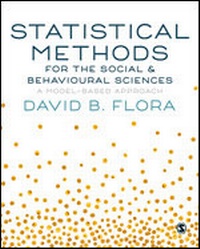
Statistical Methods for the Social and Behavioural Sciences
A Model-Based Approach
1. Auflage
Erschienen am 11. Dezember 2017
472 Seiten
978-1-5264-2194-4 (ISBN)
Beschreibung

Statistical methods in modern research increasingly entail developing, estimating and testing models for data. Rather than rigid methods of data analysis, the need today is for more flexible methods for modelling data.
In this logical, easy-to-follow and exceptionally clear book, David Flora provides a comprehensive survey of the major statistical procedures currently used. His innovative model-based approach teaches you how to:
Understand and choose the right statistical model to fit your data
Match substantive theory and statistical models
Apply statistical procedures hands-on, with example data analyses
Develop and use graphs to understand data and fit models to data
Work with statistical modeling principles using any software package
Learn by applying, with input and output files for R, SAS, SPSS, and Mplus.
Statistical Methods for the Social and Behavioural Sciences: A Model Based Approach is the essential guide for those looking to extend their understanding of the principles of statistics, and begin using the right statistical modeling method for their own data. It is particularly suited to second or advanced courses in statistical methods across the social and behavioural sciences.
In this logical, easy-to-follow and exceptionally clear book, David Flora provides a comprehensive survey of the major statistical procedures currently used. His innovative model-based approach teaches you how to:
Understand and choose the right statistical model to fit your data
Match substantive theory and statistical models
Apply statistical procedures hands-on, with example data analyses
Develop and use graphs to understand data and fit models to data
Work with statistical modeling principles using any software package
Learn by applying, with input and output files for R, SAS, SPSS, and Mplus.
Statistical Methods for the Social and Behavioural Sciences: A Model Based Approach is the essential guide for those looking to extend their understanding of the principles of statistics, and begin using the right statistical modeling method for their own data. It is particularly suited to second or advanced courses in statistical methods across the social and behavioural sciences.
Rezensionen / Stimmen
David B. Flora`s textbook, Statistical Methods for the Social and Behavioural Sciences, is a welcome offering for instructors and students alike. Not only is it well written and accessible, one of its main strengths is its coverage of techniques. The book begins with a substantial overview of multiple regression, including an up to date presentation of moderation and mediation, and takes the reader through a broad array of techniques, including Factor Analysis, Multi-level Modeling, and Structural Equation Modeling. The selection of content for this textbook is a strength! -- Dennis L Jackson In this exceptional textbook, David Flora has introduced an innovative model-based approach to understanding and applying statistical principles and techniques. This textbook helps students and researchers to understand their data and choose the most appropriate statistical models to fit to their data using any software package. The excellent and easy-to-follow style engages the reader and the use of clear illustrations and example data analyses makes advanced statistical procedures accessible to students and researchers. -- Jala Rizeq This book is so incredibly impressive. There are many general statistics texts in the field, but this one is fundamentally different by approaching the topic through a model-based perspective. It reaches a broad audience on many levels -- it's clearly technically rigorous, but makes wonderful use of bold in the text, call-out boxes, section recaps, and recommended readings. The topical coverage is also great -- this could be used either as a primary or secondary resource for a large variety of classes ranging from general introductions to multivariate topics to a graduate regression course. -- Patrick J. Curran The perfect companion guide to common statistical issues ranging from simple regression to structural equation modeling that new graduate students or seasoned faculty members will invariably encounter on their research journeys. This text will be useful for busy researchers throughout graduate school and tenure. Clear and accessible with engaging, thoughtful examples and diagrams, this is a welcome addition that will be my go-to text for guidance on statistical models. I foresee this text being on my bookshelf for years to come. -- Joshua Guilfoyle David Flora's Statistical Methods for the Social and Behavioural Sciences presents pertinent statistical topics with sufficient depth of coverage for an introductory multivariate textbook, and does so with an exceptional level of clarity. Interesting and relevant examples are accompanied by code from key software packages so that readers can further understand the concepts described in each chapter. For these reasons, Statistical Methods for the Social and Behavioural Sciences would serve as an excellent textbook for a graduate level multivariate course. -- Alyssa Counsell Dave Flora's textbook "Statistical Methods for the Social and Behavioural Sciences" is an excellent resource for graduate students, researchers, and professors alike who would like to improve their knowledge in a wide range of statistical methods. Each chapter provides the perfect balance of technical details to practical applications that provides an excellent foundation of knowledge without being overwhelming. Readers will find that this textbook is designed to answer their questions before they realize they have them and that it makes an invaluable addition to any researcher's bookshelf. -- Samantha Fashler This text by Dave Flora is an excellent resource for researchers. Each chapter builds upon the next in a logical progression. The use of examples throughout, particularly having datasets available online so you can follow-along yourself, ensures understanding. The structure of the individual chapters is so helpful, particularly the chapter summaries and annotated selections for recommended readings. It's a text I can see myself referring to frequently in the future. -- Caroline Barnes, PhD, R.PsychWeitere Details
Auflage
First Edition
Sprache
Englisch
Verlagsort
London
Großbritannien
Zielgruppe
Für höhere Schule und Studium
ISBN-13
978-1-5264-2194-4 (9781526421944)
Copyright in bibliographic data and cover images is held by Nielsen Book Services Limited or by the publishers or by their respective licensors: all rights reserved.
Schweitzer Klassifikation
Weitere Ausgaben
Andere Ausgaben
Buch
12/2017
1. Auflage
SAGE Publications Ltd
245,09 €
Artikel ist vergriffen; siehe Neuauflage
Person
David B. Flora is a Professor in the Department of Psychology at York University in Toronto, Canada. Dr. Flora has also served as Coordinator of the Quantitative Methods Area in York's graduate program in psychology as Coordinator of York's Statistical Consulting Service. As a quantitative psychologist, Dr. Flora is a coauthor on numerous journal articles focused on quantitative methodology itself as well as on a wide range of articles in which advanced quantitative methods are applied to substantive research topics in psychology. Dr. Flora earned his PhD from the Quantitative Psychology program at the University of North Carolina at Chapel Hill. Although he is now a Canadian, Dr. Flora remains a Tar Heel born and a Tar Heel bred.
Inhalt
1. Foundations of Statistical Modeling Demonstrated with Simple Regression
2. Multiple Regression with Continuous Predictors
3. Regression with Categorical Predictors
4. Interactions in Multiple Regression: Models for Moderation
5. Using Multiple Regression to Model Mediation and Other Indirect Effects
6. Introduction to Multilevel Modeling
7. Basic Matrix Algebra for Statistical Modeling
8. Exploratory Factor Analysis
9. Structural Equation Modeling I: Path Analysis
10. Structural Equation Modeling II: Latent Variable Models
11. Growth Curve Modeling
2. Multiple Regression with Continuous Predictors
3. Regression with Categorical Predictors
4. Interactions in Multiple Regression: Models for Moderation
5. Using Multiple Regression to Model Mediation and Other Indirect Effects
6. Introduction to Multilevel Modeling
7. Basic Matrix Algebra for Statistical Modeling
8. Exploratory Factor Analysis
9. Structural Equation Modeling I: Path Analysis
10. Structural Equation Modeling II: Latent Variable Models
11. Growth Curve Modeling
