

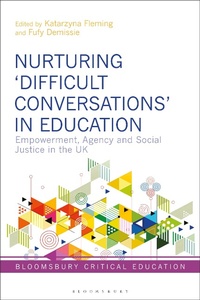
Nurturing 'Difficult Conversations' in Education
Empowerment, Agency and Social Justice in the Uk
1. Auflage
Erschienen am 11. Juli 2024
280 Seiten
978-1-350-33212-6 (ISBN)
Beschreibung
This book offers a critical discussion on the necessity for 'difficult conversations' to take place in education, drawing on studies from across the UK. The editors and contributors address three key questions:
- How can 'difficult conversations' be theorised?
- What transformations in thinking and practice can occur through 'difficult conversations'?
- What value do 'difficult conversations' have in enabling understanding and compassion between the diverse communities of today?
The chapters cover a range of topics including supporting children with SEND, parent and carer engagement, childhood trauma, race, disability, the climate emergency, and the researcher's positionality. The contributors draw on the theoretical work of bell hooks, Linda Alcoff, Paulo Freire, Victor Turner, Homi Bhabha, Nel Nodings, Melanie Nind, Emile Bojesen, Gayatri Chakravorty Spivak, Mathew Lipman, and other contemporary theories. They argue against the prevailing deficit-based perspectives about marginalized communities and invite deep thinking about the nature of oppression experienced in many spheres of education and therefore in our society. Ultimately, the book advocates for the empowerment and agency of anyone facing social inequalities through engagement in 'difficult conversations' as a means of transformation and social change.
- How can 'difficult conversations' be theorised?
- What transformations in thinking and practice can occur through 'difficult conversations'?
- What value do 'difficult conversations' have in enabling understanding and compassion between the diverse communities of today?
The chapters cover a range of topics including supporting children with SEND, parent and carer engagement, childhood trauma, race, disability, the climate emergency, and the researcher's positionality. The contributors draw on the theoretical work of bell hooks, Linda Alcoff, Paulo Freire, Victor Turner, Homi Bhabha, Nel Nodings, Melanie Nind, Emile Bojesen, Gayatri Chakravorty Spivak, Mathew Lipman, and other contemporary theories. They argue against the prevailing deficit-based perspectives about marginalized communities and invite deep thinking about the nature of oppression experienced in many spheres of education and therefore in our society. Ultimately, the book advocates for the empowerment and agency of anyone facing social inequalities through engagement in 'difficult conversations' as a means of transformation and social change.
Weitere Details
Reihe
Auflage
1. Auflage
Sprache
Englisch
Verlagsort
London
Großbritannien
Verlagsgruppe
Bloomsbury Publishing PLC
Zielgruppe
Für Beruf und Forschung
Illustrationen
10 bw illus
ISBN-13
978-1-350-33212-6 (9781350332126)
Copyright in bibliographic data and cover images is held by Nielsen Book Services Limited or by the publishers or by their respective licensors: all rights reserved.
Schweitzer Klassifikation
Weitere Ausgaben
Personen
Katarzyna Fleming is Senior Lecturer in Teacher Education at Sheffield Hallam University, UK.
Fufy Demissie is Senior Lecturer in Education at Shefield Hallam University, UK.
Fufy Demissie is Senior Lecturer in Education at Shefield Hallam University, UK.
Inhalt
Series Editor's Introduction
1. Introduction: Why Difficult Conversations Matter - In Search for Transformation and Personal Growth, Katarzyna Fleming (Sheffield Hallam University, UK) and Fufy Demissie (Sheffield Hallam University, UK)
Part I: 'Difficult Conversations' in Educational Settings
2. Transforming Autistic Children and Young People's School Experiences Through Difficult Conversations Between Educators, Jo Billington (University of Reading, UK)
3. Conversations Without 'Mouth Words': A Challenge or Learning for Transformative Educational Practice?, Katarzyna Fleming (Sheffield Hallam University, UK) and Julie Calveley (NAC Wellbeing, UK)
4. Should I Be Having this Conversation About Death?, Tracy Edwards (University of Aberdeen, UK)
5. Co-Production Between Parents and Special Educational Needs Coordinators (Sencos) - A Route to Transform Working Together, Lorna Hughes (Canterbury Christ Church University, UK)
Part II: 'Difficult Conversations' in Higher Education
6. Using a Community of Philosophical Inquiry Approach to Explore Race and Inequality in Higher Education Contexts, Fufy Demissie (Sheffield Hallam University, UK)
7. Challenging Hierarchical Barriers through Co-Creation of Curricula in HE: Students-Lecturers Reflection on Critical Dialogue, Elizabeth Collins (Leeds Beckett University, UK) and Hannah Wilson (Leeds Beckett University, UK)
8. Free Speech, Conversation, and the 'Difficulty' of Academic Freedom, Seán Henry (Edge Hill University, UK)
9. Engaging Educators in Conversation on Our Climate and Ecological Emergency, Elena Lengthorn (University of Worcester, UK)
Part III: 'Difficult Conversations' in the Research Context
10. (Looking) Behind the Mask: How Difficult Conversations in Research Can Illuminate the Complex Inner Worlds of the Teacher, Sally Hinchliff (Sheffield Hallam University, UK)
11. Enabling Difficult Conversations About Childhood Trauma with Care Experienced Children and Young People in the Home: A Conversation Between a Research and Adoptive Mother, Debbie Watson (University of Bristol, UK) and Alison Crowther (MadeToLast Resilience, UK)
12. Ethical Complexities of Having Difficult Research Conversations: A Reflective Account and a Cautionary Tale on Speaking for 'Others', Antonios Ktenidis (University of Sheffield, UK)
13. Fairness, Fruitfulness, Fact: An Argument for the Belonging of People with Profound Intellectual and Multiple Disabilities within Research, Joanna Grace (The Sensory Projects, UK)
1. Introduction: Why Difficult Conversations Matter - In Search for Transformation and Personal Growth, Katarzyna Fleming (Sheffield Hallam University, UK) and Fufy Demissie (Sheffield Hallam University, UK)
Part I: 'Difficult Conversations' in Educational Settings
2. Transforming Autistic Children and Young People's School Experiences Through Difficult Conversations Between Educators, Jo Billington (University of Reading, UK)
3. Conversations Without 'Mouth Words': A Challenge or Learning for Transformative Educational Practice?, Katarzyna Fleming (Sheffield Hallam University, UK) and Julie Calveley (NAC Wellbeing, UK)
4. Should I Be Having this Conversation About Death?, Tracy Edwards (University of Aberdeen, UK)
5. Co-Production Between Parents and Special Educational Needs Coordinators (Sencos) - A Route to Transform Working Together, Lorna Hughes (Canterbury Christ Church University, UK)
Part II: 'Difficult Conversations' in Higher Education
6. Using a Community of Philosophical Inquiry Approach to Explore Race and Inequality in Higher Education Contexts, Fufy Demissie (Sheffield Hallam University, UK)
7. Challenging Hierarchical Barriers through Co-Creation of Curricula in HE: Students-Lecturers Reflection on Critical Dialogue, Elizabeth Collins (Leeds Beckett University, UK) and Hannah Wilson (Leeds Beckett University, UK)
8. Free Speech, Conversation, and the 'Difficulty' of Academic Freedom, Seán Henry (Edge Hill University, UK)
9. Engaging Educators in Conversation on Our Climate and Ecological Emergency, Elena Lengthorn (University of Worcester, UK)
Part III: 'Difficult Conversations' in the Research Context
10. (Looking) Behind the Mask: How Difficult Conversations in Research Can Illuminate the Complex Inner Worlds of the Teacher, Sally Hinchliff (Sheffield Hallam University, UK)
11. Enabling Difficult Conversations About Childhood Trauma with Care Experienced Children and Young People in the Home: A Conversation Between a Research and Adoptive Mother, Debbie Watson (University of Bristol, UK) and Alison Crowther (MadeToLast Resilience, UK)
12. Ethical Complexities of Having Difficult Research Conversations: A Reflective Account and a Cautionary Tale on Speaking for 'Others', Antonios Ktenidis (University of Sheffield, UK)
13. Fairness, Fruitfulness, Fact: An Argument for the Belonging of People with Profound Intellectual and Multiple Disabilities within Research, Joanna Grace (The Sensory Projects, UK)
