

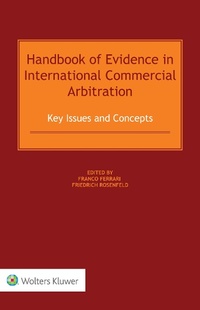
Handbook of Evidence in International Commercial Arbitration
Key Issues and Concepts
Erschienen am 7. April 2022
480 Seiten
978-94-035-4324-6 (ISBN)
Beschreibung

In arbitration, evidence provides the basis for almost every decision, be it procedural, jurisdictional, or substantive. However, users from different legal traditions may not share the same understanding as to how an arbitral tribunal ought to proceed in this regard. Therefore, it is important for lawyers to know how to collect, develop, and present evidence in arbitration proceedings, not only from a legal perspective but also from a cultural point of view. It is against this backdrop that the editors have invited a diverse group of distinguished arbitration practitioners and academics to contribute to this matchless Handbook of Evidence in International Commercial Arbitration.Key concepts and issues related to evidence in arbitration covered include the following:the normative framework on evidence in arbitration proceedings;the burden and standard of proof;means of evidence, including documents, experts, and witnesses;questions of admissibility, including issues of privilege and confidentiality;the assessment of evidence and its probative value;court assistance and sanctions.With its systematic analysis of the key concepts of evidence, holistic discussion of the applicable normative framework, cross-cultural perspectives on the taking of evidence in arbitration, and reference to case law from major arbitration hubs, this book will become an undisputed point of reference for academics and practitioners alike.Critical acclaim:"e;This handbook elegantly captures the range of issues that arises regarding evidence in international arbitration. Bringing together the foremost experts in the field, each contribution offers a thoughtful analysis on these issues and the compilation deserves a prominent spot in every practitioner's arbitral library."e;Chiann Bao, Independent Arbitrator (Arbitration Chambers) and Vice President of the ICC Court of Arbitration"e;This publication well deserves recognition as a landmark handbook on evidence in international commercial arbitration. It comprehensively discusses the whole evidentiary process from its foundations taking a comparative and harmonizing perspective as well as the burden and standards of proof to the various evidentiary means up to the assessment of evidence. Written by leading academics and practitioners from all over the world, it will be a safe haven for anyone facing discrete evidentiary issues and looking for answers to fundamental or actual questions including as to privileges, confidentiality, virtual hearings or data protection."e;Professor Filip De Ly, Chair of the ILA International Commercial Arbitration Committee
Weitere Details
Weitere Ausgaben
Andere Ausgaben
Franco Ferrari | Friedrich Rosenfeld
Handbook of Evidence in International Commercial Arbitration
Key Issues and Concepts
Buch
04/2022
Kluwer Law International
227,82 €
Versand in 15-20 Tagen
Inhalt
- Intro
- Half-Title Page
- Title Page
- Copyright Page
- Editors
- Contributors
- Summary of Contents
- Table of Contents
- Preface
- Part I Introduction
- CHAPTER 1 Cultures and the Taking of Evidence
- §1.01 INTRODUCTION
- §1.02 COMMON LAW VERSUS CIVIL LAW GENERAL DIFFERENCES
- §1.03 THE ROLE OF THE JUDGE/ARBITRATOR/DECISION-MAKER
- §1.04 CASE PRESENTATION/SUBMISSIONS
- §1.05 THE COLLECTION AND PRESENTATION OF EVIDENCE
- §1.06 CONCLUSION
- CHAPTER 2 The Normative Framework on the Taking of Evidence
- §2.01 INTRODUCTION
- §2.02 GENERAL APPROACH
- §2.03 EVIDENTIARY QUESTIONS AS PART OF THE APPLICABLE PROCEDURAL LAW
- §2.04 MANDATORY PROVISIONS
- [A] Types of Mandatory Provisions
- [B] Right to Be Heard
- [C] Right to Equal Treatment
- [D] Additional Mandatory Provisions from the Lex Arbitri
- [E] Data Protection Rules
- [F] Mandatory Provisions of Third States
- §2.05 AGREEMENT BY THE PARTIES
- [A] Overview on the Existing Formats and Their Relationship
- [B] Individually Agreed Rules for Evidentiary Issues
- [C] Agreement on a General Set of Arbitration Rules
- §2.06 DEFAULT RULES OF THE Lex Arbitri
- §2.07 POST-AWARD STAGE AND INTERNATIONAL CONVENTIONS
- §2.08 CONCLUDING REMARKS
- CHAPTER 3 The Interplay Between the Post-award and the Pre-award Regimes with Respect to a Tribunal's Treatment of Evidentiary Issues
- §3.01 INTRODUCTION
- §3.02 EVIDENTIARY ISSUES IN THE NORMATIVE FRAMEWORK ON POST-AWARD RELIEF
- §3.03 EVIDENTIARY ISSUES AT THE PRE-AWARD STAGE DETERMINED BY THE POST-AWARD REGIME
- [A] The Right to Be Heard
- [1] The Right to Make Submissions and Evidentiary Offers
- [2] The Right to Comment on Submissions and Evidentiary Offers
- [3] The Right to Comment on Findings of the Arbitral Tribunal
- [4] The Arbitral Tribunal's Duty to Take Cognizance and Consider the Parties' Submissions and Evidentiary Offers
- [B] The Right to Be Treated Equally
- §3.04 CONCLUSION
- Part II Burden and Standard of Proof
- CHAPTER 4 Demystifying the Burden of Proof in International Arbitration
- §4.01 INTRODUCTION
- §4.02 THE FUNDAMENTAL PRINCIPLE AND A SUGGESTED FRAMEWORK
- [A] Onus Probandi Incumbit Actori
- [B] A Framework for the Burden of Proof
- [C] Presumptions
- [D] Forms of Evidence and Adverse Inferences
- §4.03 BURDEN OF PROOF AND APPLICABLE LAW: SUBSTANTIVE, PROCEDURAL OR NEITHER?
- §4.04 JUDICIAL REVIEW OF ARBITRAL BURDEN OF PROOF DETERMINATIONS
- §4.05 TRIBUNAL GUIDANCE ON BURDEN OF PROOF
- §4.06 CONCLUSION
- CHAPTER 5 Standard of Proof in International Commercial Arbitration
- §5.01 INTRODUCTION
- §5.02 WHAT IS THE STANDARD OF PROOF?
- [A] The Burden and Standard of Proof
- [B] Standard of Proof in the Common Law Tradition
- [C] Standard of Proof in the Civil Law Tradition
- §5.03 HOW IS STANDARD OF PROOF DETERMINED?
- [A] Arbitration Laws and Rules
- [B] Commentary
- [C] Arbitral Practice
- §5.04 STANDARD OF PROOF IN SPECIAL CIRCUMSTANCES
- [A] Interim Measures
- [B] Quantification of Loss
- [C] Illegality
- [1] Arbitral Practice
- [2] Commentary
- [D] Sports Arbitration
- §5.05 CONCLUSION
- CHAPTER 6 Iura Novit Curia
- §6.01 INTRODUCTION
- §6.02 SPECIFICALLY ON THE TRIBUNAL'S POWERS
- [A] Party's Default
- [B] Adverse Inferences
- [C] Requesting Additional Information
- [D] Burden of Proof
- [E] Fair Hearing
- §6.03 VALIDITY AND ENFORCEMENT OF THE AWARD
- [A] Excess of Power
- [B] Impartiality
- [C] Right to Be Heard
- [D] Procedural Irregularity
- §6.04 TRIBUNAL'S OWN INITIATIVE TO PREVENT INVALID OR UNENFORCEABLE AWARDS
- [A] Corruption, Economic Crime, and Violation of Human Rights
- [B] Corruption: Can the Tribunal's Power Override the Parties' Agreement?
- §6.05 AN EMERGING TREND: DEMYTHOLOGIZING THE COMMON LAW/CIVIL LAW DIVIDE
- §6.06 CONCLUSION
- Part III Means of Evidence
- CHAPTER 7 Documentary Evidence
- §7.01 INTRODUCTION
- §7.02 LEGAL FRAMEWORK
- §7.03 DEFINITION OF A DOCUMENT'
- §7.04 CATEGORIES OF DOCUMENTS IN INTERNATIONAL ARBITRATION
- §7.05 DOCUMENTS RELIED ON BY THE PARTIES
- §7.06 DOCUMENT PRODUCTION IN INTERNATIONAL ARBITRATION
- [A] The IBA Regime for Production of Documents
- [B] Party Right to Deliver a Request to Produce Documents
- [C] Timing of a Request to Produce
- [D] The Content of a Request to Produce
- [1] Introduction and Overview
- [2] Description of the Document
- [E] Documents Maintained in Electronic Form
- [F] Statement of Relevance and Materiality
- [1] Introduction
- [2] Relevance and Materiality under the IBA Rules: What Does It Mean?
- [a] Relevance Versus Materiality
- [b] Relevant to the Case
- [c] Material to Outcome of the Case
- [G] Statement That Documents Are Not in Possession, Custody or Control of the Requesting Party
- [H] Statement of Reasons Why the Requesting Party Assumes That the Documents Are in the Possession, Custody or Control of Another Party
- [I] The Use of Redfern Schedules for Requests to Produce
- §7.07 OBJECTIONS TO PRODUCTION
- [A] Formal Objections Citing Non-compliance with Article 3.3 of the IBA Rules
- [B] Objections under Article 9.2 and 9.3 of the IBA Rules
- §7.08 SOME GENERAL ISSUES REGARDING DOCUMENTS
- [A] Conformity of Copy with the Original and Obligation to Present Original for Inspection
- [B] Multiple Identical Copies
- CHAPTER 8 Party-Appointed Experts in International Commercial Arbitration: A Necessity or a Nuisance?
- §8.01 PROLOGUE: THE NEED FOR PARTY-APPOINTED EXPERTS IN INTERNATIONAL ARBITRATION
- §8.02 CATEGORIES OF PARTY-APPOINTED EXPERTS
- §8.03 PROCESS OF APPOINTING EXPERTS
- [A] Appointment of Experts
- [B] Experts' Mandate and Engagement
- [1] The Pre-hearing Phase
- [2] The Hearing
- [a] Direct Examination
- [b] Re-examination
- [3] The Post-hearing Phase
- §8.04 RIGHTS AND OBLIGATIONS OF PARTY-APPOINTED EXPERTS
- [A] Rights of Party-Appointed Experts
- [B] Obligations of Party-Appointed Experts
- §8.05 REQUIREMENTS OF INDEPENDENCE AND IMPARTIALITY OF PARTY-APPOINTED EXPERTS IN COMPARISON TO TRIBUNAL-APPOINTED EXPERTS
- §8.06 VALUE OF PARTY-APPOINTED EXPERT REPORTS
- §8.07 ARBITRAL TRIBUNAL'S ASSESSMENT AND DETERMINATION OF EXPERT EVIDENCE
- §8.08 EXCLUSION OF PARTY-APPOINTED EXPERTS
- [A] Failure to Appear
- [B] Lack of Independence or Qualification
- [C] Conflict of Interest with a Tribunal Member
- [D] Knowledge of Confidential Information or Trade Secrets of the Counterparty
- §8.09 CROSS-EXAMINATION OF PARTY-APPOINTED EXPERTS
- [A] The Gist of Cross-Examination
- [B] Scope of Cross-Examination
- [1] Areas for Attacking the Expert
- [2] Areas for Seeking Agreement
- [C] Cross-Examination Techniques
- §8.10 EXPERT CONFERENCING AS A TOOL TO ASSESS AND WEIGH EXPERT EVIDENCE
- §8.11 EPILOGUE: CONCLUDING REMARKS
- CHAPTER 9 Tribunal-Appointed Experts in International Arbitration
- 9.01 Introduction
- 9.02 Overview of Tribunal-Appointed Experts in International Arbitration
- §9.03 THE CASE FOR USING TRIBUNAL-APPOINTED EXPERTS
- §9.04 WHERE TRIBUNAL-APPOINTED EXPERTS ARE NOT APPROPRIATE
- §9.05 PRACTICAL ISSUES ARISING FROM THE APPOINTMENT AND USE OF TRIBUNAL-APPOINTED EXPERTS
- [A] The Arbitral Tribunal's Power to Appoint One or More Experts
- [B] The Selection Process
- [C] The Parties' Right to Challenge Appointments
- [D] Rights and Powers of Tribunal-Appointed Experts
- [E] Presentation of the Expert's Findings
- [F] The Parties' Right to Respond to and Examine the Expert
- §9.06 CONCLUSION
- CHAPTER 10 Witnesses
- §10.01 SIGNIFICANCE OF WITNESS EVIDENCE
- §10.02 THE FALLIBILITY OF WITNESS MEMORY
- §10.03 PERSONS ELIGIBLE AS WITNESSES
- §10.04 MEANS OF OFFERING WITNESS EVIDENCE
- §10.05 WITNESS STATEMENTS
- [A] Are Witness Statements Necessary?
- [B] When to File Witness Statements
- [C] Elements of a Witness Statement
- [D] Level of Detail of Witness Statements
- [E] Who Drafts the Witness Statement?
- [F] Attaching Documents to Witness Statements
- §10.06 WITNESS PREPARATION
- [A] Witness Familiarization Versus Witness Preparation
- [B] Legal Considerations
- [C] Purposes of Witness Familiarization and Preparation
- [D] Methods of Preparing Witnesses
- [E] Useful Guidelines for Witnesses During Cross-Examination
- [1] Listening to the Question Carefully and Taking Your Time When Answering
- [2] Asking for Clarifications Where Necessary
- [3] Asking for Documents
- [4] Avoiding Speculations
- §10.07 CALLING FACT WITNESSES
- CHAPTER 11 Hearing
- §11.01 PHYSICAL HEARINGS AND PROCEDURAL PROTECTIONS
- [A] The Conduct of a Hearing
- [1] Whether to Conduct an Oral Hearing
- [2] Pre-hearing Considerations
- [3] The Structure of an Oral Hearing
- [4] The Tribunal's Conduct of Oral Hearings
- [B] Physical Hearing
- [1] Advantages and Disadvantages of Physical Hearings
- [2] Organisation of Physical Hearings
- [C] Procedural Protections for a Hearing
- [1] The Right to Be Heard
- [2] The Right to Equal Treatment
- [D] Issues that Implicate the Right to Be Heard and the Right to Equal Treatment
- [1] Time Allocation in the Hearing
- [2] Hearing of Evidence
- [3] Witnesses
- [4] Decision-Making
- §11.02 VIRTUAL HEARINGS AND EVIDENTIAL ISSUES
- [A] The Rise of Virtual Hearings
- [B] Is There a Right to a Physical Hearing?
- [C] Conduct of a Virtual Hearing
- [1] Virtual Hearing Protocol
- [2] Pre-hearing Preparations
- [D] Cross-Examination of Witnesses and Experts
- [1] Cross-Examination of Witnesses
- [2] Rethinking Witness Evidence Procedure
- [3] Expert Witness
- [4] Hot-Tubbing
- [5] Witness Coaching
- [E] Opportunity to Rethink Formulaic Practices
- [1] Fairness Versus Efficiency
- [2] Benefits of Virtual Hearings
- [3] Challenges of Virtual Hearings
- [F] Future of Virtual Hearings
- Part IV Admissibility of Evidence
- CHAPTER 12 Admissibility Issues Related to the Origin of the Evidence
- §12.01 THE ORIGIN OF EVIDENCE: AUTHENTICITY
- [A] Determining Authenticity: The Procedural Framework
- [B] Particular Issues Concerning Authenticity
- [1] Forgery
- [2] Copies of Documents: Including in Email Chains and Texts
- §12.02 IMPROPERLY OBTAINED EVIDENCE
- [A] Exclusionary Versus Inclusionary Approaches
- [B] Purloined or Hacked Documents
- [C] Wiretapping or Eavesdropping
- [D] Violation of Confidentiality Agreements
- §12.03 THE TREATMENT OF SECOND-HAND (OR HEARSAY') EVIDENCE
- [A] Whether to Exclude Second-Hand Evidence, or Treat It as Going to 'Weight'
- [B] Particular Issues Concerning Second-Hand Evidence
- [1] Traditional Business Records and 'Hearsay Within Hearsay'
- [2] Documents Obtained from the Internet
- [C] Official Certificates
- [D] Testimony Obtained in Prior Proceedings
- CHAPTER 13 Evidentiary Privileges
- §13.01 INTRODUCTION
- §13.02 TYPES OF PRIVILEGES RELEVANT IN INTERNATIONAL ARBITRATION
- [A] Attorney-Client Privilege
- [B] Business Secrets Privilege
- [C] 'Without Prejudice' Privilege and Mediation Privilege
- [D] Government Information Privilege
- §13.03 DETERMINING THE LAW APPLICABLE TO PRIVILEGES
- [A] The Problem: Silence of Arbitration Laws and Rules
- [B] The Conflict of Laws Rule
- [1] Choice of Law by the Parties
- [2] The 'Closest Connection Test'
- §13.04 ARTICLE 9.4(E) OF THE IBA RULES: MAINTAINING FAIRNESS AND EQUALITY IN THE APPLICATION OF PRIVILEGES WITH DIFFERENT PROTECTION STANDARDS
- §13.05 CONCLUSION
- CHAPTER 14 Confidentiality, Privacy and Data Protection in International Commercial Arbitration
- §14.01 INTRODUCTION
- §14.02 THE CASE FOR CONFIDENTIALITY
- §14.03 DEFINING AND DEALING WITH CONFIDENTIALITY
- §14.04 CONFIDENTIALITY, PRIVACY AND DATA PROTECTION
- [A] Privacy
- [B] Privacy Versus Confidentiality
- [C] Data Protection
- §14.05 DEFINING PERSONAL DATA
- [A] Australia
- [B] The United States
- [C] Australia, Singapore, the United States and the EU Compared
- §14.06 CONSENT
- §14.07 CONCLUSION
- Part V Assessment of Evidence
- CHAPTER 15 Assessing the Probative Value of Evidence
- §15.01 HOW ARBITRATORS THINK
- [A] Universal Concerns
- [1] Search for the Truth
- [2] Fairness and the Integrity of the Proceedings
- [3] Protecting the Award and Avoiding Subsequent Challenges
- [B] Legal Traditions May Affect Probative Value Accorded to Evidence
- [C] Conscious and Unconscious Bias in Arbitrators
- §15.02 TRIBUNALS ENJOY BROAD AUTHORITY TO DETERMINE THE PROBATIVE VALUE OF EVIDENCE
- [A] Arbitration Rules
- [B] National Laws
- [C] UNCITRAL Model Law (Article 19(2) and Its Legislative History)
- [D] Party Autonomy
- §15.03 GUIDANCE FOR ARBITRATORS IN ASSESSING THE WEIGHT OF EVIDENCE
- [A] Soft Law/International Practice and Procedure
- [B] Mandatory Norms
- §15.04 FACTORS THAT MAY IMPACT THE WEIGHT GIVEN TO EVIDENCE
- [A] Types of Evidence
- [1] Direct Versus Indirect Evidence
- [2] Contemporaneous Documents Versus Testimonial Evidence
- [3] Tested Versus Untested Testimonial Evidence
- [B] Common Principles
- [C] Documentary Evidence
- [D] Witness Testimony
- [E] Witness Memory
- §15.05 FINALITY OF THE TRIBUNAL'S ASSESSMENT OF EVIDENCE
- [A] United States
- [B] England
- [C] France
- [D] Switzerland
- CHAPTER 16 Adverse Inferences
- §16.01 INTRODUCTION
- §16.02 ADVERSE INFERENCES' THREE MAIN FUNCTIONS
- [A] Levelling the Playing Field
- [B] Improving Decisions by Supporting Arbitrators' Fact-Finding Discretion
- [C] Substituting for Direct Evidence
- [1] The Party Requesting an Adverse Inference Must Produce All Evidence Accessible to It Corroborating the Inference Sought
- [2] The Party Requesting the Adverse Inference Must Establish That the Requested Party Has, or Should Have, Access to the Evidence Sought
- [3] The Inference Sought Must Be Reasonable, Consistent with Facts in the Record, and Logically Related to the Probable Nature of the Evidence Withheld
- [a] Inferences Must Be Reasonable
- [b] The Inference Requested Must Be Consistent with Facts in the Record
- [c] The Requesting Party Must Establish a Logical Connection Between the Likely Nature of the Evidence Withheld and the Inference Sought
- [4] The Party Seeking the Adverse Inference Must Produce Prima Facie Evidence
- [5] The Tribunal Should Afford the Requested Party Sufficient Opportunity to Produce Evidence Prior to Drawing Adverse Inferences Against It
- §16.03 CONCLUSION
- Part VI Enforcement and Sanctions
- CHAPTER 17 National Court Assistance in the Taking of Evidence in Support of Commercial Arbitral Proceedings
- §17.01 INTRODUCTION
- §17.02 NATIONAL SYSTEMS GIVING COURTS POWER TO ASSIST IN GATHERING EVIDENCE FOR COMMERCIAL ARBITRATIONS
- [A] England, Wales and Northern Ireland
- [1] Section 43
- [2] Section 44
- [B] United States
- [1] The US FAA
- [2] Section 1782
- [C] The UNCITRAL Model Law on ICA
- [D] Germany
- [E] Hong Kong
- [1] Section 45: Interim Measures
- [2] Section 55: Assistance in the Taking of Evidence
- [3] Section 60: Inspection, Photographing and Protection of Property
- [F] Singapore
- [1] IAA, Section 12A: Interim Measures
- [2] IAA, Section 13: Subpoenas
- [3] Model Law Article 27 and Singapore Rules of Court 2021, Order 9, Rule 24: Pretrial Examinations
- [G] Party Autonomy and the IBA Rules on the Taking of Evidence
- §17.03 CONCLUSION
- CHAPTER 18 Costs and Other Sanctions
- §18.01 INTRODUCTION
- §18.02 PRELIMINARY OBSERVATIONS
- [A] Scope and Terminology
- [B] The Characterisation of Sanctions and Their Impact
- §18.03 EXAMPLES OF CONDUCT JUSTIFYING SANCTION
- [A] Refusal to Produce Evidence
- [B] Delay Tactics
- [C] Guerrilla Tactics
- §18.04 AUTHORITY TO IMPOSE SANCTIONS
- [A] Express Powers to Sanction Conduct with Respect to Evidence
- [1] The Arbitration Agreement
- [2] Institutional Arbitration Rules and Guidelines
- [3] The Arbitration Law at the Seat of Arbitration
- [B] Inherent Authority
- §18.05 SANCTIONS
- [A] Sanctioning Parties
- [1] Monetary Sanctions
- [a] Cost Allocation
- [b] Beyond Cost Allocation
- [2] Non-monetary Sanctions
- [a] Default Judgment
- [b] Measures Aimed at Preventing Future Harm
- [B] Sanctioning Counsel
- [1] Monetary Sanctions
- [2] Exclusion of Counsel from the Arbitration
- [3] Notifications to Bar Association or Arbitral Institution
- [C] A Final Note on Sanctioning Arbitrators
- §18.06 CONCLUSION
- Index
