

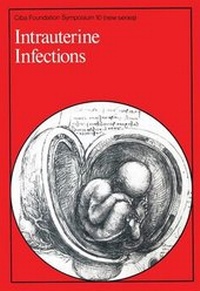
Intrauterine Infections
Erschienen am 16. September 2009
352 Seiten
978-0-470-71760-8 (ISBN)
Beschreibung

The Novartis Foundation Series is a popular collection of the proceedings from Novartis Foundation Symposia, in which groups of leading scientists from a range of topics across biology, chemistry and medicine assembled to present papers and discuss results. The Novartis Foundation, originally known as the Ciba Foundation, is well known to scientists and clinicians around the world.
Weitere Details
Weitere Ausgaben
Andere Ausgaben
Ciba Foundation
Ciba Foundation Symposium 10 - Intrauterine Infections
Software
05/2008
Wiley
82,57 €
Keine Lieferinformation verfügbar

Ciba Foundation
Ciba Foundation Symposium 10 - Intrauterine Infections
Buch
12/1973
Wiley
Preis leider unbekannt
Vom Verlag/Hersteller zurückgezogen
Personen
Katherine Elliott is the editor of Intrauterine Infections, published by Wiley.
Julie Knight is the editor of Intrauterine Infections, published by Wiley.
Inhalt
1 - Intrauterine Infections [Seite 5]
1.1 - Contents [Seite 7]
1.1.1 - Introduction [Seite 11]
1.1.2 - The clinical impact of intrauterine rubella [Seite 13]
1.1.2.1 - Discussion [Seite 22]
1.1.3 - Congenital cytomegalovirus infection [Seite 33]
1.1.3.1 - Discussion [Seite 42]
1.1.4 - The problem of congenital toxoplasmosis [Seite 55]
1.1.4.1 - Discussion [Seite 59]
1.1.5 - The virus laboratory in the diagnosis and prevention of congenital infections [Seite 63]
1.1.5.1 - Discussion [Seite 74]
1.1.6 - Foetal interferon responses induced by rubella virus [Seite 87]
1.1.6.1 - Discussion [Seite 100]
1.1.7 - Viral hepatitis type B: studies of congenital transmission [Seite 111]
1.1.7.1 - Discussion [Seite 120]
1.1.8 - Comparative aspects of infection during pregnancy [Seite 127]
1.1.8.1 - Discussion [Seite 140]
1.1.9 - Intrauterine bacterial infections [Seite 145]
1.1.9.1 - Discussion [Seite 156]
1.1.10 - The epidemiological approach to intrauterine infections [Seite 161]
1.1.10.1 - Discussion [Seite 168]
1.1.11 - Progress in prophylaxis: rubella [Seite 175]
1.1.11.1 - Discussion [Seite 180]
1.1.12 - Future developments in prophylaxis [Seite 189]
1.1.12.1 - Discussion [Seite 200]
1.1.13 - Summary [Seite 209]
1.1.14 - Appendix : Recommendations [Seite 213]
1.1.15 - Index of contributors [Seite 217]
1.1.16 - Subject index [Seite 219]
1.1 - Contents [Seite 7]
1.1.1 - Introduction [Seite 11]
1.1.2 - The clinical impact of intrauterine rubella [Seite 13]
1.1.2.1 - Discussion [Seite 22]
1.1.3 - Congenital cytomegalovirus infection [Seite 33]
1.1.3.1 - Discussion [Seite 42]
1.1.4 - The problem of congenital toxoplasmosis [Seite 55]
1.1.4.1 - Discussion [Seite 59]
1.1.5 - The virus laboratory in the diagnosis and prevention of congenital infections [Seite 63]
1.1.5.1 - Discussion [Seite 74]
1.1.6 - Foetal interferon responses induced by rubella virus [Seite 87]
1.1.6.1 - Discussion [Seite 100]
1.1.7 - Viral hepatitis type B: studies of congenital transmission [Seite 111]
1.1.7.1 - Discussion [Seite 120]
1.1.8 - Comparative aspects of infection during pregnancy [Seite 127]
1.1.8.1 - Discussion [Seite 140]
1.1.9 - Intrauterine bacterial infections [Seite 145]
1.1.9.1 - Discussion [Seite 156]
1.1.10 - The epidemiological approach to intrauterine infections [Seite 161]
1.1.10.1 - Discussion [Seite 168]
1.1.11 - Progress in prophylaxis: rubella [Seite 175]
1.1.11.1 - Discussion [Seite 180]
1.1.12 - Future developments in prophylaxis [Seite 189]
1.1.12.1 - Discussion [Seite 200]
1.1.13 - Summary [Seite 209]
1.1.14 - Appendix : Recommendations [Seite 213]
1.1.15 - Index of contributors [Seite 217]
1.1.16 - Subject index [Seite 219]
