

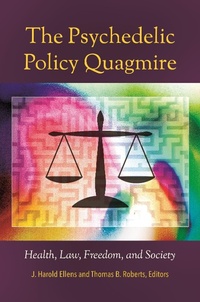
The Psychedelic Policy Quagmire
Health, Law, Freedom, and Society
1. Auflage
Erschienen am 18. August 2015
440 Seiten
979-8-216-13356-8 (ISBN)
Beschreibung

Edited by two preeminent scholars, this book provides coverage of the policy issues related to the increasingly diverse treatments, practices, and applications of psychedelics.
Hallucinogenic substances like LSD, mescaline, peyote, MDMA, and ayahuasca have a reputation as harmful substances that are enjoyed only by recreational users committing criminal acts. But leading international researchers and scholars who contributed to this book hold that the use of psychedelic substances for health, religious, intellectual, and artistic purposes is a Constitutional right-and a human right. Based on that conclusion, these scholars focus on policy issues that regulate the use of psychedelic drugs in medicine, religion, personal life, and higher education, arguing that existing regulations should match current and anticipated future uses.
This volume has two parts. The first surveys research on the use of psychedelic drugs in medicine, religion, and truth-seeking, following these topics through history and contemporary practice. The second section treats government policices that regulate the psychological, physiological, biochemical, and spiritual aspects of research and experience in these fields. The Psychedelic Policy Quagmire: Health, Law, Freedom, and Society challenges medical and legal policy experts, ethicists, scientists, and scholars with the question: How can we formulate policies that reduce the dangers of psychedelics' misuse and at the same time maximize the emerging diverse benefits?
Hallucinogenic substances like LSD, mescaline, peyote, MDMA, and ayahuasca have a reputation as harmful substances that are enjoyed only by recreational users committing criminal acts. But leading international researchers and scholars who contributed to this book hold that the use of psychedelic substances for health, religious, intellectual, and artistic purposes is a Constitutional right-and a human right. Based on that conclusion, these scholars focus on policy issues that regulate the use of psychedelic drugs in medicine, religion, personal life, and higher education, arguing that existing regulations should match current and anticipated future uses.
This volume has two parts. The first surveys research on the use of psychedelic drugs in medicine, religion, and truth-seeking, following these topics through history and contemporary practice. The second section treats government policices that regulate the psychological, physiological, biochemical, and spiritual aspects of research and experience in these fields. The Psychedelic Policy Quagmire: Health, Law, Freedom, and Society challenges medical and legal policy experts, ethicists, scientists, and scholars with the question: How can we formulate policies that reduce the dangers of psychedelics' misuse and at the same time maximize the emerging diverse benefits?
Weitere Details
Reihe
Auflage
1. Auflage
Sprache
Englisch
Verlagsort
New York
USA
Verlagsgruppe
Bloomsbury Publishing Plc
Zielgruppe
Interest Age: From 7 to 17 years
ISBN-13
979-8-216-13356-8 (9798216133568)
Copyright in bibliographic data and cover images is held by Nielsen Book Services Limited or by the publishers or by their respective licensors: all rights reserved.
Schweitzer Klassifikation
Weitere Ausgaben
Andere Ausgaben
J. Harold Ellens | Thomas B. Roberts Ph.D.
The Psychedelic Policy Quagmire
Health, Law, Freedom, and Society
Buch
08/2015
Praeger Publishers Inc
99,20 €
Versand in 10-20 Tagen
Personen
J. Harold Ellens, PhD, is a retired university professor of philosophy and psychology, a retired Presbyterian theologian and pastor, a retired U.S. Army chaplain (Colonel), and executive director emeritus of the Christian Association for Psychological Studies.
Thomas B. Roberts, PhD, is an emeritus professor of educational psychology at Northern Illinois University, where he taught Foundations of Psychedelic Studies as an Honors Program Seminar.
Thomas B. Roberts, PhD, is an emeritus professor of educational psychology at Northern Illinois University, where he taught Foundations of Psychedelic Studies as an Honors Program Seminar.
Inhalt
Series Editor's Foreword by J. Harold Ellens
Introduction by J. Harold Ellens and Thomas B. Roberts
Section I: Psychedelics, Medicine, Religion, and Truth
Chapter 1 You Have a Constitutional Right to Psychedelics: Academic Freedom, Personal Conscience, and Psychotechnologies
Thomas B. Roberts
Chapter 2 A Brief History of Psychedelics in Medical Practices: Psychedelic Medical History "before the Hiatus"
Ben Sessa
Chapter 3 Continuing History of Psychedelics in Medical Practices: The Renaissance of Psychedelic Medical Research
Ben Sessa
Chapter 4 Psychedelic Medicines
Michael J. Winkelman
Chapter 5 Psychedelic Psychotherapy Near the End of Life
Charles S. Grob and Alicia Danforth
Chapter 6 Do Drugs Have Religious Import? A 35-Year Retrospect
Huston Smith
Chapter 7 Understanding the Religious Import of Mystical States of Consciousness Facilitated by Psilocybin
William A. Richards
Chapter 8 Pilgrimage to the Light? On the Threshold of a Dream: Sacred Plants, Passionate Dedication to Ideals, and Healing
Richard Yensen
Chapter 9 Ayahuasca and the Vines of Politics
Danny Nemu
Chapter 10 Psychedelics as a Practice of Truth: A Foucauldian Argument
Pieter Stokkink
Chapter 11 The Transpersonal, Psychedelics, and Mainstream Psychology: Why the Wide Divide?
James R. Fadiman
Section II: Psychedelics, Psychology, Rights, and Policy
Chapter 12 Psychoactive Stimulation and Psychoactive Substances: Conceptual and Ethical Considerations
David Bryce Yaden, Derek Egan Anderson, Marcelo Gomes Mattar, and Andrew B. Newberg
Chapter 13 Mindapps and the Neurosingularity Project
Thomas B. Roberts
Chapter 14 Entheogenic Experience as a Human Right
Martin W. Ball
Chapter 15 Psychedelics and Criminality: A Possible Pathway to Reduced Recidivism?
Peter S. Hendricks
Chapter 16 Plant Psychedelics in the English Courts: Legal Uncertainty, Guinea Pigs, and "Dog Law"
Charlotte Walsh
Chapter 17 Therapeutic Hallucinogens: Altered State Laws for Altered States
Mitch Earleywine and Mallory Loflin
Chapter 18 Changing Psychedelics Policy
Neal M. Goldsmith
Chapter 19 The DEA: Four Decades of Impeding and Rejecting Science
Drug Policy Alliance and the Multidisciplinary Association for Psychedelic Studies
Chapter 20 Regulation of the Prescription Use of Psychedelics
Rick Doblin
Conclusion Dear God, No More Committees!
Thomas B. Roberts and J. Harold Ellens
About the Editors
About the Contributors
Index
Introduction by J. Harold Ellens and Thomas B. Roberts
Section I: Psychedelics, Medicine, Religion, and Truth
Chapter 1 You Have a Constitutional Right to Psychedelics: Academic Freedom, Personal Conscience, and Psychotechnologies
Thomas B. Roberts
Chapter 2 A Brief History of Psychedelics in Medical Practices: Psychedelic Medical History "before the Hiatus"
Ben Sessa
Chapter 3 Continuing History of Psychedelics in Medical Practices: The Renaissance of Psychedelic Medical Research
Ben Sessa
Chapter 4 Psychedelic Medicines
Michael J. Winkelman
Chapter 5 Psychedelic Psychotherapy Near the End of Life
Charles S. Grob and Alicia Danforth
Chapter 6 Do Drugs Have Religious Import? A 35-Year Retrospect
Huston Smith
Chapter 7 Understanding the Religious Import of Mystical States of Consciousness Facilitated by Psilocybin
William A. Richards
Chapter 8 Pilgrimage to the Light? On the Threshold of a Dream: Sacred Plants, Passionate Dedication to Ideals, and Healing
Richard Yensen
Chapter 9 Ayahuasca and the Vines of Politics
Danny Nemu
Chapter 10 Psychedelics as a Practice of Truth: A Foucauldian Argument
Pieter Stokkink
Chapter 11 The Transpersonal, Psychedelics, and Mainstream Psychology: Why the Wide Divide?
James R. Fadiman
Section II: Psychedelics, Psychology, Rights, and Policy
Chapter 12 Psychoactive Stimulation and Psychoactive Substances: Conceptual and Ethical Considerations
David Bryce Yaden, Derek Egan Anderson, Marcelo Gomes Mattar, and Andrew B. Newberg
Chapter 13 Mindapps and the Neurosingularity Project
Thomas B. Roberts
Chapter 14 Entheogenic Experience as a Human Right
Martin W. Ball
Chapter 15 Psychedelics and Criminality: A Possible Pathway to Reduced Recidivism?
Peter S. Hendricks
Chapter 16 Plant Psychedelics in the English Courts: Legal Uncertainty, Guinea Pigs, and "Dog Law"
Charlotte Walsh
Chapter 17 Therapeutic Hallucinogens: Altered State Laws for Altered States
Mitch Earleywine and Mallory Loflin
Chapter 18 Changing Psychedelics Policy
Neal M. Goldsmith
Chapter 19 The DEA: Four Decades of Impeding and Rejecting Science
Drug Policy Alliance and the Multidisciplinary Association for Psychedelic Studies
Chapter 20 Regulation of the Prescription Use of Psychedelics
Rick Doblin
Conclusion Dear God, No More Committees!
Thomas B. Roberts and J. Harold Ellens
About the Editors
About the Contributors
Index
