

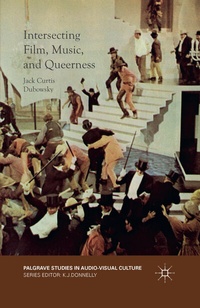
Intersecting Film, Music, and Queerness
Beschreibung
Intersecting Film, Music, and Queerness uses musicology and queer theory to uncover meaning and message in canonical American cinema. This study considers how queer readings are reinforced or nuanced through analysis of musical score. Taking a broad approach to queerness that questions heteronormative and homonormative patriarchal structures, binary relationships, gender assumptions and anxieties, this book challenges existing interpretations of what is progressive and what is retrogressive in cinema. Examined films include Bride of Frankenstein, Louisiana Story, Rudolph the Red-Nosed Reindeer, Blazing Saddles, Edward Scissorhands, Brokeback Mountain, Boys Don't Cry, Transamerica, Thelma & Louise, Go Fish and The Living End, with special attention given to films that subvert or complicate genre. Music is analyzed with concern for composition, intertextual references, absolute musical structures, song lyrics, recording, arrangement, and performance issues. This multidisciplinary work, featuring groundbreaking research, analysis, and theory, offers new close readings and a model for future scholarship.
Rezensionen / Stimmen
"I recommend Dubowsky's text as a useful starting place for someone who wishes to investigate queer film studies or film music, or who is establishing a bibliography towards these fields. The book would find frequent use in an institutional library." (C.J. Komp, Society for American Music, american-music.org, 2018)Weitere Details
Weitere Ausgaben
Person
Jack Curtis Dubowsky is a composer, author, music editor, educator, and filmmaker. Major musical works include Harvey Milk: A Cantata and an oratory with orchestra, Eisenhower Farewell Address. Dubowsky is a fellow of the Virginia Center for the Creative Arts.
Inhalt
Introduction
PART I: Mad About The Boy: Male Homosexuality and Music in Film
1. Louisiana Story, Homoeroticism, and Americana
2. Musical Cachet in The Living End and the New Queer Cinema
3. Brokeback Mountain Music
PART II: Fighting the Patriarchy: Dykes, Misogyny, and Gender Fear
4. A Tale of Two Walters: Genre and Gender Outsiders
5. Mainstreaming and Rebelling
PART III: Queering of Genre
6. Queer Monster Good: Frankenstein and Edward Scissorhands
7. Blazing Saddles: Music and Meaning in 'The French Mistake'
8. Conclusion
Index
