

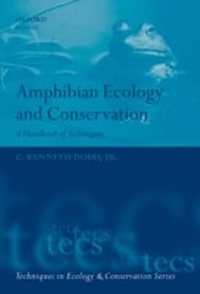
Amphibian Ecology and Conservation: A Handbook of Techniques
A Handbook of Techniques
1. Auflage
Erschienen am 17. September 2009
585 Seiten
978-0-19-157418-4 (ISBN)
Beschreibung
This practical manual of amphibian ecology and conservation brings together a distinguished, international group of amphibian researchers to provide a state-of-the-art review of the many new and exciting techniques used to study amphibians and to track their conservation status and population trends. The integration of ecology and conservation is a natural outcome of the types of questions posed by these disciplines: how amphibians can and should be sampled, marked, and followedthrough time, how abundance and population trends are measured, what are the robust statistical methods that can be used in ecology and conservation, what roles do amphibians play in community structure and function, how do animals function in their environment, and what affects the long-termpersistence of species assemblages?Although emphasizing field ecology, sections on physiological ecology, genetics, landscape ecology, and disease analysis are also included. The book describes the latest statistical approaches in amphibian field ecology and conservation, as well as the use of models in interpreting field research. Much of this information is scattered in the scientific literature or not readily available, and the intention is to provide an affordable, comprehensive synthesis for use by graduate students,researchers, and practising conservationists worldwide.
Weitere Details
Weitere Ausgaben
Inhalt
- Cover
- Contents
- List of contributors
- Part 1 Introduction
- 1 Amphibian diversity and life history
- 1.1 Introduction
- 1.2 Amphibian species richness and distribution
- 1.3 Amphibian lifestyles and life history diversity
- 1.4 Amphibian declines and why they matter
- 1.5 References
- 2 Setting objectives in field studies
- 2.1 Basic concepts for a good start
- 2.2 Steps required for a successful study
- 2.3 Trade-offs and pitfalls
- 2.4 Ethical issues
- 2.5 Acknowledgments
- 2.6 References
- Part 2 Larvae
- 3 Morphology of amphibian larvae
- 3.1 Background
- 3.2 Larval caecilians
- 3.3 Larval and larviform salamanders
- 3.4 Anuran tadpoles
- 3.5 Summary
- 3.6 References
- 4 Larval sampling
- 4.1 Introduction
- 4.2 Sampling techniques
- 4.3 Other techniques
- 4.4 Conclusions
- 4.5 Acknowledgments
- 4.6 References
- 5 Dietary assessments of larval amphibians
- 5.1 Background
- 5.2 Larval caecilians and salamanders
- 5.3 Anuran tadpoles
- 5.4 Assessing food sources and diets
- 5.5 Category III: assimilatory diet
- 5.6 Summary
- 5.7 References
- 6 Aquatic mesocosms
- 6.1 Introduction
- 6.2 Historical background
- 6.3 Why use mesocosms?
- 6.4 Types of mesocosm
- 6.5 Setting up mesocosms
- 6.6 Common experimental designs
- 6.7 Case studies
- 6.8 Conclusion
- 6.9 References
- 7 Water-quality criteria for amphibians
- 7.1 Introduction
- 7.2 Dissolved oxygen
- 7.3 Temperature
- 7.4 pH
- 7.5 Conductivity, hardness, and salinity
- 7.6 Total and dissolved organic carbon
- 7.7 Pollutants
- 7.8 Summary and conclusions
- 7.9 References
- Part 3 Juveniles and adults
- 8 Measuring and marking post-metamorphic amphibians
- 8.1 Introduction
- 8.2 Toe-clipping
- 8.3 Branding
- 8.4 Tagging and banding
- 8.5 Trailing devices
- 8.6 Pattern mapping
- 8.7 Passive integrated transponder (PIT) tags
- 8.8 Taking measurements
- 8.9 Recommendations
- 8.10 References
- 9 Egg mass and nest counts
- 9.1 Background: using egg mass and nest counts to monitor populations
- 9.2 Oviposition strategies
- 9.3 Egg-mass counts
- 9.4 Amphibian nests and nest counts
- 9.5 Clutch characteristics
- 9.6 Spatial distribution of eggs
- 9.7 Breeding phenology
- 9.8 Number of surveys needed
- 9.9 Estimating egg-mass detection probabilities
- 9.10 Variation in counts among observers
- 9.11 Marking eggs
- 9.12 Situations in which nest counts are not practical
- 9.13 How to count eggs in a nest
- 9.14 Estimating hatching success
- 9.15 Analysis of egg-mass count data
- 9.16 Summary
- 9.17 References
- 10 Dietary assessments of adult amphibians
- 10.1 Introduction
- 10.2 Methods to obtain prey items: historical overview
- 10.3 Data analysis
- 10.4 General considerations
- 10.5 Conclusions
- 10.6 Acknowledgments
- 10.7 References
- 11 Movement patterns and radiotelemetry
- 11.1 Introduction
- 11.2 Equipment
- 11.3 Surgical techniques
- 11.4 Tracking procedures
- 11.5 Analysis of movement data
- 11.6 Validation of telemetry procedures
- 11.7 Conclusions
- 11.8 References
- 12 Field enclosures and terrestrial cages
- 12.1 Introduction: amphibians in the terrestrial environment
- 12.2 What are the purposes of terrestrial enclosures?
- 12.3 Defining the research question
- 12.4 Constructing enclosures
- 12.5 Study species
- 12.6 Census techniques
- 12.7 Response metrics
- 12.8 Thinking outside the box
- 12.9 References
- Part 4 Amphibian populations
- 13 Drift fences, coverboards, and other traps
- 13.1 Introduction
- 13.2 Drift fences, funnel traps, and other passive capture methods
- 13.3 Coverboards and other traps that require active capture
- 13.4 References
- 14 Area-based surveys
- 14.1 Introduction: what are area-based surveys?
- 14.2 Kinds of area-based survey
- 14.3 Specific examples of area-based surveys
- 14.4 Modifications
- 14.5 Design issues: choice of sampling unit
- 14.6 An example of study design
- 14.7 Assumptions of area-based surveys
- 14.8 Summary and recommendations
- 14.9 References
- 15 Rapid assessments of amphibian diversity
- 15.1 Background: rapid assessment of amphibian diversity
- 15.2 Planning an RA
- 15.3 In the field
- 15.4 Compiling data and interpreting results
- 15.5 Recommendations and reporting
- 15.6 Summary
- 15.7 References
- 16 Auditory monitoring of anuran populations
- 16.1 Introduction
- 16.2 MCS
- 16.3 ARS
- 16.4 Conclusions
- 16.5 Acknowledgments
- 16.6 References
- 17 Measuring habitat
- 17.1 Introduction
- 17.2 Habitat selection
- 17.3 Spatial and temporal scale
- 17.4 Approaches for examining habitat selection
- 17.5 Determining availability
- 17.6 What to measure
- 17.7 Weather variables
- 17.8 Aquatic habitat
- 17.9 Physical habitat variables
- 17.10 Chemical variables
- 17.11 Measuring vegetation
- 17.12 Edaphic features
- 17.13 Conclusion
- 17.14 References
- Part 5 Amphibian communities
- 18 Diversity and similarity
- 18.1 Introduction
- 18.2 Data transformation
- 18.3 Species diversity
- 18.4 Similarity
- 18.5 Software
- 18.6 Summary
- 18.7 References
- 19 Landscape ecology and GIS methods
- 19.1 Introduction
- 19.2 Applications of spatial data for amphibian conservation
- 19.3 Spatial statistics
- 19.4 Limitations and future directions
- 19.5 References
- Part 6 Physiological ecology and genetics
- 20 Physiological ecology: field methods and perspective
- 20.1 Introduction
- 20.2 Heat exchange, body temperature, and thermoregulation
- 20.3 Water relations
- 20.4 Measuring water exchange
- 20.5 Energetics
- 20.6 Modeling amphibian-environment interactions
- 20.7 Other issues and future research directions
- 20.8 References
- 21 Models in field studies of temperature and moisture
- 21.1 Introduction
- 21.2 Field models for investigating temperature and moisture
- 21.3 Summary and future developments
- 21.4 References
- 22 Genetics in field ecology and conservation
- 22.1 Background: the importance of genetics in ecology and conservation
- 22.2 Molecular methods for investigating amphibian populations
- 22.3 Analysis of genetic data
- 22.4 Future developments
- 22.5 References
- Part 7 Monitoring, status, and trends
- 23 Selection of species and sampling areas: the importance to inference
- 23.1 Introduction
- 23.2 Sampling
- 23.3 Study sites and consequences of convenience sampling
- 23.4 Abundance and inference
- 23.5 Conclusions
- 23.6 Acknowledgments
- 23.7 References
- 24 Capture-mark-recapture, removal sampling, and occupancy models
- 24.1 Introduction
- 24.2 Estimating amphibian population size and vital rates
- 24.3 Estimating amphibian occupancy and vital rates
- 24.4 Summary and general recommendations
- 24.5 Disclaimer
- 24.6 References
- 25 Quantifying abundance: counts, detection probabilities, and estimates
- 25.1 Background: imperfect detection in amphibian ecology and conservation
- 25.2 Imperfect detection
- 25.3 Components of imperfect detection
- 25.4 How to deal with imperfect detection
- 25.5 Designing a sampling protocol
- 25.6 Software
- 25.7 Outlook
- 25.8 References
- 26 Disease monitoring and biosecurity
- 26.1 Introduction
- 26.2 Amphibian diseases of concern
- 26.3 Disease monitoring: detection and diagnosis
- 26.4 Biosecurity: preventing disease transmission
- 26.5 Conclusions
- 26.6 References
- 27 Conservation and management
- 27.1 Introduction
- 27.2 Managing amphibian populations
- 27.3 Wetland breeding sites
- 27.4 Terrestrial habitats
- 27.5 Migratory and dispersal routes
- 27.6 Intensive manipulation of individuals
- 27.7 Conclusion
- 27.8 References
- Index
- A
- B
- C
- D
- E
- F
- G
- H
- I
- J
- K
- L
- M
- N
- O
- P
- Q
- R
- S
- T
- U
- V
- W
- X
- Y
- Z
