

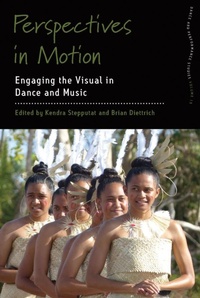
Perspectives in Motion
Engaging the Visual in Dance and Music
1. Auflage
Erschienen am 10. März 2021
340 Seiten
978-1-80539-560-7 (ISBN)
Beschreibung
Focusing on visual approaches to performance in global cultural contexts, Perspectives in Motion explores the work of Adrienne L. Kaeppler, a pioneering researcher who has made a number of interdisciplinary contributions over five decades to dance and performance studies. Through a diverse range of case studies from Oceania, Asia, and Europe, and interdisciplinary approaches, this edited collection offers new critical and ethnographic frameworks for understanding and experiencing practices of music and dance across the globe.
Weitere Details
Reihe
Auflage
1. Auflage
Sprache
Englisch
Verlagsort
Oxford
Großbritannien
Zielgruppe
Für Beruf und Forschung
Illustrationen
Bibliography; Index; 38 Illustrations
ISBN-13
978-1-80539-560-7 (9781805395607)
DOI
10.3167/9781800730021
Copyright in bibliographic data and cover images is held by Nielsen Book Services Limited or by the publishers or by their respective licensors: all rights reserved.
Schweitzer Klassifikation
Weitere Ausgaben
Person
Brian Diettrich is Associate Professor in Ethnomusicology at Victoria University of Wellington. A specialist in Oceania, his work has appeared in numerous publications about music and culture, including Ethnomusicology, Yearbook for Traditional Music, and the Journal of Pacific History.
Inhalt
List of illustrations
Foreword
Nanasipau?u Tuku?aho
Acknowledgements
Introduction: Engaging the Visual in Dance and Music
Brian Diettrich and Kendra Stepputat
Part I: Gaining Insights through Dance Visualizations
Chapter 1. Kinetic Songscapes: Intersensorial Listening to Hula Ku?i Songs
Kati Szego
Chapter 2. Using Motion Capture to Access Culturally Embedded and Embodied Movement Knowledge: A Case Study in Tango Argentino
Kendra Stepputat
Chapter 3. Transcription and Description: Tasks for Dance Research
Egil Bakka
Chapter 4. Moving into Someone Else's Research Project: Issues in Collaborative Research
Judy Van Zile
Part II: Reconsidering Movement Structures
Chapter 5. The Dancer's Voice: The Dancing Body as Sound Made Visible
Jane Freeman Moulin
Chapter 6. From Tonga to Malaysia: Utlilising Adrienne Kaeppler's Analysis of Dance Structure to Understand Igal of the Sama-Bajau in East Malaysia
Mohd Anis Md Nor
Chapter 7. Courting as Structured Movement in the Eastern Highlands of Papua New Guinea
Don Niles
Part III: Music and Dance as Agency in Power Struggles
Chapter 8. Disturbing Bodies: Danced Resistance and Imperial Corporeality in Colonial Micronesia
Brian Diettrich
Chapter 9. Greek Politicians' Dancing: Theatrical Representations of Political Power
Irene Loutzaki
Chapter 10. Lalai: Somatic Decolonisation and Worldview-Making through Chant on the Pacific Island of Guahan
Ojeya Cruz Banks
Part IV: Significance of the Tangible
Chapter 11. Intangible Dancing as Tangible Museum Exhibits
Elsie Ivancich Dunin
Chapter 12. Creativity and Ceremony in the Repatriation of King Ng:tja'
Kirsty Gillespie
Chapter 13. The Weave Within: Being, Seeing and Sensing in Barasili - Solomon Islands
Irene Karongo Hundleby
Part V: Perspectives from Adrienne L. Kaeppler
Interview with Adrienne L. Kaeppler: A Conversation with the Kupuna
Ricardo D. Trimillos and Adrienne L. Kaeppler
Publications by Adrienne L. Kaeppler
Jess Marinaccio (compiler)
Index
Foreword
Nanasipau?u Tuku?aho
Acknowledgements
Introduction: Engaging the Visual in Dance and Music
Brian Diettrich and Kendra Stepputat
Part I: Gaining Insights through Dance Visualizations
Chapter 1. Kinetic Songscapes: Intersensorial Listening to Hula Ku?i Songs
Kati Szego
Chapter 2. Using Motion Capture to Access Culturally Embedded and Embodied Movement Knowledge: A Case Study in Tango Argentino
Kendra Stepputat
Chapter 3. Transcription and Description: Tasks for Dance Research
Egil Bakka
Chapter 4. Moving into Someone Else's Research Project: Issues in Collaborative Research
Judy Van Zile
Part II: Reconsidering Movement Structures
Chapter 5. The Dancer's Voice: The Dancing Body as Sound Made Visible
Jane Freeman Moulin
Chapter 6. From Tonga to Malaysia: Utlilising Adrienne Kaeppler's Analysis of Dance Structure to Understand Igal of the Sama-Bajau in East Malaysia
Mohd Anis Md Nor
Chapter 7. Courting as Structured Movement in the Eastern Highlands of Papua New Guinea
Don Niles
Part III: Music and Dance as Agency in Power Struggles
Chapter 8. Disturbing Bodies: Danced Resistance and Imperial Corporeality in Colonial Micronesia
Brian Diettrich
Chapter 9. Greek Politicians' Dancing: Theatrical Representations of Political Power
Irene Loutzaki
Chapter 10. Lalai: Somatic Decolonisation and Worldview-Making through Chant on the Pacific Island of Guahan
Ojeya Cruz Banks
Part IV: Significance of the Tangible
Chapter 11. Intangible Dancing as Tangible Museum Exhibits
Elsie Ivancich Dunin
Chapter 12. Creativity and Ceremony in the Repatriation of King Ng:tja'
Kirsty Gillespie
Chapter 13. The Weave Within: Being, Seeing and Sensing in Barasili - Solomon Islands
Irene Karongo Hundleby
Part V: Perspectives from Adrienne L. Kaeppler
Interview with Adrienne L. Kaeppler: A Conversation with the Kupuna
Ricardo D. Trimillos and Adrienne L. Kaeppler
Publications by Adrienne L. Kaeppler
Jess Marinaccio (compiler)
Index
