

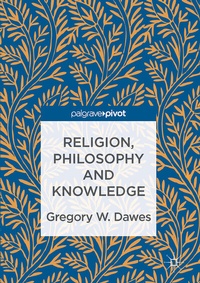
Religion, Philosophy and Knowledge
Beschreibung

This book offers a philosophical approach to religion that acknowledges both the diversity of religions and the many and varied dimensions of the religious life. Rather than restricting itself to Christian theism, it covers a wide range of religious traditions, examining their beliefs in the context of the actual practice of the religious life.
After outlining the aims of religion, the book focuses on claims to knowledge. What kinds of knowledge do religions purport to offer? In what idiom is it couched? From what sources do devotees draw their claims to knowledge? Are these sources reliable? Rather than trying to settle age-old questions about religious belief, the book offers its readers a set of criteria with which they can make informed decisions in matters of faith.
Rezensionen / Stimmen
"This book is all about that philosophy and the knowledge behind religion. . This book is a good book on basic religious philosophy. While not dealing with any one particular religion, it finds basic principles on what makes a religion." (Justin Dilliplane, Resolved for Christ, resolvedfc.blogspot.de, January, 2018)Weitere Details
Weitere Ausgaben
Andere Ausgaben
Person
Gregory W. Dawes is Associate Professor in Philosophy at the University of Otago, New Zealand. He completed his first graduate degree at the Pontifical Biblical Institute in Rome before returning to New Zealand to complete PhD degrees in both biblical studies and philosophy. His previous books include The Historical Jesus Question , Theism and Explanation , and Galileo and the Conflict between Religion and Science .
Inhalt
INTRODUCTION.- 1. Religions, Philosophy, and Knowledge.- Part One: Religious Language and Thought.- 2. Religious Language.- 3. Modes of Thought.- 4. Theology / Dharmatology.- PART TWO: THE AIMS OF RELIGION.- 5. A Sacred Order.- 6. Individual Salvation.- 7. Knowledge and Skill.- 8. Embodied Knowledge.- PART THREE: MODES OF KNOWING.- MODE 1: INDICES, SYMBOLS, ICONS.- 9. Divination.- 10. Dreams and Visions.- MODE 2: KNOWLEDGE BY ACQUAINTANCE.- 11. Mysticism and Knowledge.- 12. Testing Mystical Knowledge.- 13. Self-Authentication.- MODE 3: DISCURSIVE REASON.- 14. Ontological Arguments.- 15. Cosmological Arguments.- 16. Teleological (Design) Arguments.- 17. The Role of Reason.- MODE 4: TESTIMONY (AUTHORITY).- 18. Possession and Prophecy.- 19. Revelation and Faith.- 20. Self-Authentication, Again.- Conclusion.- 21. Assessing Religious Beliefs.
