

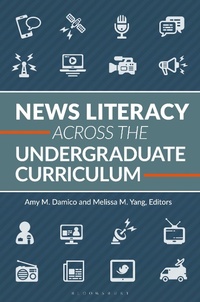
News Literacy Across the Undergraduate Curriculum
1. Auflage
Erschienen am 8. August 2024
280 Seiten
979-8-216-17213-0 (ISBN)
Beschreibung
Librarians and faculty members offer perspectives, workshop initiatives, and classroom strategies to assist readers in increasing news literacy on their campus.
We are living in a time when the evolving media ecosystem requires individuals to pay critical attention to content, developing ways to make sense of information, data, news reports, and research. Undergraduate college student learners in all disciplines must possess skills to critically identify, assess, and challenge the ideas to which they're being exposed.
Both librarians and faculty know this, but they may not know how to develop and implement information literacy material. In this valuable collection, reference librarians, instructional librarians, and undergraduate faculty across disciplines share best practices for establishing relationships with each other and for increasing students' news and information literacy skills. Contributions include perspectives on pedagogy, reflections on successes and challenges, and reports of research on student learning. This book teaches librarians and faculty how to implement news and information literacy content across the curriculum to empower students to be smarter, more critical, and more engaged news consumers.
We are living in a time when the evolving media ecosystem requires individuals to pay critical attention to content, developing ways to make sense of information, data, news reports, and research. Undergraduate college student learners in all disciplines must possess skills to critically identify, assess, and challenge the ideas to which they're being exposed.
Both librarians and faculty know this, but they may not know how to develop and implement information literacy material. In this valuable collection, reference librarians, instructional librarians, and undergraduate faculty across disciplines share best practices for establishing relationships with each other and for increasing students' news and information literacy skills. Contributions include perspectives on pedagogy, reflections on successes and challenges, and reports of research on student learning. This book teaches librarians and faculty how to implement news and information literacy content across the curriculum to empower students to be smarter, more critical, and more engaged news consumers.
Weitere Details
Auflage
1. Auflage
Sprache
Englisch
Verlagsort
USA
Verlagsgruppe
Bloomsbury Publishing Plc
Zielgruppe
Für höhere Schule und Studium
ISBN-13
979-8-216-17213-0 (9798216172130)
Copyright in bibliographic data and cover images is held by Nielsen Book Services Limited or by the publishers or by their respective licensors: all rights reserved.
Schweitzer Klassifikation
Weitere Ausgaben
Personen
Amy M. Damico is Professor of Communication and Faculty Adviser to the Endicott Scholars Honors Program at Endicott College, Beverly, MA, USA.
Melissa M. Yang is Professor of Communication at Endicott College, Beverly, MA, USA.
Melissa M. Yang is Professor of Communication at Endicott College, Beverly, MA, USA.
Inhalt
Acknowledgements
Introduction
Part I: Explorations of Classroom Practice
1. Evaluating Sources and Identifying Disinformation Around Climate Change Policy Using the SIFT Method, Kristine Kelly
2. Capturing Source Evaluation in Action: Using Screencasting as a Tool for Student Engagement and Self-Reflection, Michael Stöpel
3. An Assessment of the Effectiveness of an Information Literacy Workshop on Student Ability to Determine Online Content Credibility, Timothy Arnold
4. The News is History: Building News Literacy Skills with Historic Primary Sources, Jen Hoyer
5. Media Framing and the American Civil Rights Movement, Elizabeth Matelski
6. The For-Against-Neutral Assignment, Sarah Gewirtz, Elijah Browne, and Ethan Wittrock
7. Inoculating Against the Infodemic: An Argument for Implementing Transdisciplinary Health Literacy Instruction, Lara Salahi
8. Bot Spotting: Thinking Through Automation on Social Media, Randall Livingstone
9. Integrating and Scaling Scientific News Literacy Education in a Large Online Undergraduate Course, Wei Zakharov, Haiyan Li, Michael Fosmire, and Jonathon Harbor
10. Incorporating News and Information Literacy into a First Year Writing Program, Kelsey McNiff and Sam Alexander
Part II: Perspectives on Increasing News Literacy Across the Undergraduate Curriculum
11. News Literacy Instruction in Practice: A Systematic Review, Jessica Nicole Szempruch, Madison Veeneman, and Barbara Lewis
12. Complicating News Literacy through a Media and Information Literacy Lens, Natasha Casey and Spencer Brayton
13. Building the Information Avengers Team, Carolyn Schubert and Ryan Alessi
14. Teaching News Literacy with a Digital Badge, Katie Odhner and Brendan Johnson
15. Practical Approaches to News Literacy for Undergraduate Library Instruction, Brooke Gross and Adam Clemons
16. Strategies for Increasing News Literacy Skills through Academic Librarian and Faculty Partnerships, Michelle Shea and Kelly Williams
17. News and Information Literacy Across the Curriculum: Faculty Development and Student Outcomes, Amy Damico and Melissa Yang
18. Reflections on Student Leaders' Engagement with News and Information Literacy Across Campus, Melissa Yang
Conclusion
Resources
About the Editors and Contributors
Index
Introduction
Part I: Explorations of Classroom Practice
1. Evaluating Sources and Identifying Disinformation Around Climate Change Policy Using the SIFT Method, Kristine Kelly
2. Capturing Source Evaluation in Action: Using Screencasting as a Tool for Student Engagement and Self-Reflection, Michael Stöpel
3. An Assessment of the Effectiveness of an Information Literacy Workshop on Student Ability to Determine Online Content Credibility, Timothy Arnold
4. The News is History: Building News Literacy Skills with Historic Primary Sources, Jen Hoyer
5. Media Framing and the American Civil Rights Movement, Elizabeth Matelski
6. The For-Against-Neutral Assignment, Sarah Gewirtz, Elijah Browne, and Ethan Wittrock
7. Inoculating Against the Infodemic: An Argument for Implementing Transdisciplinary Health Literacy Instruction, Lara Salahi
8. Bot Spotting: Thinking Through Automation on Social Media, Randall Livingstone
9. Integrating and Scaling Scientific News Literacy Education in a Large Online Undergraduate Course, Wei Zakharov, Haiyan Li, Michael Fosmire, and Jonathon Harbor
10. Incorporating News and Information Literacy into a First Year Writing Program, Kelsey McNiff and Sam Alexander
Part II: Perspectives on Increasing News Literacy Across the Undergraduate Curriculum
11. News Literacy Instruction in Practice: A Systematic Review, Jessica Nicole Szempruch, Madison Veeneman, and Barbara Lewis
12. Complicating News Literacy through a Media and Information Literacy Lens, Natasha Casey and Spencer Brayton
13. Building the Information Avengers Team, Carolyn Schubert and Ryan Alessi
14. Teaching News Literacy with a Digital Badge, Katie Odhner and Brendan Johnson
15. Practical Approaches to News Literacy for Undergraduate Library Instruction, Brooke Gross and Adam Clemons
16. Strategies for Increasing News Literacy Skills through Academic Librarian and Faculty Partnerships, Michelle Shea and Kelly Williams
17. News and Information Literacy Across the Curriculum: Faculty Development and Student Outcomes, Amy Damico and Melissa Yang
18. Reflections on Student Leaders' Engagement with News and Information Literacy Across Campus, Melissa Yang
Conclusion
Resources
About the Editors and Contributors
Index
