

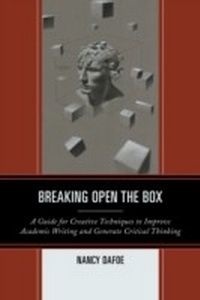
Breaking Open the Box
A Guide for Creative Techniques to Improve Academic Writing and Generate Critical Thinking
1. Auflage
Erschienen am 12. Februar 2013
210 Seiten
978-1-4758-0275-7 (ISBN)
Beschreibung
What do David Foster Wallace's essay on wars over usage and Pico Iyer's comma personification have to do with improving students' academic writing? Everything. For all of the attention supposedly paid to Bloom's Taxonomy-with creativity at the top-educators tend to shy away from encouraging students' creative choices in areas where traditional analysis and the critic's style and tone have reigned. While we do not want our students to write inane or empty verbiage, we unintentionally set them up for this inevitability--or worse.
The movement away from children's natural creative impulses in elementary school to a direction in which they literally fit their writing into preconfigured shapes is a gradual one. Although purportedly taught to instill academic structures, these boxes are also designed to facilitate the ease with which student product may be assessed.
We need a more creative approach to teaching writing. A methodology incorporating creativity, as modeled by students in this text, demonstrates the kind of progress we are all seeking, offering an exciting challenge for young writers and educators alike.
The movement away from children's natural creative impulses in elementary school to a direction in which they literally fit their writing into preconfigured shapes is a gradual one. Although purportedly taught to instill academic structures, these boxes are also designed to facilitate the ease with which student product may be assessed.
We need a more creative approach to teaching writing. A methodology incorporating creativity, as modeled by students in this text, demonstrates the kind of progress we are all seeking, offering an exciting challenge for young writers and educators alike.
Weitere Details
Auflage
1. Auflage
Sprache
Englisch
Verlagsort
New York
USA
Verlagsgruppe
Bloomsbury Publishing Plc
ISBN-13
978-1-4758-0275-7 (9781475802757)
Copyright in bibliographic data and cover images is held by Nielsen Book Services Limited or by the publishers or by their respective licensors: all rights reserved.
Schweitzer Klassifikation
Weitere Ausgaben
Person
Nancy A. Dafoe is an award-winning, published poet and fiction writer, in addition to being an educator living in Central New York. She has taught in a variety of settings and at different grade levels from 9th grade to freshmen in college.
Inhalt
Foreword
Acknowledgments
Introduction: Writing Well Matters
Chapter 1:Encouraging Creative Frameworks for Critical Thinking and Writing
Chapter 2: The Writer as Critical ThinkerSection 1: Playing with Language
Section 2: Taking Creative Risks to Improve Writing
Chapter 3: Recognizing the Problem
Section 1: A Familiar Scene
Section 2: Why the Essay Genre Presents Such Challenges
Section 3: The Hollow Middle
Section 4: When a Good Student Writes a Bad Essay
Section 5: When a Student Surprises with His/Her Writing
Chapter 4: Outlining Creative Applications to Academic Writing
Section 1: Where to start and how to proceed with instruction in creative techniques and creative choices
Section 2: Applications with Metaphor
Chapter 5: Applications with Prose Poems or Poetic Prose
Chapter 6: Discourse Applications with Poetry
Chapter 7: Applications with Narrative-Story, Dialogue, and the Mini-Script
Chapter 8: Applications with Parody and Satire
Chapter 9: Applications with Musings and Journaling
Chapter 10: Applications with Unusual Vessels and Technology
Section 1: Student Applications with Unusual Vessels
Section 2: Applications with Technology
A: Texting
B: Blogging
Chapter 11: Traditional Looking Essays Incorporating Creative Techniques
Chapter 12: Changing the Landscape of Academic Writing Assignments
and the Classroom Environment
Chapter 13: Making Editing Integral
Chapter 14: Inviting the Common Core Standards into the Classroom and
Recognizing they are First Cousins to Creativity
Chapter 15: Lesson Planning Involving Creative Choice and Techniques
Section 1: Building Creative Techniques into the Writing Lesson
Section 2: Tweaking the Assessment Rubric to Encourage Creativity
Chapter 16: Setting Up Action Research
Section 1: Student Writing Surveys
Section 2: Examining Comparative Data
Section 3: A Procedural Guide-Building Creative Choice
into the Compositional Assignment
Chapter 17: Providing Students with Opportunities for Authentic Audience
Instructional Application and Dedication
Appendix A: A Guide for Parents
Appendix B: A Sampling of Young Writers' Conferences
Appendix C: Helpful, Creative Resources for Writers and Writing Instruction
Bibliography
Notes
Acknowledgments
Introduction: Writing Well Matters
Chapter 1:Encouraging Creative Frameworks for Critical Thinking and Writing
Chapter 2: The Writer as Critical ThinkerSection 1: Playing with Language
Section 2: Taking Creative Risks to Improve Writing
Chapter 3: Recognizing the Problem
Section 1: A Familiar Scene
Section 2: Why the Essay Genre Presents Such Challenges
Section 3: The Hollow Middle
Section 4: When a Good Student Writes a Bad Essay
Section 5: When a Student Surprises with His/Her Writing
Chapter 4: Outlining Creative Applications to Academic Writing
Section 1: Where to start and how to proceed with instruction in creative techniques and creative choices
Section 2: Applications with Metaphor
Chapter 5: Applications with Prose Poems or Poetic Prose
Chapter 6: Discourse Applications with Poetry
Chapter 7: Applications with Narrative-Story, Dialogue, and the Mini-Script
Chapter 8: Applications with Parody and Satire
Chapter 9: Applications with Musings and Journaling
Chapter 10: Applications with Unusual Vessels and Technology
Section 1: Student Applications with Unusual Vessels
Section 2: Applications with Technology
A: Texting
B: Blogging
Chapter 11: Traditional Looking Essays Incorporating Creative Techniques
Chapter 12: Changing the Landscape of Academic Writing Assignments
and the Classroom Environment
Chapter 13: Making Editing Integral
Chapter 14: Inviting the Common Core Standards into the Classroom and
Recognizing they are First Cousins to Creativity
Chapter 15: Lesson Planning Involving Creative Choice and Techniques
Section 1: Building Creative Techniques into the Writing Lesson
Section 2: Tweaking the Assessment Rubric to Encourage Creativity
Chapter 16: Setting Up Action Research
Section 1: Student Writing Surveys
Section 2: Examining Comparative Data
Section 3: A Procedural Guide-Building Creative Choice
into the Compositional Assignment
Chapter 17: Providing Students with Opportunities for Authentic Audience
Instructional Application and Dedication
Appendix A: A Guide for Parents
Appendix B: A Sampling of Young Writers' Conferences
Appendix C: Helpful, Creative Resources for Writers and Writing Instruction
Bibliography
Notes
