
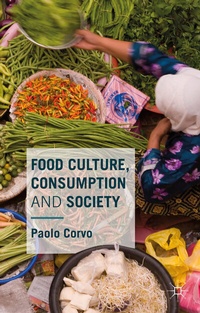
Food Culture, Consumption and Society
Beschreibung
Rezensionen / Stimmen
"In today plethora of books and papers about "food", Prof. Corvo's book represents a welcome and refreshing exception. Corvo's book not only encompasses the traditional methods to study food's implications in its many different anthropological, social, consumeristic and pleasure aspects, but shows the links between them in a creative and original manner ... . "Food Culture, Consumption and Society" is a fascinating reading not only because of the amount of information provided, but also due to Prof. Corvo writing style - at times provocative and passionate - but always clear and to the point." (Paolo Benassi, Hollywood, US)
Weitere Details
Weitere Ausgaben
Person
Paolo Corvo is Director of the Sociology Laboratory at the University of Gastronomic Sciences, Italy. His research interests include food and consumption, sustainable and enogastronomic tourism, local territorial development, quality of life and happiness.
Inhalt
2. Food culture and Society
3. Crisis and theories of food consumption
4. Problematics of food
5. Food, Environment and Quality of life

Systemvoraussetzungen
Dateiformat: PDF
Kopierschutz: Wasserzeichen-DRM (Digital Rights Management)
Systemvoraussetzungen:
- Computer (Windows; MacOS X; Linux): Verwenden Sie zum Lesen die kostenlose Software Adobe Reader, Adobe Digital Editions oder einen anderen PDF-Viewer Ihrer Wahl (siehe E-Book Hilfe).
- Tablet/Smartphone (Android; iOS): Installieren Sie bereits vor dem Download die kostenlose App Adobe Digital Editions oder die App PocketBook (siehe E-Book Hilfe).
- E-Book-Reader: Bookeen, Kobo, Pocketbook, Sony, Tolino u.v.a.m.
Das Dateiformat PDF zeigt auf jeder Hardware eine Buchseite stets identisch an. Daher ist eine PDF auch für ein komplexes Layout geeignet, wie es bei Lehr- und Fachbüchern verwendet wird (Bilder, Tabellen, Spalten, Fußnoten). Bei kleinen Displays von E-Readern oder Smartphones sind PDF leider eher nervig, weil zu viel Scrollen notwendig ist. Mit Wasserzeichen-DRM wird hier ein „weicher” Kopierschutz verwendet. Daher ist technisch zwar alles möglich – sogar eine unzulässige Weitergabe. Aber an sichtbaren und unsichtbaren Stellen wird der Käufer des E-Books als Wasserzeichen hinterlegt, sodass im Falle eines Missbrauchs die Spur zurückverfolgt werden kann.
Weitere Informationen finden Sie in unserer E-Book Hilfe.