

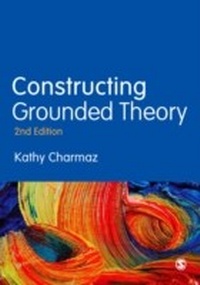
Constructing Grounded Theory
2. Auflage
Erschienen am 19. März 2014
416 Seiten
978-1-4462-9349-2 (ISBN)
Beschreibung

Kathy Charmaz presents the definitive guide to doing grounded theory from a constructivist perspective. This second edition of her groundbreaking text retains the accessibility and warmth of the first edition whilst introducing cutting edge examples and practical tips.
This expanded second edition:
- explores how to effectively focus on data collection
- demonstrates how to use data for theorizing
- adds two new chapters that guide you through conducting and analysing interviews in grounded theory
- adds a new chapter on symbolic interactionism and grounded theory
- considers recent epistemological debates about the place of prior theory
- discusses the legacy of Anselm Strauss for grounded theory. This is a seminal title for anyone serious about understanding and doing grounded theory research.
This expanded second edition:
- explores how to effectively focus on data collection
- demonstrates how to use data for theorizing
- adds two new chapters that guide you through conducting and analysing interviews in grounded theory
- adds a new chapter on symbolic interactionism and grounded theory
- considers recent epistemological debates about the place of prior theory
- discusses the legacy of Anselm Strauss for grounded theory. This is a seminal title for anyone serious about understanding and doing grounded theory research.
Rezensionen / Stimmen
Kathy Charmaz's new edition of her classic text on developing grounded theory is an invaluable resource for qualitative and mixed methods scholars. Her formulation of grounded theory analysis is remarkable for its eclectic synthesis of what have been contentious approaches and for its clear connections to the variety of qualitative data analysis methods. I have used Dr. Charmaz's work to teach both general induction and specifically grounded theory methods. The emphasis on research thinking and decision making, the explicit discussion of theories we start with and theories we build, and the extensive variety of examples in the second edition enrich our understanding of what we are doing when we do research. The book is an indispensable part of a qualitative research library. -- Judith Preissle, Professor Emeritus This is a powerful, richly nuanced, evocative work. It is masterfully grounded in the grounded theory strategies and practices of established scholars. It represents a stunning and brilliantly innovative intervention. It provides ground zero - the starting place for the next generation of social science scholars. A major accomplishment. -- Norman K. Denzin, College of Communications Scholar and Professor of Sociology This is an excellent book. It is easy to read, gives lots of practical advice and is quite profound. If you are serious about studying the conceptual universes and the interior worlds of research participants in a way which recognises that the researcher is intimately involved in the construction and analysis of data, this is a book which will make you re-think how you conduct research. -- Paul Webb, Research Manager, Praxis Care, BelfastAlle Preise
Weitere Details
Reihe
Auflage
Second Edition
Sprache
Englisch
Verlagsort
London
Großbritannien
Zielgruppe
Für höhere Schule und Studium
Produkt-Hinweis
Reflowable
ISBN-13
978-1-4462-9349-2 (9781446293492)
Copyright in bibliographic data and cover images is held by Nielsen Book Services Limited or by the publishers or by their respective licensors: all rights reserved.
Schweitzer Klassifikation
Weitere Ausgaben
Andere Ausgaben
Kathy Charmaz
Constructing Grounded Theory
Buch
03/2014
2. Auflage
SAGE Publications Ltd
61,96 €
Artikel ist vergriffen; siehe Neuauflage
Kathy Charmaz
Constructing Grounded Theory
Buch
03/2014
2. Auflage
SAGE Publications Ltd
217,78 €
Artikel ist vergriffen; siehe Neuauflage
Person
Kathy Charmaz was Professor Emerita of Sociology and the former director of the Faculty Writing Program at Sonoma State University. She joined the first cohort of doctoral students at the University of California, San Francisco, where she studied with Anselm Strauss. She wrote in the areas of social psychology, medical sociology, qualitative methods, and grounded theory, and over her career wrote, coauthored, or coedited 14 books, including two award-winning works: Good Days, Bad Days; The Self in Illness and Time, and Constructing Grounded Theory.
She received the George Herbert Mead award for lifetime achievement from the Society for the Study of Symbolic Interaction, the Leo G. Reeder award for distinguished contributions from the Medical Sociology Section of the American Sociological Association and the Lifetime Achievement award from the International Congress of Qualitative Inquiry. Professor Charmaz also gave workshops on qualitative methods, grounded theory, symbolic interactionism, and scholarly writing around the globe.
She received the George Herbert Mead award for lifetime achievement from the Society for the Study of Symbolic Interaction, the Leo G. Reeder award for distinguished contributions from the Medical Sociology Section of the American Sociological Association and the Lifetime Achievement award from the International Congress of Qualitative Inquiry. Professor Charmaz also gave workshops on qualitative methods, grounded theory, symbolic interactionism, and scholarly writing around the globe.
Inhalt
An Invitation to Grounded Theory
Gathering Rich Data
Crafting and Conducting Intensive Interviews
Interviewing in Grounded Theory Studies
The Logic of Grounded Theory Coding Practices and Initial Coding
Focused Coding and beyond
Memo-Writing
Theoretical Sampling, Saturation and Sorting
Reconstructing Theory in Grounded Theory Studies
Symbolic Interactionism and Grounded Theory
Writing the Draft
Reflecting on the Research Process
Gathering Rich Data
Crafting and Conducting Intensive Interviews
Interviewing in Grounded Theory Studies
The Logic of Grounded Theory Coding Practices and Initial Coding
Focused Coding and beyond
Memo-Writing
Theoretical Sampling, Saturation and Sorting
Reconstructing Theory in Grounded Theory Studies
Symbolic Interactionism and Grounded Theory
Writing the Draft
Reflecting on the Research Process
