


The Queer and the Vernacular Languages in India
Studies in Contemporary Texts and Cultures
1. Auflage
Erschienen am 15. September 2023
288 Seiten
978-1-000-96340-3 (ISBN)
Beschreibung

This book analyses regional expressions of the queer experience in texts available in the Indian vernacular languages. It studies queer autobiographies and literary and cinematic texts written in the vernacular languages on gay, lesbian, bisexual and transgender issues. The authors outline the specific terms that are popular in the bhashas (languages) to refer to the queer people and discuss any neo coinages/modes of communication invented by the queer people themselves. The volume also addresses the lack of queer representation in certain language communities and the lack of queer interaction in non-metropolitan cities in India.
An important contribution to the field of queer studies in India, this timely book will be an essential read for scholars and researchers of gender studies, queer studies, cultural studies, discrimination and exclusion studies, language studies, political studies, sociology, postcolonial studies and South Asian studies.
An important contribution to the field of queer studies in India, this timely book will be an essential read for scholars and researchers of gender studies, queer studies, cultural studies, discrimination and exclusion studies, language studies, political studies, sociology, postcolonial studies and South Asian studies.
Weitere Details
Auflage
1. Auflage
Sprache
Englisch
Verlagsort
London
Großbritannien
Verlagsgruppe
Taylor & Francis Ltd
Zielgruppe
Für höhere Schule und Studium
Produkt-Hinweis
Reflowable
Illustrationen
9 Tables, black and white
ISBN-13
978-1-000-96340-3 (9781000963403)
Copyright in bibliographic data and cover images is held by Nielsen Book Services Limited or by the publishers or by their respective licensors: all rights reserved.
Schweitzer Klassifikation
Weitere Ausgaben
Andere Ausgaben
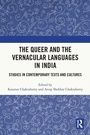
Kaustav Chakraborty | Anup Shekhar Chakraborty
The Queer and the Vernacular Languages in India
Studies in Contemporary Texts and Cultures
Buch
12/2024
1. Auflage
Routledge India
63,60 €
Versand in 10-20 Tagen
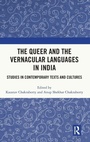
Kaustav Chakraborty | Anup Shekhar Chakraborty
The Queer and the Vernacular Languages in India
Studies in Contemporary Texts and Cultures
Buch
09/2023
1. Auflage
Routledge India
206,70 €
Versand in 10-20 Tagen
Personen
Kaustav Chakraborty is Associate Professor in the Department of English, Southfield (Loreto) College, Darjeeling, India. He has been a Fellow at Indian Institute of Advanced Study, Shimla. His areas of interest are Queer Studies, Indigenous Literatures and Cultures, Folklore, Culture of Nationalism, Philosophy of Intimacy and South Asian Literatures. His major publications include Indian Drama in English (edited volume, 2014), Tagore and Nationalism (co-edited with K. L. Tuteja, 2017), Indigeneity, Tales and Alternatives (2017), The Politics of Belonging in Contemporary India: Anxiety and Intimacy (edited volume, 2020), Queering Tribal Folktales from East and Northeast India (2020) and Nations and Nationalisms: A Short Introduction (2021).
Anup Shekhar Chakraborty is Assistant Professor in the Department of Political Science and Political Studies at Kolkata's Netaji Institute for Asian Studies and a member of the Mahanirban Calcutta Research Group (MCRG). He received the IPSA National Young Political Scientist Award 2020; the IDRC, DEF, and IDF "India Social Science Research Award 2009", and the "C.R. Parekh Fellowship (2011-2012)" at the Asia Research Centre of the London School of Economics and Political Science. He has published numerous works about the Zo/Mizo people. His most recent works include Braided Entanglements of Identities, Religion, and Politics in Mizoram (2020); Religion and Politics in Mizoram (2019); and Death and Dying in Northeast India: Indigeneity and Afterlife (co-edited with P. Sen, 2023). He serves as one of the Guest Editors for the Special Issue on "LGBTQ+ People in Situations of Forced Displacement", Oxford Journal of Refugee Studies.
Anup Shekhar Chakraborty is Assistant Professor in the Department of Political Science and Political Studies at Kolkata's Netaji Institute for Asian Studies and a member of the Mahanirban Calcutta Research Group (MCRG). He received the IPSA National Young Political Scientist Award 2020; the IDRC, DEF, and IDF "India Social Science Research Award 2009", and the "C.R. Parekh Fellowship (2011-2012)" at the Asia Research Centre of the London School of Economics and Political Science. He has published numerous works about the Zo/Mizo people. His most recent works include Braided Entanglements of Identities, Religion, and Politics in Mizoram (2020); Religion and Politics in Mizoram (2019); and Death and Dying in Northeast India: Indigeneity and Afterlife (co-edited with P. Sen, 2023). He serves as one of the Guest Editors for the Special Issue on "LGBTQ+ People in Situations of Forced Displacement", Oxford Journal of Refugee Studies.
Inhalt
List of tables
List of Contributors
Preface
Indian Vernaculars and the Queer: An Introduction
Kaustav Chakraborty and Anup Shekhar Chakraborty
Part I: Vernacular Vocabularies and Expressions of the Regional Queer
1. Laingik Alpasankhya and Queer Identities in the Present-Day Marathi Language
Paresh Hate
2. Queer in Karnataka: Exploring Male Same Sex Sexualities in the Non-metropolitan
Kiran Bhairannavar
3. A Hidden Language that Reveals a Distinct Culture: Revisiting the Lingua Franca of the Hijra Community
Sibsankar Mal and Grace Bahalen Mundu
Part II: LGBTQ+ and the Regional Literature
4. Precarious Lives, Fraught Selves: Tirunangai Autobiographies in Tamil
Kiran Keshavamurthy
5. 'They' are Queer: Transgressing Gender Normativity in Vernacular Assamese Literature
Tonmoyee Rani Neog and Rimpi Borah
6. Urdu and the Queer Consciousness
Omar Ghazali
Part III: Performing the Vernacular Queer Offline, Online and on Screen
7. Mawngkuahur in the times of E-Love: Sexualities, Regimentation, Control, Display and the Zo Queer
Anup Shekhar Chakraborty
8. The Many Bodies of the Vernacular: Negotiating Queer Identity in the Public and Virtual Domains of Assam
Amrita Pritam Gogoi
9. Queer Assam on Celluloid: Locating Queer Characters in Bulbul Can Sing and Fireflies-Jonaki Porua
Anupom Kumar Hazarika
Part IV: Queer Invisibility and the Linguistic Community
10. The Many 'Queer' Silences - Competing Masculinities in Kashmir
Huzaifa Pandit
11. In Search of the Queer in (Catholic) Konkani: Silence, Slurs and the Spectacular
Kevin Frank Fernandes
Part V: Making the Queer Visible in the Vernacular Culture
12. Exploring Queer Literature in Nepali from the Hills of Darjeeling and Sikkim
Anil Pradhan and Pema Gyalchen Tamang
13. Voices of Survival: LGBTQ+ Representations in Literary/Cinematic/Creative Texts in Bangla
Himadri Roy
Index
List of Contributors
Preface
Indian Vernaculars and the Queer: An Introduction
Kaustav Chakraborty and Anup Shekhar Chakraborty
Part I: Vernacular Vocabularies and Expressions of the Regional Queer
1. Laingik Alpasankhya and Queer Identities in the Present-Day Marathi Language
Paresh Hate
2. Queer in Karnataka: Exploring Male Same Sex Sexualities in the Non-metropolitan
Kiran Bhairannavar
3. A Hidden Language that Reveals a Distinct Culture: Revisiting the Lingua Franca of the Hijra Community
Sibsankar Mal and Grace Bahalen Mundu
Part II: LGBTQ+ and the Regional Literature
4. Precarious Lives, Fraught Selves: Tirunangai Autobiographies in Tamil
Kiran Keshavamurthy
5. 'They' are Queer: Transgressing Gender Normativity in Vernacular Assamese Literature
Tonmoyee Rani Neog and Rimpi Borah
6. Urdu and the Queer Consciousness
Omar Ghazali
Part III: Performing the Vernacular Queer Offline, Online and on Screen
7. Mawngkuahur in the times of E-Love: Sexualities, Regimentation, Control, Display and the Zo Queer
Anup Shekhar Chakraborty
8. The Many Bodies of the Vernacular: Negotiating Queer Identity in the Public and Virtual Domains of Assam
Amrita Pritam Gogoi
9. Queer Assam on Celluloid: Locating Queer Characters in Bulbul Can Sing and Fireflies-Jonaki Porua
Anupom Kumar Hazarika
Part IV: Queer Invisibility and the Linguistic Community
10. The Many 'Queer' Silences - Competing Masculinities in Kashmir
Huzaifa Pandit
11. In Search of the Queer in (Catholic) Konkani: Silence, Slurs and the Spectacular
Kevin Frank Fernandes
Part V: Making the Queer Visible in the Vernacular Culture
12. Exploring Queer Literature in Nepali from the Hills of Darjeeling and Sikkim
Anil Pradhan and Pema Gyalchen Tamang
13. Voices of Survival: LGBTQ+ Representations in Literary/Cinematic/Creative Texts in Bangla
Himadri Roy
Index
