

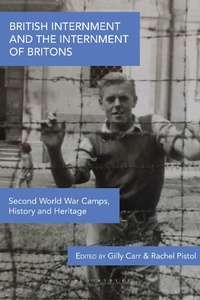
British Internment and the Internment of Britons
Second World War Camps, History and Heritage
1. Auflage
Erschienen am 18. Mai 2023
304 Seiten
978-1-350-26626-1 (ISBN)
Beschreibung

This edited volume presents a cutting-edge discussion and analysis of civilian 'enemy alien' internment in Britain, the internment of British civilians on the continent, and civilian internment camps run by the British within the wider British Empire. The book brings together a range of interdisciplinary specialists including archaeologists, historians, and heritage practitioners to give a full overview of the topic of internment internationally.
Very little has been written about the experience of interned Britons on the continent during the Second World War compared with continentals interned in Britain. Even fewer accounts exist of the regime in British Dominions where British guards presided over the camps. This collection is the first to bring together the British experiences, as the common theme, in one study. The new research presented here also offers updated statistics for the camps whilst considering the period between 1945 to the present day through related site heritage issues.
Very little has been written about the experience of interned Britons on the continent during the Second World War compared with continentals interned in Britain. Even fewer accounts exist of the regime in British Dominions where British guards presided over the camps. This collection is the first to bring together the British experiences, as the common theme, in one study. The new research presented here also offers updated statistics for the camps whilst considering the period between 1945 to the present day through related site heritage issues.
Weitere Details
Auflage
1. Auflage
Sprache
Englisch
Verlagsort
London
Großbritannien
Verlagsgruppe
Bloomsbury Publishing PLC
Zielgruppe
Für Beruf und Forschung
Illustrationen
51 bw illus
ISBN-13
978-1-350-26626-1 (9781350266261)
Copyright in bibliographic data and cover images is held by Nielsen Book Services Limited or by the publishers or by their respective licensors: all rights reserved.
Schweitzer Klassifikation
Weitere Ausgaben
Andere Ausgaben
Gilly Carr | Rachel Pistol
British Internment and the Internment of Britons
Second World War Camps, History and Heritage
Buch
12/2024
Bloomsbury Academic
55,79 €
Versand in 15-20 Tagen
Personen
Gilly Carr is Associate Professor in Archaeology at the University of Cambridge, UK. She is the author of seven monographs including Victims of Nazism in the Channel Islands: A Legitimate Heritage? (2019) and is currently writing A Materiality of Internment about the creativity produced in internment camps in Germany in WWII.
Rachel Pistol is a digital historian at King's College London, UK, where she works on the European Holocaust Research Infrastructure (EHRI) and is the National Coordinator of EHRI-UK. She has published widely on refugees and Second World War internment including Internment during the Second World War (2017) and is the co-editor, along with Larissa Allwork, of The Jews, the Holocaust, and the Public (2019).
Rachel Pistol is a digital historian at King's College London, UK, where she works on the European Holocaust Research Infrastructure (EHRI) and is the National Coordinator of EHRI-UK. She has published widely on refugees and Second World War internment including Internment during the Second World War (2017) and is the co-editor, along with Larissa Allwork, of The Jews, the Holocaust, and the Public (2019).
Inhalt
List of Figures
List of Contributors
Introduction: British Internment and the Internment of Britons 1939-1945: Camps, History and Heritage, Rachel Pistol and Gilly Carr
Section 1 - British Camps: Continentals interned in Britain
1. Early internment camps in the UK: A forgotten history and heritage, Rachel Pistol, King's College London
2. 'Once again to live their bit of private life, free from camping like gipsies': the case of a refugee camp in the Garden of England, Clare Ungerson, University of Southampton, UK
3. Legacy and Heritage of the Arandora Star Tragedy in Britain and Italy: A Transnational Perspective on Commemoration, Terri Colpi, University of St Andrews, UK
4. Huyton - A Transit Camp near Liverpool, Jennifer Taylor, Research Centre for German and Austrian Exile Studies, University of London, UK
5. Internment and its legacy: a multi-generational case-study, Rob David, Independent Researcher
6. Rushen Camp, Isle Of Man, for women and children: 'Treat them with kindness', Rushen Heritage Action Team
Section 2 - Continental Camps: Britons interned on the Continent
7. Monopoly boards, pianos and bodies hanging on the wire: Memories of the British experiences of the French transit camp of Compiègne, Gilly Carr, University of Cambridge, UK
8. P.G. Wodehouse and the Men of Tost, Christine Berberich, University of Portsmouth, UK
9. The Golden Cage: The Orphan Story of British Women and Internment in Vittel, Ayshka Sené, Nottingham Trent University, UK
10. The internment of British enemy aliens in Fascist internment camps: the case study of 'Anglo-Maltesi', Pierluigi Bolioli, University of Pisa, Italy
Section 3 - Camps in the British Dominions: Continentals interned by the British abroad
11. Memories of Atlit - Jewish refugees interned in the detention camp Atlit near Haifa 1940/41, Verena Buser, Potsdam University of Applied Sciences, Germany
12. "Dehra Dun, we hope to leave you soon!": The operation, experiences and legacy of the Dehra Dun Central Internment Camp in British India, 1939-present, Joseph Cronin, Queen Mary, University of London, UK
13. Civilian internment in the British Raj: camps and their legacy c. 1939-62, Alan Malpass, Bishop Grosseteste University, UK
14. They were brought to Australia from around the World... The internment of Enemy Aliens in World War II at Tatura Camps 1-4, Alan Morgenroth, Independent Researcher
15. 75 Years of Canadian WWII Internment Camp Site Heritage: A case study of Camp B-70 in New Brunswick, Todd Caissie, Rutgers University, USA
Index
List of Contributors
Introduction: British Internment and the Internment of Britons 1939-1945: Camps, History and Heritage, Rachel Pistol and Gilly Carr
Section 1 - British Camps: Continentals interned in Britain
1. Early internment camps in the UK: A forgotten history and heritage, Rachel Pistol, King's College London
2. 'Once again to live their bit of private life, free from camping like gipsies': the case of a refugee camp in the Garden of England, Clare Ungerson, University of Southampton, UK
3. Legacy and Heritage of the Arandora Star Tragedy in Britain and Italy: A Transnational Perspective on Commemoration, Terri Colpi, University of St Andrews, UK
4. Huyton - A Transit Camp near Liverpool, Jennifer Taylor, Research Centre for German and Austrian Exile Studies, University of London, UK
5. Internment and its legacy: a multi-generational case-study, Rob David, Independent Researcher
6. Rushen Camp, Isle Of Man, for women and children: 'Treat them with kindness', Rushen Heritage Action Team
Section 2 - Continental Camps: Britons interned on the Continent
7. Monopoly boards, pianos and bodies hanging on the wire: Memories of the British experiences of the French transit camp of Compiègne, Gilly Carr, University of Cambridge, UK
8. P.G. Wodehouse and the Men of Tost, Christine Berberich, University of Portsmouth, UK
9. The Golden Cage: The Orphan Story of British Women and Internment in Vittel, Ayshka Sené, Nottingham Trent University, UK
10. The internment of British enemy aliens in Fascist internment camps: the case study of 'Anglo-Maltesi', Pierluigi Bolioli, University of Pisa, Italy
Section 3 - Camps in the British Dominions: Continentals interned by the British abroad
11. Memories of Atlit - Jewish refugees interned in the detention camp Atlit near Haifa 1940/41, Verena Buser, Potsdam University of Applied Sciences, Germany
12. "Dehra Dun, we hope to leave you soon!": The operation, experiences and legacy of the Dehra Dun Central Internment Camp in British India, 1939-present, Joseph Cronin, Queen Mary, University of London, UK
13. Civilian internment in the British Raj: camps and their legacy c. 1939-62, Alan Malpass, Bishop Grosseteste University, UK
14. They were brought to Australia from around the World... The internment of Enemy Aliens in World War II at Tatura Camps 1-4, Alan Morgenroth, Independent Researcher
15. 75 Years of Canadian WWII Internment Camp Site Heritage: A case study of Camp B-70 in New Brunswick, Todd Caissie, Rutgers University, USA
Index
