

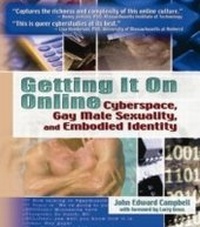
Getting It On Online
Cyberspace, Gay Male Sexuality, and Embodied Identity
1. Auflage
Erschienen am 4. April 2014
242 Seiten
978-1-317-71273-2 (ISBN)
Beschreibung
Learn how gay men use Internet technologies to connect with others sharing their erotic desires and to forge affirming communities online!
Getting It On Online: Cyberspace, Gay Male Sexuality, and Embodied Identity examines the online embodied experiences of gay men. At once scholarly and sensual, this unique book is the result of a three-year ethnographic study chronicling the activities on three distinct social scenes in the world of Internet Relay Chat (IRC)virtual spaces constructed by gay men for the erotic exploration of the male body. Examining the vital role the body plays in defining these online spaces offers insight into how gay men negotiate their identities through emerging communication technologies. The author combines a critical look at the role of the body in cyberspace with candid accounts of his own online experiences to challenge conventional views on sex, sexuality, and embodied identity.
Getting It On Online provides an inside look at three specific online communitiesgaychub (a community celebrating male obesity), gaymuscle (a community formulated around images of the muscular male body), and gaymusclebears (a space representing the erotic convergence of the obese and muscular male bodies emerging out of the gay male bear subculture)in an effort to unsettle those models of beauty and the erotic depicted in more mainstream media. The book demonstrates how the social position of these men in the physical world in regards to age, race, gender, class, and physical beauty influences their online experiences. Far from a realm of bodiless exultation, Getting It On Online illustrates how the flesh remains very much present in cyberspace.
Getting It On Online examines topics such as:
why people chat online
the history of IRC (Internet Relay Chat)
how people construct their identities in cyberspace
how some online spaces function like virtual gay bars
the concept of online disembodiment
the role the body plays in online social relations
the future of online communication
ethnographic research in cyberspace
mediated images of the male body and the gay male beauty myth
and much more!
Getting It On Online: Cyberspace, Gay Male Sexuality, and Embodied Identity is an essential resource for anthropologists, sociologists, and psychologists; academics working in gender studies, queer theory, cultural studies, and cyber-culture studies; and anyone interested in gay and lesbian issues and/or cyberspace.
Getting It On Online: Cyberspace, Gay Male Sexuality, and Embodied Identity examines the online embodied experiences of gay men. At once scholarly and sensual, this unique book is the result of a three-year ethnographic study chronicling the activities on three distinct social scenes in the world of Internet Relay Chat (IRC)virtual spaces constructed by gay men for the erotic exploration of the male body. Examining the vital role the body plays in defining these online spaces offers insight into how gay men negotiate their identities through emerging communication technologies. The author combines a critical look at the role of the body in cyberspace with candid accounts of his own online experiences to challenge conventional views on sex, sexuality, and embodied identity.
Getting It On Online provides an inside look at three specific online communitiesgaychub (a community celebrating male obesity), gaymuscle (a community formulated around images of the muscular male body), and gaymusclebears (a space representing the erotic convergence of the obese and muscular male bodies emerging out of the gay male bear subculture)in an effort to unsettle those models of beauty and the erotic depicted in more mainstream media. The book demonstrates how the social position of these men in the physical world in regards to age, race, gender, class, and physical beauty influences their online experiences. Far from a realm of bodiless exultation, Getting It On Online illustrates how the flesh remains very much present in cyberspace.
Getting It On Online examines topics such as:
why people chat online
the history of IRC (Internet Relay Chat)
how people construct their identities in cyberspace
how some online spaces function like virtual gay bars
the concept of online disembodiment
the role the body plays in online social relations
the future of online communication
ethnographic research in cyberspace
mediated images of the male body and the gay male beauty myth
and much more!
Getting It On Online: Cyberspace, Gay Male Sexuality, and Embodied Identity is an essential resource for anthropologists, sociologists, and psychologists; academics working in gender studies, queer theory, cultural studies, and cyber-culture studies; and anyone interested in gay and lesbian issues and/or cyberspace.
Weitere Details
Sprache
Englisch
Verlagsort
London
Großbritannien
Verlagsgruppe
Taylor & Francis Ltd
Zielgruppe
Für höhere Schule und Studium
Dateigröße
2,93 MB
ISBN-13
978-1-317-71273-2 (9781317712732)
Copyright in bibliographic data and cover images is held by Nielsen Book Services Limited or by the publishers or by their respective licensors: all rights reserved.
Schweitzer Klassifikation
Weitere Ausgaben
Person
Campbell, John Edward
Inhalt
Foreword
Acknowledgments
Chapter 1. Bodiless Exultation?
Bodies in Cyberspace . . .
Interrogating the Online Disembodiment Thesis
Why Gay Men?
Coming Attractions
Chapter 2. Getting Online
Of Virtual Tents on Cyberbeaches . . .
A Brief History of IRC
Negotiating the Insider/Outsider Duality in Cyberspace
Conducting Fieldwork Through the Ether
Virtual Ethnography, Real Subjects
Chapter 3. Virtual Gay Bars
Entering the Virtual Gay Bar
General Profile of the Channels
Walk Like a Man, Chat Like a Man . . .
Who Else Would Go to a Gay Bar?
Virtual Queer Havens: Anonymity, Safety, and Erotic Exploration Online
Chatting in Private
Virtual Havens As Real Communities
Chapter 4. Singing the Body Cybernetic
Semiotics of the (Cyber)Body
To See Someone Online, Just Ask for His Stats
Online Types: Bodybuilders, Musclebears, and Chubs in Cyberspace
Erotic Bodies, Erotic Practices
Cyborgs, Freaks, and Online Embodiment
Chapter 5. Guts and Muscles and Bears, Oh My!
The Gay Male Beauty Myth
They Never Show: Reactions to Media Representations of the Male Body
Subverting/Reconstructing Beauty Hierarchies in Cyberspace
Don't Hate Me Because I'm Beautiful . . .
Chapter 6. Getting Off Online
Who's Native to Cyberspace Anyway?
Emancipation from the Body?
Sanctum Sanctorum in Cyberspace
Appendix. IRC Interviewee Profile
Notes
Bibliography
Index
Acknowledgments
Chapter 1. Bodiless Exultation?
Bodies in Cyberspace . . .
Interrogating the Online Disembodiment Thesis
Why Gay Men?
Coming Attractions
Chapter 2. Getting Online
Of Virtual Tents on Cyberbeaches . . .
A Brief History of IRC
Negotiating the Insider/Outsider Duality in Cyberspace
Conducting Fieldwork Through the Ether
Virtual Ethnography, Real Subjects
Chapter 3. Virtual Gay Bars
Entering the Virtual Gay Bar
General Profile of the Channels
Walk Like a Man, Chat Like a Man . . .
Who Else Would Go to a Gay Bar?
Virtual Queer Havens: Anonymity, Safety, and Erotic Exploration Online
Chatting in Private
Virtual Havens As Real Communities
Chapter 4. Singing the Body Cybernetic
Semiotics of the (Cyber)Body
To See Someone Online, Just Ask for His Stats
Online Types: Bodybuilders, Musclebears, and Chubs in Cyberspace
Erotic Bodies, Erotic Practices
Cyborgs, Freaks, and Online Embodiment
Chapter 5. Guts and Muscles and Bears, Oh My!
The Gay Male Beauty Myth
They Never Show: Reactions to Media Representations of the Male Body
Subverting/Reconstructing Beauty Hierarchies in Cyberspace
Don't Hate Me Because I'm Beautiful . . .
Chapter 6. Getting Off Online
Who's Native to Cyberspace Anyway?
Emancipation from the Body?
Sanctum Sanctorum in Cyberspace
Appendix. IRC Interviewee Profile
Notes
Bibliography
Index
