

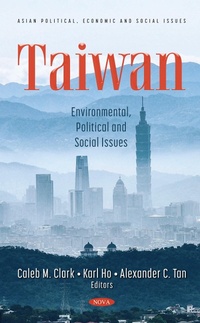
Taiwan: Environmental, Political and Social Issues
Erschienen am 2. Juli 2021
354 Seiten
978-1-5361-9871-3 (ISBN)
Beschreibung

At the turn of the century, Taiwan appeared to be a success story in both its economic and political development. Rapid economic growth and economic transformation had commenced in the 1960s and continued through the 1990s, earning the name of a "'miracle" in the 1980s. While considerably delayed, the country's transformation from a one-party dictatorship began slowly in the late 1980s but was completed without much trauma by the mid-1990s, reflecting both reforms from above by the ruling Kuomintang (KMT) and pressure from below by the opposition Democratic Progressive Party (DPP). The first two decades of the 21st century brought generally bad news, however. The economy slowed and became considerably more dependent on China, who claimed sovereign control over Taiwan; and politics became more conflictual as Taiwan's situation worsened. In terms of issues, national identity and cross-Strait relations dominated Taiwan politics throughout much of the democratic era. However by the late 2010s, economic and social issues had become important concerns as well. Consequently, as the 2020s opened, Taiwan was clearly at a crossroads in its international, political, and social situation. This book analyzes issues in contemporary Taiwan. The first two chapters consider a variety of issues; the next four analyze cross-Strait relations; then come three chapters on issues and the party system and three on constitutional and legal issues; and the final one focuses on a social issue.
Weitere Details
Weitere Ausgaben
Andere Ausgaben
Buch
07/2021
Nova Science Publishers Inc
302,21 €
Versand in 15-20 Tagen
Inhalt
- Intro
- Contents
- Introduction: Taiwan at a Crossroads
- Abstract
- Chapter 1
- Public Policy Preferences Revealed in Referendum Voting: The Case of Taiwan
- Abstract
- Introduction
- Literature Review
- The Study of Public Policy Preferences
- Referenda, Direct Democracy, and Policy Making
- Referenda in the Taiwan Context
- Early History
- The 2018 Referendum Act
- The Mobilization of Issue Groups and the Emergence of 10 Referendums
- The Fiercely Debated Issues
- Referendum Voting as a Revelation of Policy Preferences
- Data
- Methods and Results
- Two-Tier Item Factor Model
- Model Comparison and Selection
- Findings on Latent Policy Positions
- Conclusion
- References
- Appendix 1.1. The Referendum Results before 2018
- Appendix 1.2. The Referendum Results in 2018
- Appendix 1.3. The Referendums Questionnaire of TIGCR2019 Interviews
- Chapter 2
- Leftist Proclivity in Taiwan's Political Development
- Abstract
- Introduction
- Japanese Colonialism Came to Town
- The KMT Party-State Came to Town
- Democratization Came to Town
- The Recent Surge of the Left in the 2010s
- Conclusion
- References
- Chapter 3
- In the Eye of the Storm: Taiwan, China, and the U.S. in Challenging Times
- Abstract
- References
- Chapter 4
- Taiwan's Military Posture toward China's Confrontational Stance
- Abstract
- Introduction
- Study Design
- Historical Background
- Taiwan's National Defense Strategies
- Cross-Strait Relations as a Factor in Taiwan's Military Modernization
- Taiwan's Economy
- Taiwan's Military Power
- Taiwan's Military Spending, Force Preservation and Conventional Capabilities
- External Acquisition of Arms
- Domestic Production as an Alternative to Arms Purchases
- Military Personnel
- Asymmetric Warfare Capabilities
- Conclusion
- References
- Chapter 5
- Inconsistent Struggle Shadowed by the Dragon: Taiwan's Defence under the Tsai Ing-Wen Administration
- Abstract
- Introduction
- Inferiority
- Response to Challenges
- Multilateral Dynamics
- Conclusion
- References
- Chapter 6
- U.S.-China Relations from Trump to Biden: A Systems Theory Assessment
- Abstract
- References
- Chapter 7
- Partisan Polarization and Fragmentation in the Taiwanese Electorate: Evidence from the 2020 Elections
- Abstract
- Introduction
- The Changing Dynamics of Taiwan's Politics
- Polarization and Fragmentation in Taiwan
- Implications
- References
- Chapter 8
- An Etiology of Party System Development and Voter Alignments in Democratic Taiwan: Stability before the Storm
- Abstract
- Introduction
- Party Choice, Cleavages and Party Systems
- The Taiwan Case
- Political Cleavage - National Identity and Ethnicity
- Party Actors and Stability of Voter Identification
- Volatility
- Conclusion
- References
- Chapter 9
- Taiwanese Party Manifestos and Their Purposes: Some Initial Findings and Thoughts
- Abstract
- Introduction
- Taiwanese Electoral Politics - Some Background
- The Why's of Taiwanese Manifestos
- As Direct Appeals to Voters, Indirect Mobilization of Voters, or Arming Activists?
- As Draft Legislative Programs
- As A Means of Controlling Elected Officials and Resolving Internal Disputes
- Some Points to Consider
- References
- Chapter 10
- Revisiting Taiwan's Semi-Presidentialism at a Critical Juncture
- Abstract
- Subtypes of Semi-Presidentialism
- Taiwan Enters Presidential Supremacy
- Ma: Restored Congruence and Forced Supremacy
- Amending the Constitution: Four Proposals
- References
- Chapter 11
- Institutional Resilience and Change: The Case of the Legislative Yuan in Taiwan
- Abstract
- Introduction
- A Brief History
- The Legislative Yuan during the Authoritarian Period
- Transition to Democracy
- The Functions and Powers of the Legislative Yuan
- Major Turning Points in the Evolution of the Legislative Yuan
- From a Rubber Stamp to a Democratic Legislature
- Clientelistic Politics, Corruption, and Electoral Reform
- Conclusion
- Acknowledgments
- References
- Chapter 12
- Mr. President Democracy: A Political Life in Modern Constitutionalism
- Abstract
- Introduction
- Theoretical Insights
- Methodology
- Dissolution of Congress
- Direct Presidential Election
- Exclusive Power to Appoint the Premier
- The Head of Judiciary or Chief Justice
- The Incapacitation of Taiwan Province
- Voluntary Retirement
- Conclusion
- References
- Chapter 13
- Opposition to Gender Equity Education in Taiwan: A Linguistic Perspective on Social Conservative Language on Facebook
- Abstract
- Introduction
- Theoretical Background
- The Language of Anti-Gender/Sexuality Conservatism
- An Integrated Framework for the Qualitative Analysis of Online Comments
- Data
- Analysis
- CHONG's Anti-GEE Movements Pre-Referendum
- CHONG's Anti-GEE Movements Post-Referendum
- Conclusion
- References
- About the Editors
- About the Authors
- Index
- Blank Page
- Blank Page
