

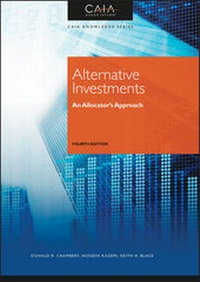
Alternative Investments
An Allocator's Approach
4. Auflage
Erschienen am 14. September 2020
960 Seiten
978-1-119-65169-7 (ISBN)
Beschreibung
Whether you are a seasoned professional looking to explore new areas within the alternative investment arena or a new industry participant seeking to establish a solid understanding of alternative investments, Alternative Investments: An Allocator's Approach, Fourth Edition (CAIA Level II curriculum official text) is the best way to achieve these goals.
In recent years, capital formation has shifted dramatically away from public markets as issuers pursue better financial and value alignment with ownership, less onerous and expensive regulatory requirements, market and information dislocation, and liberation from the short-term challenges that undergird the public capital markets. The careful and informed use of alternative investments in a diversified portfolio can reduce risk, lower volatility, and improve returns over the long-term, enhancing investors' ability to meet their investment outcomes. Alternative Investments: An Allocator's Approach (CAIA Level II curriculum official text) is a key resource that can be used to improve the sophistication of asset owners and those who work with them.
This text comprises the curriculum, when combined with supplemental materials available at caia.org, for the CAIA Level II exam.
"Over the course of my long career one tenet has held true, 'Continuing Education'. Since CalSTRS is a teachers' pension plan, it is no surprise that continuing education is a core attribute of our Investment Office culture. Overseeing one of the largest institutional pools of capital in the world requires a cohesive knowledge and understanding of both public and private market investments and strategies. We must understand how these opportunities might contribute to delivering on investment outcomes for our beneficiaries. Alternative Investments: An Allocator's Approach is the definitive core instruction manual for an institutional investor, and it puts you in the captain's chair of the asset owner."
--Christopher J. Ailman, Chief Investment Officer, California State Teachers' Retirement System
"Given their diversified cash flow streams and returns, private markets continue to be a growing fixture of patient, long-term portfolios. As such, the need to have proficiency across these sophisticated strategies, asset classes, and instruments is critical for today's capital allocator. As a proud CAIA charterholder, I have seen the practical benefits in building a strong private markets foundation, allowing me to better assist my clients."
--Jayne Bok, CAIA, CFA, Head of Investments, Asia, Willis Tower Watson
In recent years, capital formation has shifted dramatically away from public markets as issuers pursue better financial and value alignment with ownership, less onerous and expensive regulatory requirements, market and information dislocation, and liberation from the short-term challenges that undergird the public capital markets. The careful and informed use of alternative investments in a diversified portfolio can reduce risk, lower volatility, and improve returns over the long-term, enhancing investors' ability to meet their investment outcomes. Alternative Investments: An Allocator's Approach (CAIA Level II curriculum official text) is a key resource that can be used to improve the sophistication of asset owners and those who work with them.
This text comprises the curriculum, when combined with supplemental materials available at caia.org, for the CAIA Level II exam.
"Over the course of my long career one tenet has held true, 'Continuing Education'. Since CalSTRS is a teachers' pension plan, it is no surprise that continuing education is a core attribute of our Investment Office culture. Overseeing one of the largest institutional pools of capital in the world requires a cohesive knowledge and understanding of both public and private market investments and strategies. We must understand how these opportunities might contribute to delivering on investment outcomes for our beneficiaries. Alternative Investments: An Allocator's Approach is the definitive core instruction manual for an institutional investor, and it puts you in the captain's chair of the asset owner."
--Christopher J. Ailman, Chief Investment Officer, California State Teachers' Retirement System
"Given their diversified cash flow streams and returns, private markets continue to be a growing fixture of patient, long-term portfolios. As such, the need to have proficiency across these sophisticated strategies, asset classes, and instruments is critical for today's capital allocator. As a proud CAIA charterholder, I have seen the practical benefits in building a strong private markets foundation, allowing me to better assist my clients."
--Jayne Bok, CAIA, CFA, Head of Investments, Asia, Willis Tower Watson
Weitere Details
Weitere Ausgaben
Personen
DR. DONALD R. CHAMBERS, PhD, CAIA, is Associate Director of Programs at the CAIA Association; Chief Investment Officer of Biltmore Capital Advisors and Emeritus Professor at Lafayette College in Easton, Pennsylvania. Dr. Chambers previously served as Director of Alternative Investments at Karpus Investment Management. He is a member of the editorial board of The Journal of Alternative Investments.
DR. HOSSEIN KAZEMI, PhD, is a senior adviser to the CAIA Association. He is the Michael and Cheryl Philipp Professor of Finance at the University of Massachusetts, Amherst; Director of the Center for International Securities and Derivatives Markets; a cofounder of the CAIA Association; and Editor-in-Chief of The Journal of Alternative Investments--the official publication of the CAIA Association and a member of the editorial board of The Journal of Financial Data Science.
DR. KEITH H. BLACK, PhD, CAIA, FDP, is the Managing Director of Content Strategy at the CAIA Association. He was previously an associate at Ennis Knupp and, before that, an assistant professor at Illinois Institute of Technology. He is a member of the editorial board of The Journal of Alternative Investments.
DR. HOSSEIN KAZEMI, PhD, is a senior adviser to the CAIA Association. He is the Michael and Cheryl Philipp Professor of Finance at the University of Massachusetts, Amherst; Director of the Center for International Securities and Derivatives Markets; a cofounder of the CAIA Association; and Editor-in-Chief of The Journal of Alternative Investments--the official publication of the CAIA Association and a member of the editorial board of The Journal of Financial Data Science.
DR. KEITH H. BLACK, PhD, CAIA, FDP, is the Managing Director of Content Strategy at the CAIA Association. He was previously an associate at Ennis Knupp and, before that, an assistant professor at Illinois Institute of Technology. He is a member of the editorial board of The Journal of Alternative Investments.
Inhalt
Part 1
Chapter 1: Asset Manager Code
Chapter 2: Recommendations and Guidance
Chapter 3: Global Regulation
Chapter 4 ESG and Alternative Investments
Chapter 5 ESG Analysis and Application
Part 2 Models
Chapter 6: Modeling Overview and Interest Rate Models
Chapter 7: Credit Risk Models
Chapter 8: Multi-Factor Equity Pricing Models
Chapter 9: Asset Allocation Processes and the Mean-Variance Model
Chapter 10: Other Asset Allocation Approaches
Part 3 Institutional Asset Owners and Investment Policies
Chapter 11: Types of Asset Owners and the Investment Policy Statement
Chapter 12: Foundations and the Endowment Model
Chapter 13: Pension Fund Portfolio Management
Chapter 14: Sovereign Wealth Funds
Chapter 15: Family Offices and the Family Office Model
Part 4 Risk and Risk Management
Chapter 16: Cases in Tail Risk
Chapter 17: Benchmarking and Performance Attribution
Chapter 18: Liquidity and Funding Risks
Chapter 19: Hedging, Rebalancing, and Monitoring
Chapter 20: Risk Measurement, Risk Management, and Risk Systems
Part 5 Methods For Alternative Investing
Chapter 21: Valuation and Hedging Using Binomial Trees
Chapter 22: Directional Strategies And Methods
Chapter 23: Multivariate Empirical Methods and Performance Persistence
Chapter 24: Relative Value Methods
Chapter 25: Valuation Methods for Private Assets: The Case of Real Estate
Part 6 Accessing Alternative Investments
Chapter 26: Hedge Fund Replication
Chapter 27: Diversified Access to Hedge Funds
Chapter 28: Access to Real Estate and Commodities
Chapter 29: Access Through Private Structures
Chapter 30: The Risk and Performance of Private and Listed Assets
Part 7 Due Diligence & Selecting Managers
Chapter 31: Active Management and New Investments
Chapter 32: Selection of a Fund Manager
Chapter 33: Investment Process Due Diligence
Chapter 34: Operational Due Diligence
Chapter 35: Due Diligence of Terms and Business Activities
Part 8: Volatility and Complex Strategies
Chapter 36: Volatility as a Factor Exposure
Chapter 37: Volatility, Correlation, and Dispersion Products and Strategies
Chapter 38: Complexity and Structured Products
Chapter 39: Insurance-Linked Products and Hybrid Securities
Chapter 40: Complexity and the Case of Cross-Border Real Estate Investing
Index
Chapter 1: Asset Manager Code
Chapter 2: Recommendations and Guidance
Chapter 3: Global Regulation
Chapter 4 ESG and Alternative Investments
Chapter 5 ESG Analysis and Application
Part 2 Models
Chapter 6: Modeling Overview and Interest Rate Models
Chapter 7: Credit Risk Models
Chapter 8: Multi-Factor Equity Pricing Models
Chapter 9: Asset Allocation Processes and the Mean-Variance Model
Chapter 10: Other Asset Allocation Approaches
Part 3 Institutional Asset Owners and Investment Policies
Chapter 11: Types of Asset Owners and the Investment Policy Statement
Chapter 12: Foundations and the Endowment Model
Chapter 13: Pension Fund Portfolio Management
Chapter 14: Sovereign Wealth Funds
Chapter 15: Family Offices and the Family Office Model
Part 4 Risk and Risk Management
Chapter 16: Cases in Tail Risk
Chapter 17: Benchmarking and Performance Attribution
Chapter 18: Liquidity and Funding Risks
Chapter 19: Hedging, Rebalancing, and Monitoring
Chapter 20: Risk Measurement, Risk Management, and Risk Systems
Part 5 Methods For Alternative Investing
Chapter 21: Valuation and Hedging Using Binomial Trees
Chapter 22: Directional Strategies And Methods
Chapter 23: Multivariate Empirical Methods and Performance Persistence
Chapter 24: Relative Value Methods
Chapter 25: Valuation Methods for Private Assets: The Case of Real Estate
Part 6 Accessing Alternative Investments
Chapter 26: Hedge Fund Replication
Chapter 27: Diversified Access to Hedge Funds
Chapter 28: Access to Real Estate and Commodities
Chapter 29: Access Through Private Structures
Chapter 30: The Risk and Performance of Private and Listed Assets
Part 7 Due Diligence & Selecting Managers
Chapter 31: Active Management and New Investments
Chapter 32: Selection of a Fund Manager
Chapter 33: Investment Process Due Diligence
Chapter 34: Operational Due Diligence
Chapter 35: Due Diligence of Terms and Business Activities
Part 8: Volatility and Complex Strategies
Chapter 36: Volatility as a Factor Exposure
Chapter 37: Volatility, Correlation, and Dispersion Products and Strategies
Chapter 38: Complexity and Structured Products
Chapter 39: Insurance-Linked Products and Hybrid Securities
Chapter 40: Complexity and the Case of Cross-Border Real Estate Investing
Index
